
Reviewed · WORKSHOPS
Woolf & Dickens: London Literary Tour & Writing Workshop
Woolf & Dickens turns central London into a hands-on writing studio, with stops picked for what writers saw, worried about, and turned into page after page. I like the way the tour uses the city as a literal writing prompt, especially the view from Waterloo Bridge. It is not just sightseeing, it is short readings plus a guided experiment that gets you moving your pen fast.
I also like the kind, inclusive workshop atmosphere, with prompts designed for people from first-time writers to experienced ones. The one thing to consider is time, it is only 1.5 hours, so you will not get a slow, sit-and-stare museum pace.
Key things to know before you go
- Waterloo Bridge as a Woolf prompt: You respond to what you see, not just what you read.
- Mindful writing at Somerset House: You practice attention, then turn it into words.
- St Mary Le Strand ekphrasis: You write from the church interior, guided by an Eliot connection to time.
- Aldwych timeline stop: You are nudged to think about history moving forward, not stuck in the past.
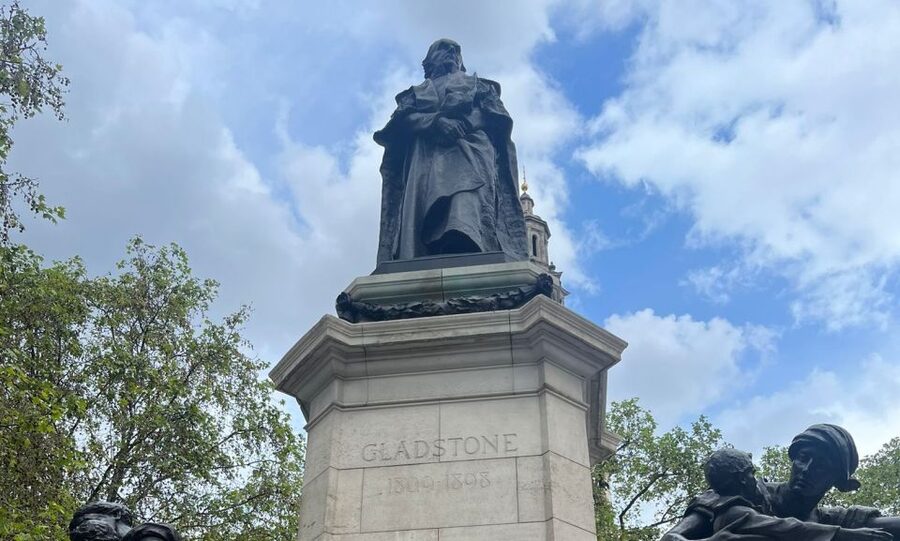
- Politics, truth, and facts with Gladstone: You build a list that blends personal memory with public history.
- Doctor Johnson and his dictionary: You test how language systems shape identity.
Entering The London Writing Studio From Waterloo Bridge
This tour works because it refuses the usual split between sightseeing and writing. Instead of saying, “Take photos, then write later,” it uses the real streets as your trigger. You stop, read a small piece, look again, and then write while the place is still fresh in your head.
It is led by Joseph Pierson, an award-winning novelist with a PhD in Creative Writing. That matters. You get more than literary name-dropping. You get prompts that are specific enough to get you started, but flexible enough that your own voice can show up quickly.
You also get a warm, safe tone. The workshop format is welcoming and inclusive, which is a big deal if you feel rusty, self-conscious, or just plain unsure what to write. The whole idea is that writing is a practice, not a test.
A few more London tours worth a look
- London: Traditional English Scone Making and Tea Workshop
★ 5.0 · 702 reviews - London: East End Street Art Tour and Spray Painting Workshop
★ 4.8 · 297 reviews - London: Half-Day Street Art Tour and Workshop
★ 4.9 · 172 reviews
The Waterloo Bridge Woolf Prompt: Seeing Time While You Write
The tour begins near Waterloo Bridge, at the north end. You meet at a slope on the right that goes behind Somerset House. Even before the first reading, you are positioned for one of London’s classic visual machines: commuters below, wide water, and a view that keeps changing as the light shifts.
This is where Virginia Woolf enters. You consider her wistful reflections tied to the view from Waterloo Bridge, then you do something practical: you write a biographical sketch inspired by what you see from there. That means you are not aiming for a perfect imitation of Woolf. You are using her method as a tool, blending a sense of memory with a present-tense observation.
What I like about this approach is that it makes the moment personal. You can start with a detail that catches your eye, then gently expand outward, linking the scene to your own timeline. Woolf’s style often feels like it lives between then and now, and this exercise gets you to feel that movement in your own sentences.
Practical tip: bring a pen you actually like using. For a short workshop, you will feel every friction point.
Somerset House Mindful Writing: Paying Attention Then Turning It Into Words
Next comes Somerset House, where the tour shifts from looking outward to looking inward, at least for a minute. The exercise here is described as a mindful writing experiment, which is tour-speak for a simple plan: slow your attention down, then write from that steadier focus.
Somerset House is an excellent choice for this. It has the kind of public courtyard energy that makes you aware of sounds, footsteps, architecture, and weather all at once. You are encouraged to practice attention, then translate it into language. The translation part is key. You are not just observing quietly, you are producing text.
If you have never done a mindfulness-based writing exercise before, this is a friendly entry. The prompts are built to work for novices, and also offer room for experienced writers to take the assignment farther. In practice, that often means you can keep it simple, or you can play with structure, repetition, or tone if you want.
A small consideration: because this is a writing workshop, you will be writing at least part of the time. If you prefer photography-first tours, this might feel like too much paper, too fast. But if you like the act of making words, it is a great fit.
Aldwych Timeline and St Mary Le Strand: T.S. Eliot’s Time Inside a Church
One of the best parts of this tour is how it uses T.S. Eliot without making it feel like homework. Eliot’s reflections on time and history show up through the route, including a stop that connects to the timeline on the walls at Aldwych. That detail is a clever bridge. It reminds you that history is not just something behind glass, it is visible in how we mark the present.
Then you go into the church of St Mary Le Strand. Here, the writing work becomes a full ekphrasis exercise, inspired by the grand interior. Ekphrasis usually means writing from an artwork or scene, trying to put something visual into language. In this case, the interior architecture is your text prompt.
Why this works: churches can be quiet in a way that makes you notice. You start paying attention to scale, light, detail, and symmetry. Once you are tuned in, the writing prompt stops feeling abstract. You are describing a space you can see, hear, and feel, and you are doing it while thinking about time, because Eliot keeps time in the frame.
A practical drawback to keep in mind: religious spaces have their own pace and rules. You may need to lower your voice and move gently. If you are comfortable with that, you will get a better writing experience.
A different sort of day out in London:
- From London: Harry Potter Warner Bros Studio Tour
★ 4.7 · 26,588 reviews - Magical London: Harry Potter Guided Walking Tour
★ 4.7 · 22,044 reviews - London: Madame Tussauds London
★ 4.6 · 20,915 reviews - Stonehenge, Windsor Castle, and Bath from London
★ 4.5 · 18,662 reviews
Gladstone, Politics, and Truth: Facts With a Personal Memory Layer
After the Eliot stops, the tour pivots to something more political and sharply human: how truth changes with perspective. You encounter a statue of Gladstone, and the prompts lead you to think about politics, truth, and history as something you reframe depending on where you stand.
The exercise here is a list of facts. But it is not a dry exercise. You are asked to blend personal history with the environment you are part of. That means your list is doing two jobs at once: reporting what you know and revealing what shaped you.
I like assignments like this because they force clarity. Lists can feel simple, but they make you choose. You cannot hide behind flowery language. You pick facts. You decide what matters. And then, by adding the personal memory layer, you admit that your facts have a voice behind them.
It is also a smart way to connect literature to civic life. Woolf and Eliot often pull you toward interior experience. The Gladstone prompt pulls you toward public experience, the shared world where truth and politics constantly shift depending on the angle.
If you are the kind of writer who enjoys mixing observation with argument, this part is likely to feel energizing.
Doctor Johnson’s House and His Dictionary: How Language Builds Identity
The final stop ties everything together with language itself. At Doctor Johnson’s house, you read from his dictionary. This is not trivia. It is a way to think about how dictionaries, structures, and definitions shape how people understand the world.
The prompt here focuses on how systems make us. Religion, politics, art, and language all feed identity, and Johnson is a perfect guide for that theme. Dictionaries are the most literal kind of structure. They try to fix meaning, at least on paper. Then you watch how that meaning gets used, resisted, reshaped, and lived.
You are likely to leave this part with a different relationship to words. It is one thing to use language. It is another thing to feel the architecture underneath it, the framework that makes your thoughts sound possible.
Also, because the tour is a writing workshop, you do not just hear about these ideas. You practice translating them into your own sentences. That makes the Johnson stop stick.
If you are worried that you will leave with too many impressions and not enough actual writing, this is the section that helps you turn theory into something you can hold.
Price and Value: What You Get for $101 in 1.5 Hours
At $101 per person for 1.5 hours, this tour sits in a middle band for London guided experiences. The value is in what you do with the guide, not in how long you sit.
You are paying for:
- A guided route with literary prompts tied to specific places
- Short readings that feed each exercise
- A writing workshop format designed for different levels
- No entry tickets needed, which keeps the cost from creeping upward
To me, the best value signal here is that the tour is built around active writing, not passive listening. You are not just consuming content. You are using the content as raw material. If you come with a pen and a willingness to try something small, you can leave with a few pages you made yourself, plus a clearer sense of how authors like Woolf, Eliot, and Dickens (along with Johnson) turn settings into meaning.
A short time can feel limiting, but it can also be motivating. You get enough structure to write something real, without needing hours of stamina.
Who This Writing Workshop Is For (and Who Might Want Something Else)
You should strongly consider this if you:
- Like literature but want it connected to lived experience, not just facts
- Enjoy writing prompts and want a guided starting point
- Feel nervous about writing and prefer a safe, inclusive space with gentle structure
- Want a London activity that uses your brain and your eyes at the same time
You might not love it as much if you:
- Want a classic architecture or museum tour where the main goal is long viewing time
- Dislike writing during travel
- Prefer solo time, because the workshop needs participation and attention
Group size is described as a private group, which usually means you will get a calmer atmosphere than big public tours. It is also wheelchair accessible, which is helpful if you need step-free routes and seating breaks.
Before You Go: What to Bring and How to Prepare
The tour asks you to bring:
- A pen
- Water
- Internet access
- An umbrella, just in case
That internet access detail is worth planning for. Have your phone ready with data, or enough signal to use what the guide might request. I would also charge your phone beforehand, since writing plus directions plus photos can add up quickly.
Dress for outdoor time and for time in a church. Even in good weather, London can swing. Comfortable shoes matter because you are moving between stops.
Should You Book Woolf & Dickens?
Book it if you want a London tour that treats writing like a skill you can practice in public, without pressure. The strengths are the guided prompts built around Waterloo Bridge, Somerset House, St Mary Le Strand, Aldwych, and Doctor Johnson’s house, plus the warm workshop tone that makes it easier to start.
Skip it if you want pure sightseeing, because the main event is the writing you do during the tour. If you love literary London but you have grown tired of lectures, this is a refreshing alternative that lets you make something, in the moment.
If you are on the fence, think about this question: do you want to leave with words you created, even if they are imperfect? If yes, this one is worth your time.
FAQ
How long is the Woolf & Dickens London Literary Tour & Writing Workshop?
It lasts 1.5 hours.
Where do I meet the tour?
Meet at the north end of Waterloo Bridge, at the right side slope that goes behind Somerset House.
Is the tour wheelchair accessible?
Yes, it is wheelchair accessible.
Do I need entry tickets for the stops?
No entry tickets are needed.
What language is the guide?
The live tour guide speaks English.
Do I need to be an experienced writer?
No. The workshop is designed to suit all levels, from novice to novelist.
What should I bring?
Bring a pen, water, and internet access, plus an umbrella just in case.
Is there free cancellation?
Yes, you can cancel up to 24 hours in advance for a full refund.
Recently reviewed around London
- Bridgerton Tour in London★ 5.0 · 9 reviews
- Tour in Italian: Londra in un Giorno★ 4.9 · 20 reviews
- Westminster and National Gallery 3.5-Hour Tour in Italian★ 4.9 · 28 reviews
- London in Spanish Privado: Lo Mejor de Londres en un día!★ 4.8 · 12 reviews
- Top London Sights Tour – Christmas Day Special!★ 5.0 · 12 reviews
- Tour a Piedi di Harry Potter a Londra★ 5.0 · 20 reviews
- The Royal Express, 2.5 hour tour★ 5.0 · 6 reviews
- London: Royal Hampton Court Guided Tour with Afternoon Tea★ 5.0 · 67 reviews
Workshops, compared.

Traditional English Scone Making and Tea Workshop
Read our review →
East End Street Art Tour and Spray Painting Workshop
Read our review →



Browse the lists this tour appears in