
Reviewed · HISTORICAL TOURS
London: Guided Tour of the Natural History Museum
A guided walkthrough of the Natural History Museum in London is interesting because it turns a giant building of specimens into a clear story of evolution, Earth science, and life in the oceans. You do not need a science degree to follow along, and the route is designed to hit the museum’s most memorable stops in just 2 hours.
I especially like how the tour sets the tone right at the start, with bag check and the contactless donations queue, plus a giraffe skeleton displayed next to a taxidermy giraffe. It is a fun, fast way to remind you that this museum is about real animals and real discoveries, not just decor.
One drawback to consider: the tour reliability looks mixed. The overall rating is 2.7 out of 5, and there are several recent reports of guides not showing up, failing to find the group, or shortening the visit.
Key things you should notice before you go
- Galleries in a tight route, covering dinosaurs, mammals, marine life, human evolution, and Earth sciences in about 2 hours
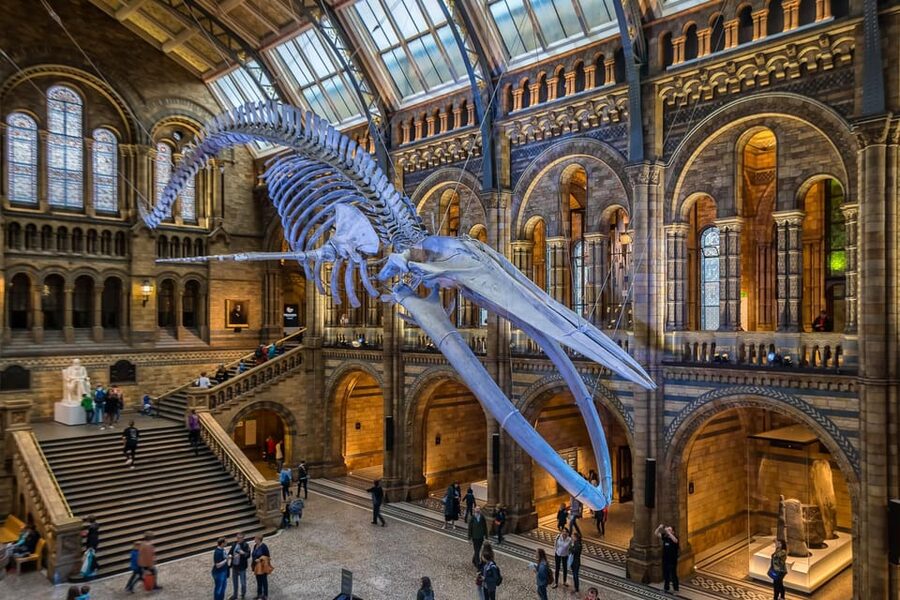
- High-impact highlights like the blue whale skeleton and the Diplodocus in the Dinosaur Gallery
- Geology comes with hands-on focus, especially in the Volcanoes and Earthquakes style content and Earth sciences rooms
- Wildlife Garden add-on, with birds, bees, and other animals as a calm break from the main halls
- Museum lore in the architecture, including the Sir Richard Owen and Charles Darwin rivalry hinted by terracotta details
- Reliability matters here, based on multiple no-show or short-visit reports in recent bookings
Entering the Natural History Museum, and why the first room matters
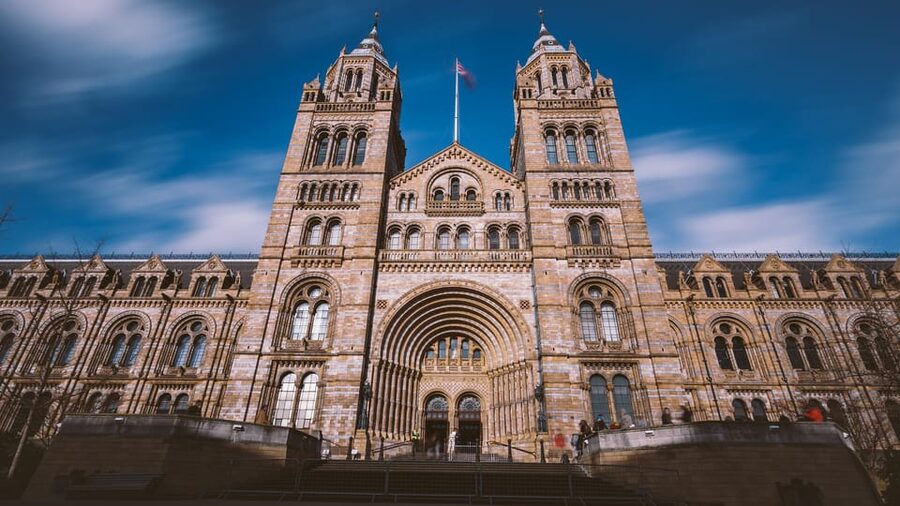
The tour starts as soon as you walk into the Natural History Museum. You pass through bag check and head toward the contactless donations queue, where you immediately get that classic museum feeling of big displays, old-school curiosity, and modern visitor flow all in one spot.
Right away, you see a giraffe skeleton standing tall next to a taxidermy giraffe. That pairing is more than a wow moment. It is a quiet lesson in what museums actually do: preserve evidence, show scale, and help you compare past and present. If you like learning through visuals, this is a strong opener.
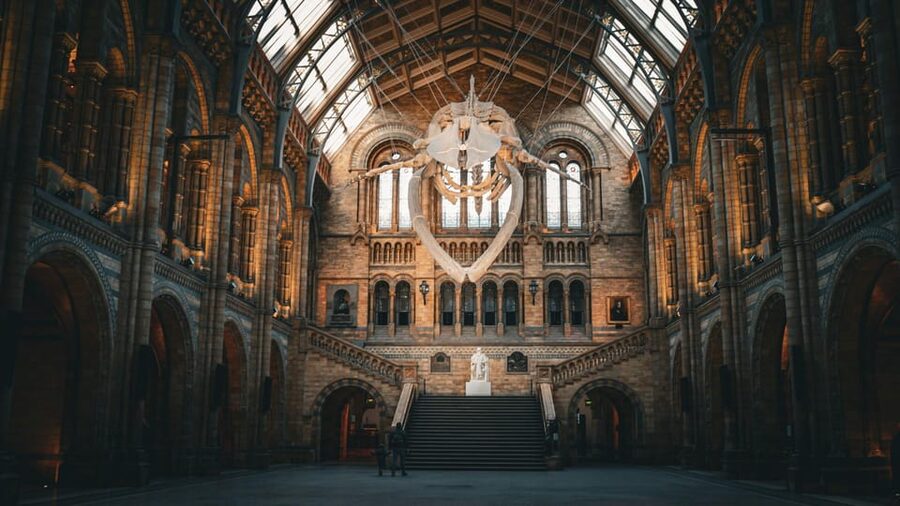
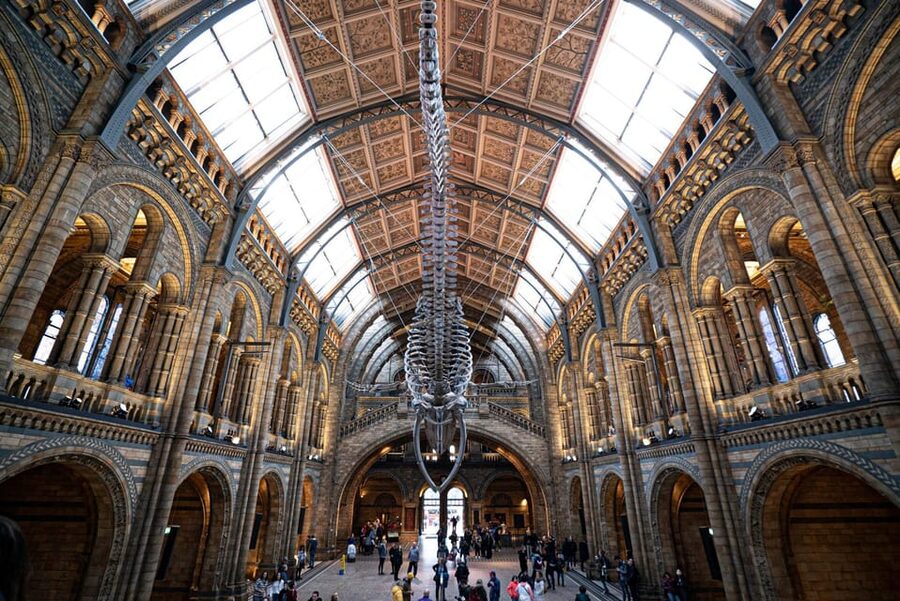
Then you move into the grand main hall with terracotta arches and columns. This is where the tour’s storytelling starts to feel clever. The terracotta monkeys scaling the walls are a nod to Sir Richard Owen’s rivalry with Charles Darwin. It is the kind of detail you might miss if you wander on your own, because you are likely staring at the skeletons and ignoring the architecture.
More museum visits in London:
- Tower of London and Crown Jewels Exhibition Ticket
★ 4.5 · 6,677 reviews - London: Chelsea Football Club Stadium and Museum Tour
★ 4.8 · 4,576 reviews - Chelsea FC Stadium Tours and Museum
★ 5.0 · 1,908 reviews
Where you meet your guide, and how not to lose the start time
This is a Golden Tours, Gray Line London guided experience, and it is not the official Natural History Museum tour. That matters because the meeting point uses a specific landmark.
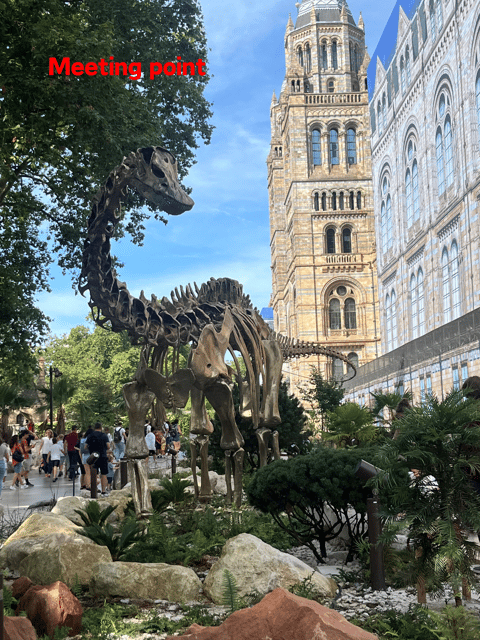
You meet at the museum main entrance on Cromwell Road, South Kensington (SW7 5BD). Follow signs for the main entrance, and in the Evolution Garden you will find a large bronze skeleton statue of a long-necked dinosaur. Your guide is located opposite that statue with a blue and white Golden Tours umbrella.
Plan to arrive at least 15 minutes early. It sounds basic, but this tour has had reports of guides not finding participants, and one no-show scenario included someone who arrived just a couple minutes late. If you want a smooth start, treat this like a timed theater show: be on site, be early, and stay visible.
Dinosaur Gallery: Diplodocus and the joy of standing still
Your first major stop is the Dinosaur Gallery. This is where the tour earns its keep, because these skeletons do not look real unless you see them up close.
You will encounter prehistoric skeletons, including the famous Diplodocus. When you look at these long-necked forms in person, the scale hits differently than it does in photos. It is also a great entry point into evolution, because you can see how ideas about classification and life history changed over time. Even if you are not a dinosaur person, the size and arrangement make it hard not to pay attention.
A guided approach helps here because you are not just looking at bones. You are getting a route that prevents you from getting stuck in one display while the rest of the story slides by.
Mammals Gallery: taxidermy, skeletons, and a quick reality check
Next comes the Mammals Gallery. This room is full of taxidermy specimens and skeletons, from African elephants to cheetahs.
What I like about this stop is how it connects to the museum’s bigger theme. You see animals that are alive in the wild, but you are learning from preserved evidence. That makes the evolution story feel grounded. It also helps you notice patterns: body shapes, skull differences, and how skeletons explain function.
One practical note: mammal displays can pull your attention in different directions. If you want a fast, focused visit, stick with the guide’s flow rather than letting each animal turn into a 20-minute detour. The whole tour is about 2 hours, so time is part of the design.
More history tours in London:
- London Small Group Tour of Historical Pubs
★ 5.0 · 10,422 reviews - Soho Music & Historic Pubs Tour
★ 5.0 · 1,993 reviews - London: Historic Pubs of Central London Walking Tour
★ 4.9 · 1,065 reviews - London: Soho Music and Historic Pubs Walking Tour
★ 4.9 · 836 reviews
Marine Life and the blue whale skeleton overhead
The Marine Life section is a highlight for a reason. A blue whale skeleton is suspended from the ceiling, and you can see ocean biodiversity in a way that feels dramatic, not textbook.
This is the moment where the tour’s variety makes sense. Dinosaurs and mammals are incredible, but they are land-based. Then the whale display expands your frame to what the ocean holds, and it gives you a different kind of awe, with scale and gravity working together.
If you are traveling with kids, this is also the display that often gets the easiest buy-in. Even adults who came for dinosaurs usually pause longer here, because the suspension makes the whole room feel like a living diorama.
Human Evolution Gallery: life-sized models and fossils you can track
Then the tour moves into the Human Evolution Gallery. Here you will find life-sized models and fossilized remains that explain our ancestors’ evolutionary journey.
This section works well in a guided format because it helps you keep the timeline straight. Without guidance, it is easy to bounce between interesting skulls and models without building a clear sense of sequence.
The value for you is perspective. The gallery gives you a chance to think about evolution not as a single event, but as a long set of changes, shaped by evidence. If you like connecting dots, you will leave with a better mental map than you would from a quick walk.
Earth sciences with Volcanoes and Earthquakes style themes
After the biology stops, the tour shifts to Earth sciences. You explore geology and mineral-focused areas with geological wonders like gemstones and volcanic rocks, including the Volcanoes and Earthquakes gallery content.
I like this change of pace. After spending time with living creatures and their skeletons, you get to see Earth itself as part of the story. Plate movement, volcanic activity, and changes to the landscape are part of why ecosystems shift over time. So even though this section is not about evolution directly, it supports the bigger idea that life and Earth evolve together.
This is also a good section if you have limited time in London and want at least one science topic that feels different from fossils. You will likely remember the contrast: bones on one side, rock formations and earth processes on the other.
Wildlife Garden: a small outdoor breather
Finally, you explore the Wildlife Garden, described as a haven for birds, bees, and other animals. This is a calmer finish than the big indoor galleries.
Even if you do not see a ton of wildlife in the short time you have, the garden break helps your brain reset. It also makes the idea of biodiversity feel less like a concept on a label. When you step outside, you get that reminder that the museum is documenting living systems that still exist beyond glass cases.
Ending at the café and gift shop
The tour concludes at the museum’s café and gift shop. That is practical if you want to immediately regroup, grab a snack, and decide if you want to keep exploring on your own.
This is also a smart time to pick up a souvenir that actually fits what you learned. If you spent the morning with dinosaurs and whales, you will have a much easier time choosing something related to those specific themes.
Price and value: $40 for a focused story in 2 hours
At $40 per person for a 2 hour guided tour, the value depends on what you want.
If your goal is orientation, highlights, and a structured route through the museum’s best-known sections, this price can make sense. The tour packs multiple major galleries into one visit, which saves you from spending the whole day deciding where to go.
But here is the catch: the tour includes the guided portion, and food and transportation are not included. The info you have does not explicitly confirm whether museum admission is included with the tour price. Before you buy, double-check that detail so you are not surprised when you arrive.
With that said, paying for guidance can be worth it at the Natural History Museum because the collection is so large that a free-for-all route often turns into a scattered experience. A guided highlight plan helps you avoid that.
Reliability watchout: what the low ratings teach you
I would be doing you a disservice if I ignored the operational complaints. The overall rating is 2.7 out of 5 across 46 reviews, and the issues described are serious enough to plan around.
Here are the patterns that show up in the negative reports:
- Guides not arriving at all
- Guides arriving late or failing to locate the group
- Tours being canceled or shortened, leaving participants with less than the intended experience
- Promised refunds not being received at the time of the complaint
In one no-show case, a participant contacted for status and was told a refund would be processed, but they reported still not receiving it. In another case, someone arrived two minutes late and said they found no one and did not get to visit the museum. Another report described a guide who seemed confused when finding the other participants and the tour ended very early.
None of that changes how good the museum content is. It does mean you should protect yourself. Show up early, stand where you are told to stand, and keep your phone charged in case you need to confirm the guide’s location.
Who this tour suits best, and who should think twice
This guided tour is a good match if you want:
- A tight, story-based route through evolution, marine life, human evolution, and Earth sciences
- Standout moments like Diplodocus and the blue whale skeleton
- A guided structure that keeps you moving and helps you connect what you see
You might think twice if:
- You hate risk and need absolute certainty of start and finish time
- You are traveling with very strict scheduling and cannot spare extra time if a guide is delayed or no-show happens
- You want an unhurried museum day, because the format is only 2 hours
If your London day is already packed, build in some flexibility near the meeting time so you are not stressed if plans change.
Should you book this London Natural History Museum guided tour?
My take: book it only if you can handle uncertainty and you plan to arrive early on purpose. The museum stops are genuinely strong, and a guided route can be a smart way to see multiple core galleries without wandering for hours.
If you are the type who needs a guaranteed guide presence and you cannot tolerate any operational problems, I would look for alternatives that have more consistent execution. But if you treat this as a guided highlight plan, show up early, and keep your expectations realistic about the 2 hour format, you can still end up with a memorable Natural History Museum visit.
Recently reviewed around London
- Bridgerton Tour in London★ 5.0 · 9 reviews
- Tour in Italian: Londra in un Giorno★ 4.9 · 20 reviews
- London in Spanish Privado: Lo Mejor de Londres en un día!★ 4.8 · 12 reviews
- Westminster and National Gallery 3.5-Hour Tour in Italian★ 4.9 · 28 reviews
- Top London Sights Tour – Christmas Day Special!★ 5.0 · 12 reviews
- Tour a Piedi di Harry Potter a Londra★ 5.0 · 20 reviews
- The Royal Express, 2.5 hour tour★ 5.0 · 6 reviews
- London: Royal Hampton Court Guided Tour with Afternoon Tea★ 5.0 · 67 reviews
Historical Tours, compared.
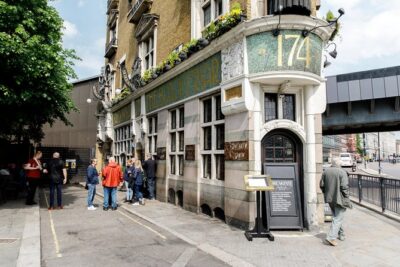
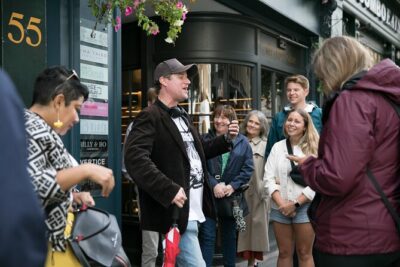
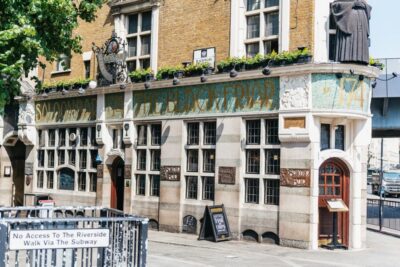

Royal Historic Pubs Walking Guided Tour in London
Read our review →
Private Group: Historical Pub Walking Tour of London
Read our review →

Browse the lists this tour appears in