
Reviewed · HISTORICAL TOURS
Roman Ruins to Blitz Bombings: London’s Fiery History
London can feel like two places at once: a modern financial core and an ancient street grid that keeps resurfacing in tiny clues. This guided walk strings together Roman London and later mayhem, all in a route you can actually finish in a morning or early afternoon. I love how the stops are short, so you stay moving, and I also like the mix of big moments with street-level details you can spot with your own eyes. One thing to consider: it is not a museum visit, so if you want long indoor exhibits, you will still need to plan those separately.
What really makes this work is that the story travels across centuries at a human pace, from Roman walls to the Tower of London, then toward the City’s landmarks and power centers. I like the way the guide’s style keeps the flow tight, with clear delivery and room for your questions, and I like that the group stays small, about fifteen people, which makes the Q&A feel real. The main drawback is just logistics, it is around 2.5 miles of walking in roughly two hours, so comfortable shoes are not optional.
Key things you’ll notice on this City of London route
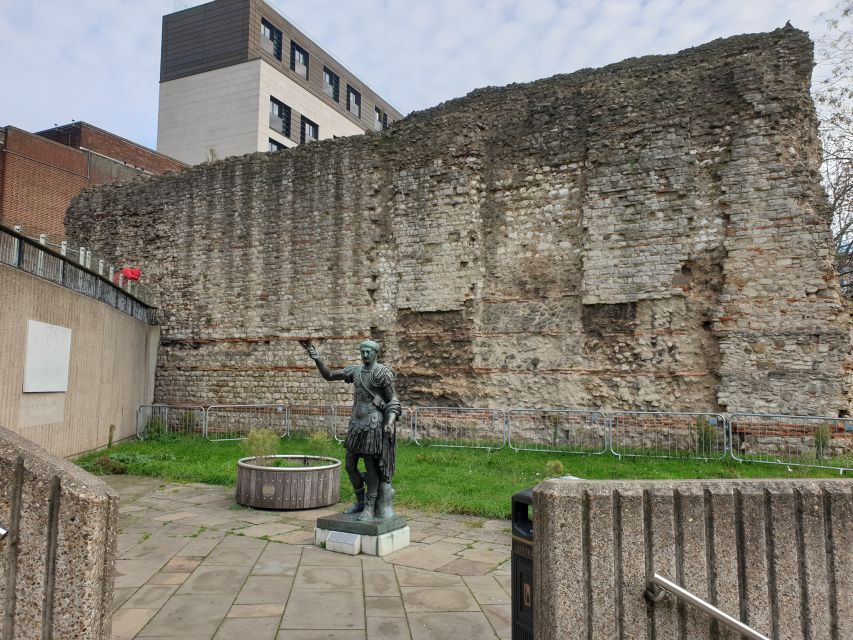
- Roman Wall of Londinium sightings, right in the middle of the City’s modern bustle
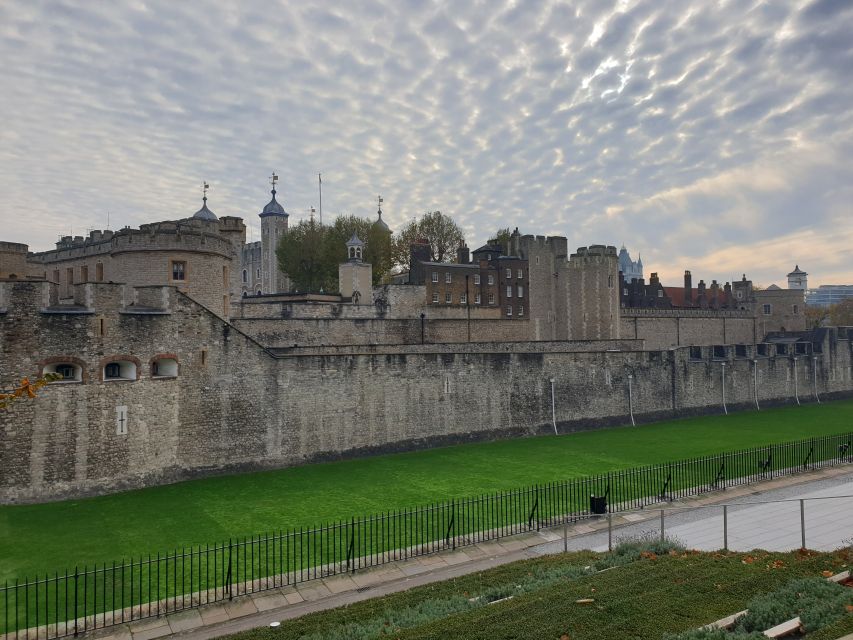
- Tower of London focus on fear, power, and the darker side of royal history
- St Dunstan in the East church garden as a calm pause between headline sites
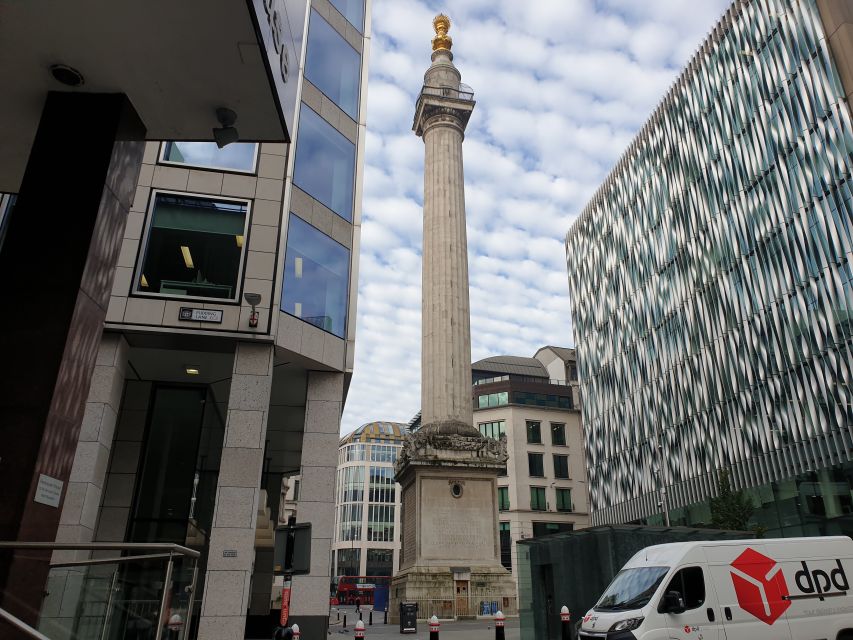
- Monument to the Great Fire of London and the way fire shaped what you can still see
- London Stone and Bank of England stories that connect old civic identity to finance
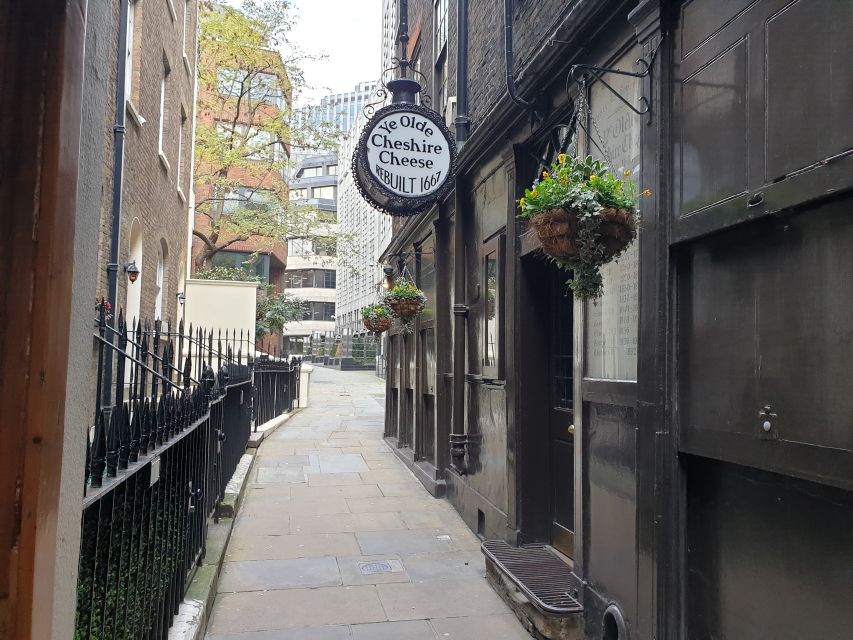
- Guildhall, St Paul’s, and Ye Olde Cheshire Cheese for a finish that feels very London
Entering the City’s time machine, from Tower Hill to Blackfriars
This tour is built for people who like history, but also like not getting trapped in one place. You start at the exit of Tower Hill Station, and you are looking for your guide at the base of the steps leading up to the sundial, holding an Historic London Tours sign. From there, you wind through the ancient heart of the City of London with a steady rhythm, not a random list of landmarks.
The best part, for me, is how the route keeps snapping your attention back to what is physically there. The “two thousand years” promise is not just marketing. You really do get moments where Roman-era traces sit in the same city fabric as medieval power and later London reinvention after fire and war.
You’ll also meet a cast of characters in the guide’s narration, including the Romans, William the Conqueror, Christopher Wren, Anne Boleyn’s ghost, and Queen Boudica, plus a fun explanation of how that Boudica connection shows up in pop culture like Harry Potter. The point is not to memorize names. The point is to see how London keeps reusing stories, symbols, and sites.
More history tours in London:
- London Small Group Tour of Historical Pubs
★ 5.0 · 10,422 reviews - Soho Music & Historic Pubs Tour
★ 5.0 · 1,993 reviews - London: Historic Pubs of Central London Walking Tour
★ 4.9 · 1,065 reviews
Price and value, why $26 makes sense for a 2-hour walk
At around $26 per person for a roughly two-hour walk, you are paying for interpretation, not entry tickets. The tour includes the walking tour and a local guide, and it does not include museum entrances. That makes it good value if you want a guided brain-map for the City, then decide later what you want to go deeper on indoors.
Where this price makes the most sense is for first-time Londoners who feel like the City is hard to read. Many of the most important places here are visible, but they do not come with labels that explain why the site matters. A guide can connect the dots fast, especially when you are limited to a short timeframe and you still want the bigger picture.
If you are traveling with limited energy, this is also easier than a full-day itinerary. You still get a lot of variety, Roman survival, royal drama, civic institutions, and the Great Fire story arc, without spending the whole day standing in one line somewhere.
A small-group tour that stays interactive, not lecture-only
This experience caps ticket sales at about fifteen attendees. That matters more than you might think. In small groups, you tend to get faster answers and more back-and-forth, because your guide can keep track of who has questions and what kind of facts people are hunting.
The delivery style is repeatedly praised for being clear and friendly. One guide you may be assigned, like Tom, is noted for not overloading people even while sharing a lot of information. That is a big deal on a route like this, where quick stops can otherwise turn into information overload. Here, the narration is paced so you can actually look at what you are standing next to.
If you like asking “why” questions, this format gives you a decent chance to do it, because you are not disappearing into a huge crowd.
Roman Wall of Londinium, the City’s ancient backbone you can still find
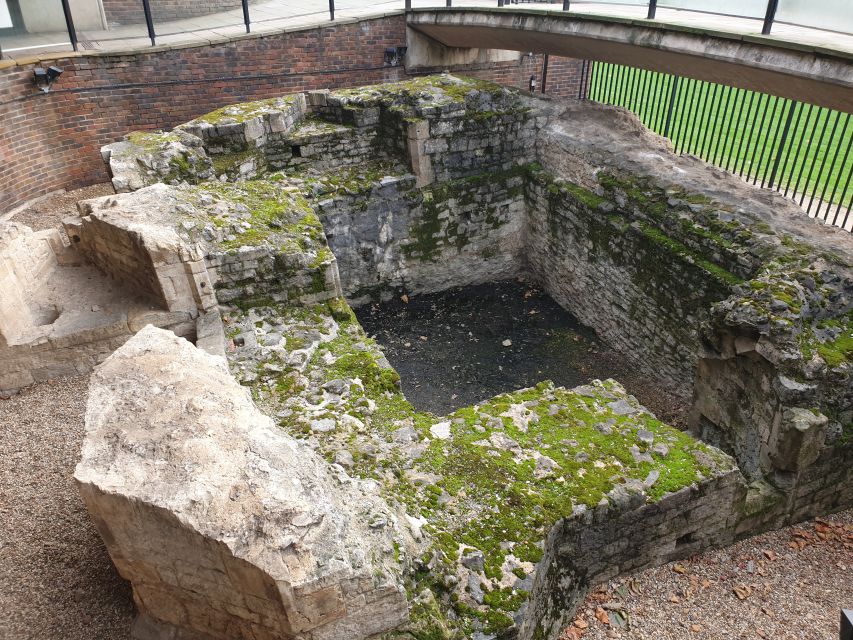
Your first proper stop is the Roman Wall of Londinium. Even if you have seen Roman ruins elsewhere in Britain, the emotional effect here is different because it is embedded in London’s ongoing life. You are not touring a distant relic. You are seeing how the Roman city once defined the shape of settlement, and how traces survive when everything around them keeps changing.
What I like about this stop is that it gives you a baseline. Once you understand that London had an older foundation, later landmarks click into place with more meaning. Even if you know the Roman period in general terms, seeing a Roman feature in central London helps you understand why the City’s growth had to work with what was already there.
A practical note: since the guide stops are short, about five minutes per major site, you should expect a quick hit of context rather than a slow, lingering Roman artifact session.
A different sort of day out in London:
- From London: Harry Potter Warner Bros Studio Tour
★ 4.7 · 26,588 reviews - Magical London: Harry Potter Guided Walking Tour
★ 4.7 · 22,044 reviews - London: Madame Tussauds London
★ 4.6 · 20,915 reviews - Stonehenge, Windsor Castle, and Bath from London
★ 4.5 · 18,662 reviews
Tower of London, fear, power, and the stories people repeat
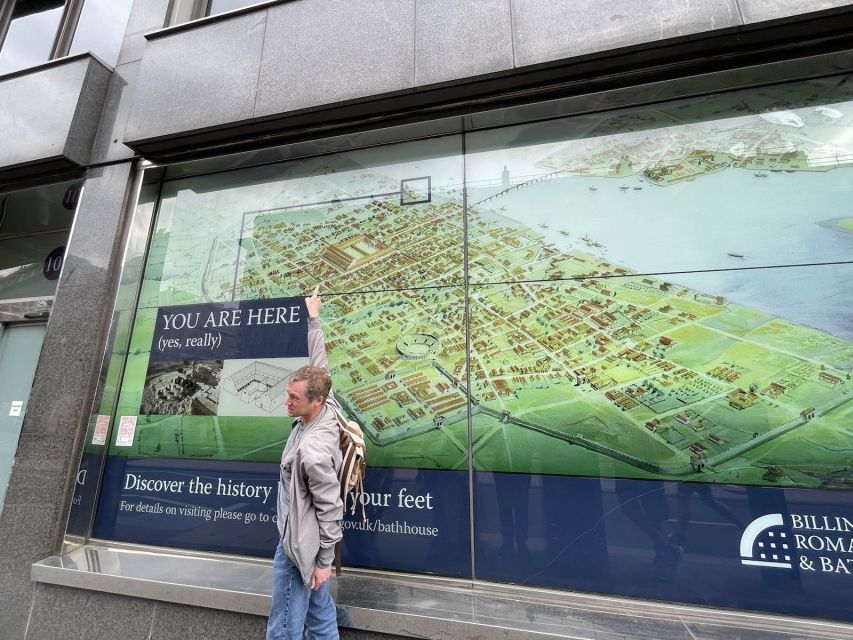
Next is the Tower of London, and this is where the tour shifts from ancient foundations to medieval and Tudor-era intensity. The Tower is one of those places where you can feel the weight of history even when you are just standing outside or moving through nearby viewpoints.
On this walk, the focus is on the Tower’s sinister, bloody reputation. You do not just get a catalog of events. You get a sense of how the Tower functioned in the story of English power, and why later figures and legends keep circling back to it.
If you are a fan of royal drama, you’ll also appreciate how the narration threads into Tudor themes, including Anne Boleyn’s ghost. Even if you are skeptical about ghosts, the “ghost” angle works as cultural storytelling, showing how the Tower became a stage for public memory.
One consideration: the Tower is a huge site. A two-hour walking route cannot replace a full visit with museum rooms and long explanations. Think of this stop as the “hook” that makes you want to go deeper later.
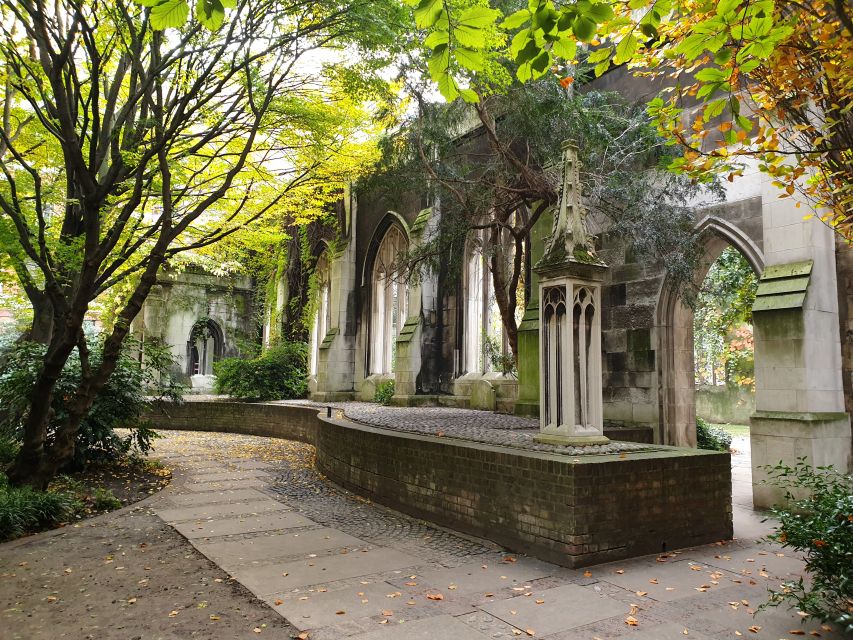
St Dunstan in the East Church Garden, a breather between big scenes
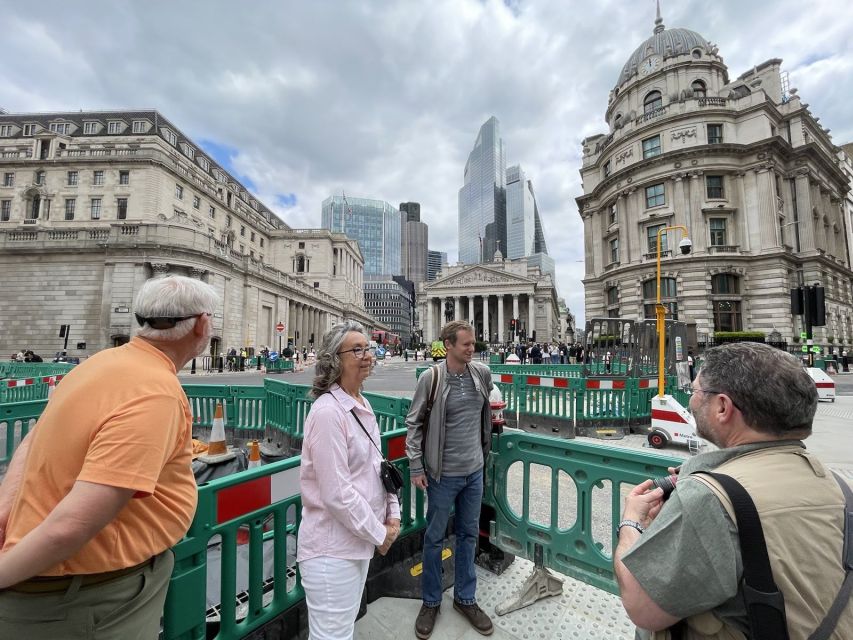
After the Tower, you reach St Dunstan in the East Church Garden. This part of the route is valuable because it gives your brain a rest. London’s biggest attractions can feel like constant motion, so this pause helps you process what you just heard.
You get a quieter setting that contrasts with the drama around the Tower. It is a smart pacing move. And it also helps you notice how the City isn’t only monuments and government. There are spaces where faith and community life have long existed, even through destruction and rebuilding.
Because the stop is brief, you will not leave with pages of architectural notes. But you will likely leave with a better sense of how the City’s layers survive side by side, even when the headlines are about war and fire.
The Monument to the Great Fire of London, why fire reshaped everything
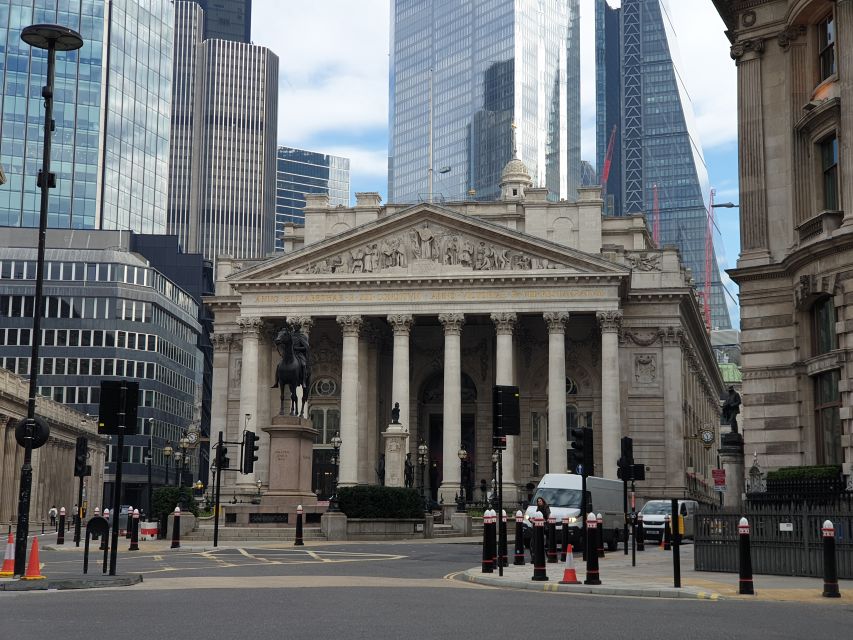
Then comes the Monument to the Great Fire of London, a site that signals a turning point for how London looks and works. Fire is not just a disaster story here. It becomes an architectural and urban planning force, and it helps explain why certain streets and rebuilding choices are what they are today.
What I like about this stop is the cause-and-effect angle. Once the guide links fire to the City’s later evolution, other sites start to feel less random. You understand why London repeatedly rebuilds, and why surviving traces from earlier centuries are often more limited than people assume.
If you are someone who likes to connect history to physical space, this is a standout moment. The Monument area becomes a narrative hinge, moving you from the older City into a later London that was shaped by crisis.
London Stone’s remaining part, civic identity in a small piece
At London Stone, you get a brief look at a remaining fragment of something that historically mattered a lot for the City’s identity. Even without deep museum context, a stop like this works because it is a reminder that civic symbols were once tangible objects you could point to.
This matters for understanding the City of London, because it is easy to treat the City like one big modern business district. But the City historically has had its own identity and governance. A symbol like London Stone helps explain how local civic culture formed.
The drawback is simple: this is not a long photo stop with a full interpretation. It is quick, five-ish minutes, designed to give you the meaning, not an all-day research session.
Bank of England vaults and the playful “tunnel” story
Then you reach the Bank of England, and here the tour turns a bit theatrical. You’ll hear about the easiest way to tunnel into the Bank of England’s vaults, which is obviously not a how-to, but a way of talking about security, secrecy, and the kind of power the institution represents.
I actually like this approach. It keeps you engaged in a part of London that can feel intimidating or boring if you only view it from the outside. By turning the subject into a story puzzle, the guide helps you pay attention to what the Bank symbolizes, while still keeping the experience fun.
Even with a fictional framing, you learn in a practical way how institutions maintain control and why finance became such a major part of London’s identity over time.
Guildhall’s Lord Mayor tradition, how governance outlasts regimes
Next up is Guildhall, London, and this is where the City’s civic machinery gets explained. The tour highlights the Lord Mayor position as an eight-century-old role, which gives you a striking contrast with the shorter reign cycles you hear about in royal history.
This stop is valuable because it expands your idea of power. The Tower shows authority through force and punishment. The Guildhall shows authority through governance, tradition, and civic continuity.
If you are the kind of traveler who enjoys institutions, you’ll likely find this more rewarding than you expect. It makes the City feel like a living system, not just a place where people work.
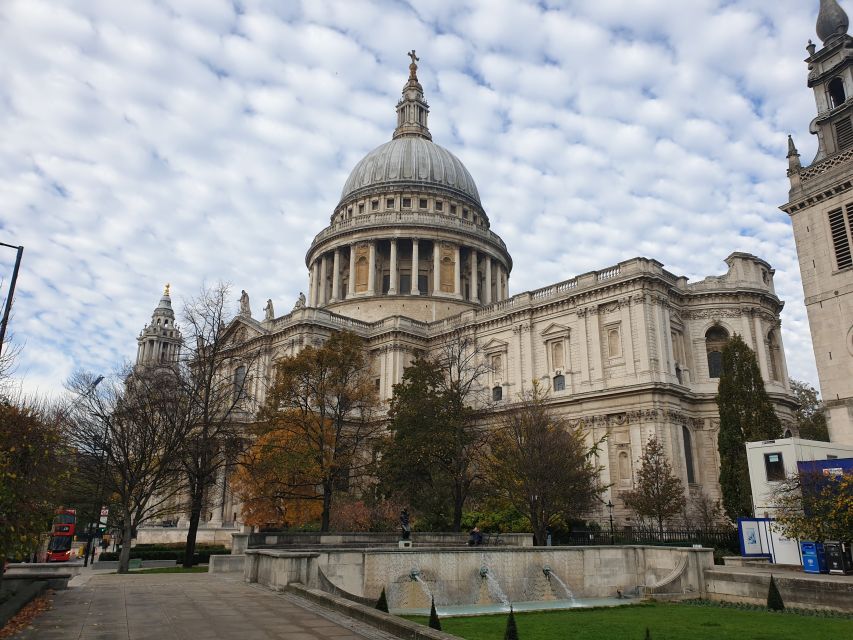
St Paul’s Cathedral, why this area became the stage for reinvention
Then you head toward St Paul’s Cathedral. Even if you have seen it in photos, standing near it during a walk like this changes how you understand it. The guide’s narration links the larger historical arc to the personalities and rebuilding mindset associated with figures like Christopher Wren.
This is where the story starts to feel like it has momentum. You move from Romans to medieval power to Tudor-era legends, then to fire and rebuilding, and you end up at one of London’s most famous symbols of restoration and design ambition.
The stop is short, so you should keep your expectations realistic. This tour is not a full cathedral guide. But it does enough to make you want to return and look more carefully, maybe even later on your own.
Ye Olde Cheshire Cheese finish, closing the loop with a very London setting
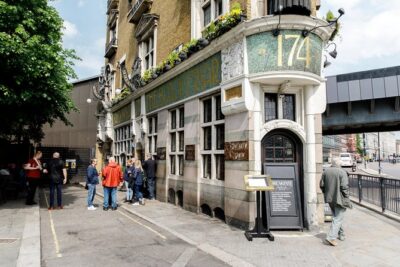
You end at Ye Olde Cheshire Cheese. It is a classic London finish point because it gives you a place to breathe and talk through what you just learned, while the setting itself hints at how long the area has functioned as a social hub.
For me, the best part of ending here is that it closes the loop between history and everyday life. You have walked through Roman traces, institutional power, royal drama, and city transformation. Then you finish in a place where people keep gathering, which is exactly what makes cities like London feel alive.
This is also practical: since the tour ends near Blackfriars Station, it is usually easier to move on to dinner or your next stop without adding another complicated transit step.
What to bring, how to pace yourself, and who this tour suits
Bring comfortable shoes. That’s the only strict requirement, but it matters, because the tour is around two and a half miles over roughly two hours.
Pacing is built into the experience, but you still stand and walk. If you are sensitive to frequent stops, it can help to remember that each major site gets only a short interpretation window. You are meant to move on and let your guide’s context do the heavy lifting.
Who will enjoy this most:
- First-time visitors who want a guided map of the City fast
- History fans who prefer street-level stories over museum-only visits
- People who like a clear, friendly guide style, with time for questions
- Travelers who want the story of London fire, power, and reinvention in one coherent walk
If you are the type who wants deep museum hours, this won’t replace those. But it is a strong way to decide what to prioritize next.
Should you book Roman Ruins to Blitz Bombings: London’s Fiery History?
If you want value, clarity, and a walk that connects landmarks to stories in a way you can actually remember, I think you should book it. Small group size, a smooth two-hour pace, and a guide style praised for clear delivery and humour make it feel less like school and more like a well-run stroll with a smart narrator.
It is also a smart booking when your time is limited. You get Roman traces, Tower of London drama, Great Fire context, City governance themes like the Lord Mayor, and a finish at a very London pub setting, all without museum tickets.
The only reason to skip is if you strongly prefer indoor exhibits, or you cannot comfortably walk about 2.5 miles. Otherwise, this is a fun way to see how London’s scary past and rebuilding chapters shaped the city you see today.
FAQ
Where does the walking tour start?
You meet at the exit of Tower Hill Station, spot your guide standing at the base of the steps leading up to the sundial, and look for the Historic London Tours sign.
How long is the tour, and how far do you walk?
The tour takes about two hours and covers about 2.5 miles on foot.
Where does the tour end?
It ends near Blackfriars Station, with the finish at Ye Olde Cheshire Cheese.
What’s included in the ticket price?
The ticket includes the walking tour and a local guide.
What is not included?
Entrance to museums is not included.
What language is the tour guide?
The tour is guided in English.
How big is the group?
Ticket sales are limited to fifteen attendees to help keep the experience enjoyable.
What should I bring?
Wear comfortable shoes, since it is a walking tour.
If you want, tell me your travel dates and your interests (Romans, Tudors, architecture, or British institutions), and I’ll suggest what to watch for during the walk and what to consider doing afterward.
Recently reviewed around London
- Bridgerton Tour in London★ 5.0 · 9 reviews
- Tour in Italian: Londra in un Giorno★ 4.9 · 20 reviews
- London in Spanish Privado: Lo Mejor de Londres en un día!★ 4.8 · 12 reviews
- Westminster and National Gallery 3.5-Hour Tour in Italian★ 4.9 · 28 reviews
- Top London Sights Tour – Christmas Day Special!★ 5.0 · 12 reviews
- Tour a Piedi di Harry Potter a Londra★ 5.0 · 20 reviews
- The Royal Express, 2.5 hour tour★ 5.0 · 6 reviews
- London: Royal Hampton Court Guided Tour with Afternoon Tea★ 5.0 · 67 reviews
Historical Tours, compared.

Royal Historic Pubs Walking Guided Tour in London
Read our review →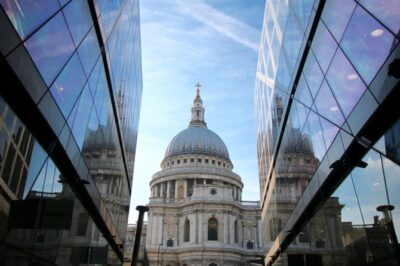
Private Group: Historical Pub Walking Tour of London
Read our review →

Browse the lists this tour appears in