
Reviewed · WALKING TOURS
London: Secrets of the London Underground Walking Tour
London’s Underground is one of those places you use every day, yet it can still surprise you. This tour turns the Tube from a commute into a story you can walk through, with haunted station lore and real engineering milestones. You start at Baker Street, right by Sherlock Holmes, and you move through history at a human pace, not a museum crawl.
What I like most is the focus on the Underground’s building and evolution, starting with an original station opened in 1863, and the way the guide makes the system’s changes feel practical and clear. I also love the wartime angle, including how the Tube was used during the Blitz and what it did for major institutions. If you get guides like John or Aaron, the vibe is fact heavy but not boring.
One catch to plan for: there’s moderate walking and lots of stairs in the Tube network, so it is not a good fit for wheelchair users or people with reduced mobility. Also, you are responsible for your own Tube travel card or Oyster card before you join.
Key things that make this tour worth your time
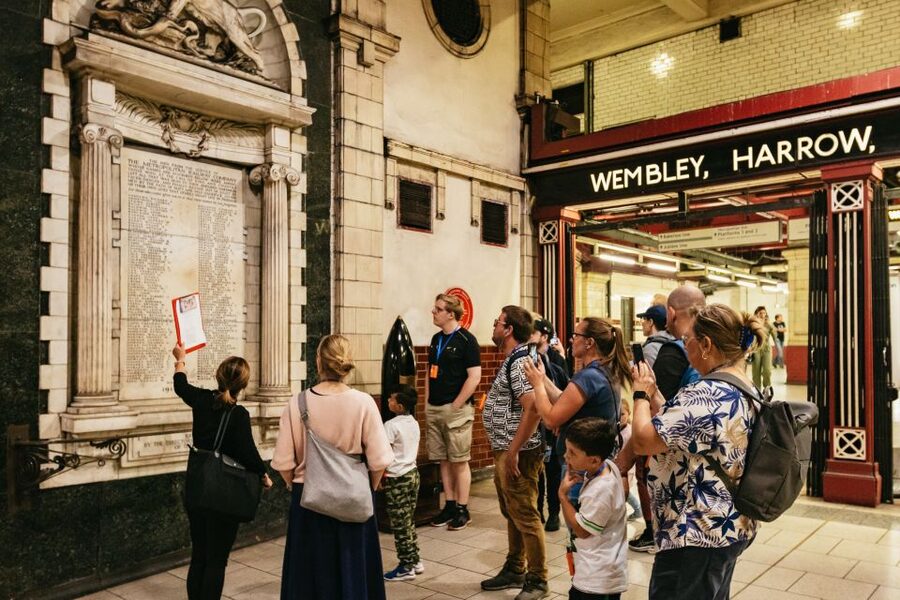
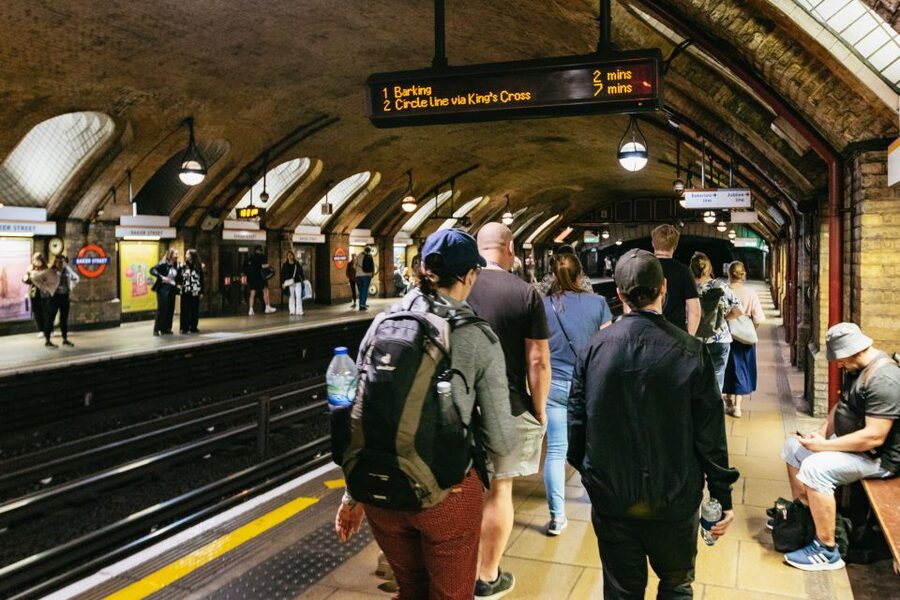
- Baker Street Station opened in 1863, anchored to the Metropolitan Railway, the world’s first underground railway
- Audio headset included, so you can actually hear the guide on busy platforms and along streets
- How steam gave way to electrified rails, plus clues about how early tunnels were built
- Why more than 40 stations were left abandoned, with context for what changed underground
- Blitz-era Underground repurposing, including refuge use, an aircraft factory, and British Museum storage
- Ghost-station stories tied to named legends, including a Pharaoh’s daughter and a nun
Baker Street to the Tube, where a commute becomes a walkable story
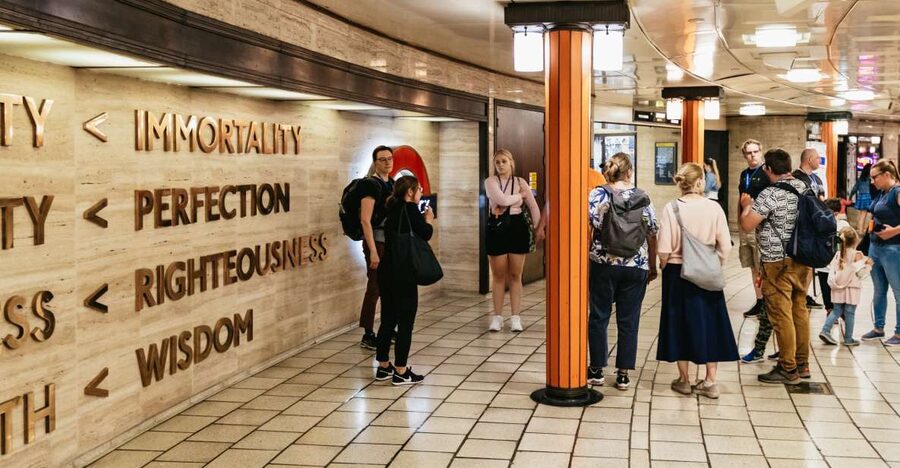
The best thing about this London Underground walking tour is that it treats the Tube like a living machine with a memory. You are not just hearing dates. You are learning why the system was built the way it was, and how different eras used it for very different jobs.
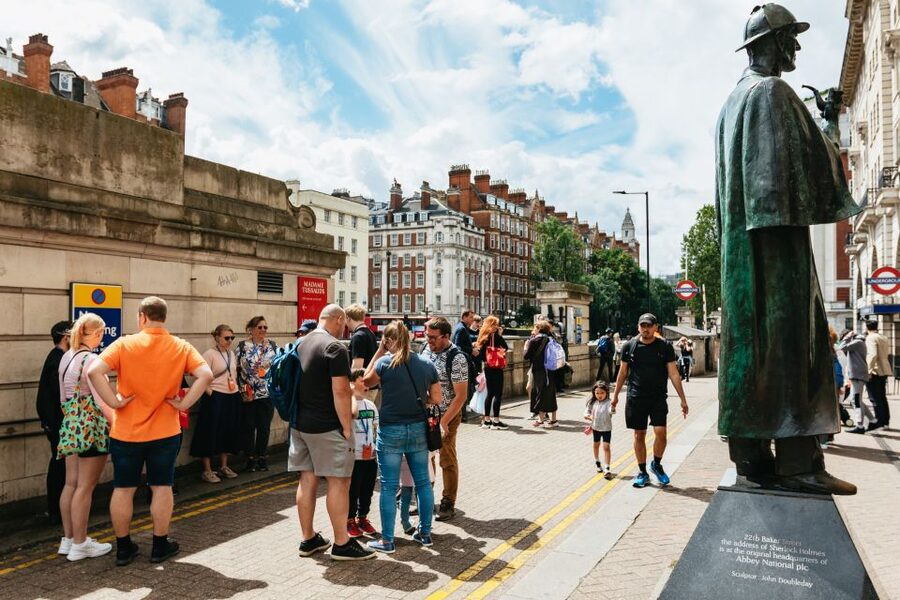
You begin at Baker Street Station, one of the original stops on the Metropolitan Railway. Meeting by the Sherlock Holmes statue outside Baker Street keeps things easy to find, especially if you are arriving from elsewhere in the city. You also get a photo stop right at the start, which is a nice way to orient yourself before the tour turns historical.
And yes, you’ll still be in London. You’ll mix street walking with short public transport time, so it feels like real travel, not a staged reenactment. The tour runs about 2.5 hours, which is enough time to learn a lot without draining your whole day.
More walking tours in London:
- Magical London: Harry Potter Guided Walking Tour
★ 4.7 · 22,044 reviews - London: The Original Jack the Ripper Walking Tour
★ 4.7 · 7,833 reviews - Tour for Muggles The Ultimate Harry Potter Walking Tour in London
★ 5.0 · 4,684 reviews
How the 1863 Baker Street stop sets the tone
This tour’s foundation is the fact that the Underground started with bold construction, not modern convenience. At Baker Street, you are at a station connected to the Underground’s earliest era, with the highlight that it opened in 1863. That early date matters because it explains why so much of the system feels “built under pressure,” from engineering challenges to expanding demand.
From there, the guide connects dots you might miss on your own. For example, you learn how trains evolved from steam-powered operation to electrified rails. That is not just trivia. It changes everything about what tunnels needed, how stations worked, and why later upgrades looked the way they did.
Even if you think you know the Tube pretty well, this part can reset your perspective. The network looks like a set of lines on a map, but the real story is physical: tracks, tunnel routes, station layouts, and constant adaptation.
Learning the Tube’s engineering, not just its branding
London’s Underground has two faces: the practical service side, and the visual side you recognize instantly. This tour touches both, including the famous roundel symbol and why it became such a powerful identity.
What I appreciate here is that the stories connect to how you would actually ride today. When you hear about how the very first tunnels were built, you start to understand why certain routes feel the way they do, and why some station designs look older or more complicated than you expect.
The route also gives you a chance to spot how the Underground has been layered over time. You are guided through the system’s evolution while moving between locations, so the talk stays attached to real places rather than floating in the air.
The abandoned-station and disused-platform stories, with a dose of reality
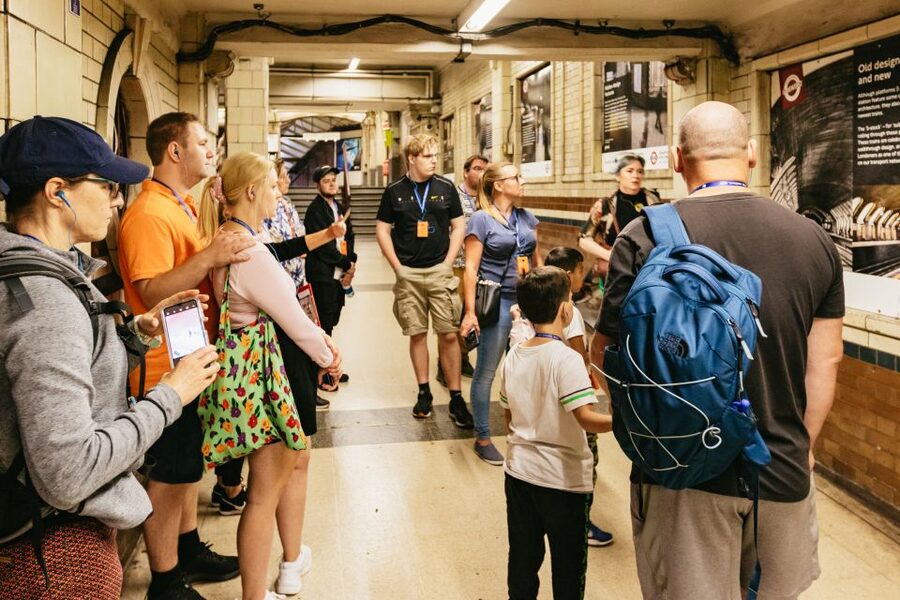
One of the most intriguing themes on this tour is what happened when parts of the Underground stopped being useful. You learn why more than 40 stations were left abandoned, and the logic behind those changes. That matters because abandonment is not just a grim footnote. It’s a clue about shifting travel patterns and infrastructure priorities.
The tour also includes haunted and disused station stories. Expect spooky rumors, like stations reputed to be haunted by the ghosts of a Pharaoh’s daughter and even a nun. I like this approach when it is handled with context, because it turns folklore into a reason to pay attention to what you see, rather than pretending every rumor is literal.
If your main goal is purely “behind the scenes,” keep your expectations balanced. This is not described as a full access pass into restricted disused tunnels. Still, hearing why certain spaces fell out of use, and how the Underground repurposed areas during different periods, gives the ghost stories weight.
A different sort of day out in London:
- From London: Harry Potter Warner Bros Studio Tour
★ 4.7 · 26,588 reviews - London: Madame Tussauds London
★ 4.6 · 20,915 reviews - Stonehenge, Windsor Castle, and Bath from London
★ 4.5 · 18,662 reviews - London: Warner Bros. Studio Tour with Transfers
★ 4.7 · 17,586 reviews
Wartime Underground: the Tube as shelter, factory, and storage
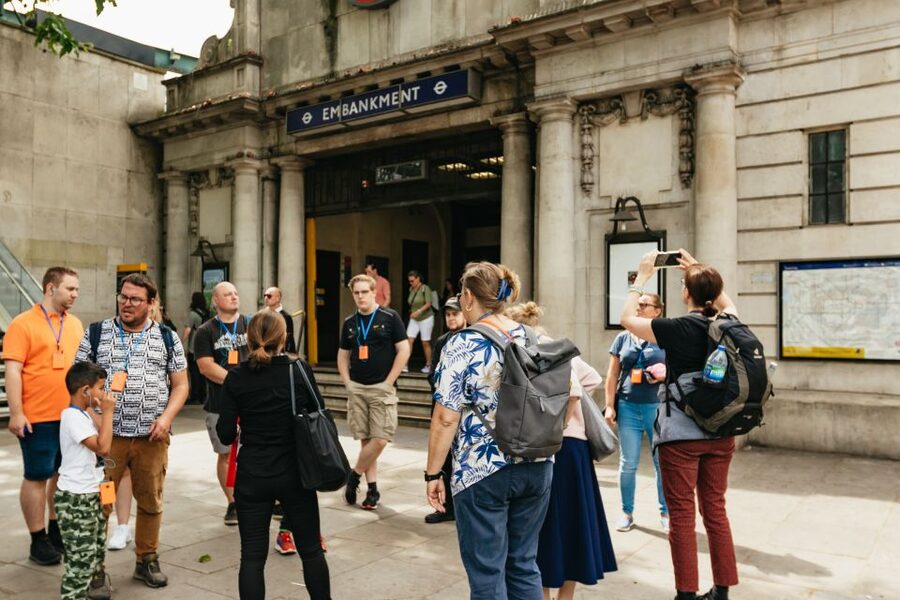
If you only care about one chapter of Tube history, make it the wartime one. This tour includes how the Tube was repurposed and used as a refuge during the Blitz. It also covers that it served as an aircraft factory and even storage for treasures of the British Museum.
That combination is what makes the Tube feel bigger than transportation. During crisis, the Underground became infrastructure for survival and production. You stop seeing it as just a way to get across town and start seeing it as a space that London could adapt fast.
The tour also mentions a station connected to remains of 1000 bodies. You will learn which station that is as part of the story, and it adds a serious tone to the tour’s darker elements. It’s the kind of detail that makes you look at a station and think about what used to happen there, long before modern crowds.
London Transport Museum stop: putting symbols and stories in reach
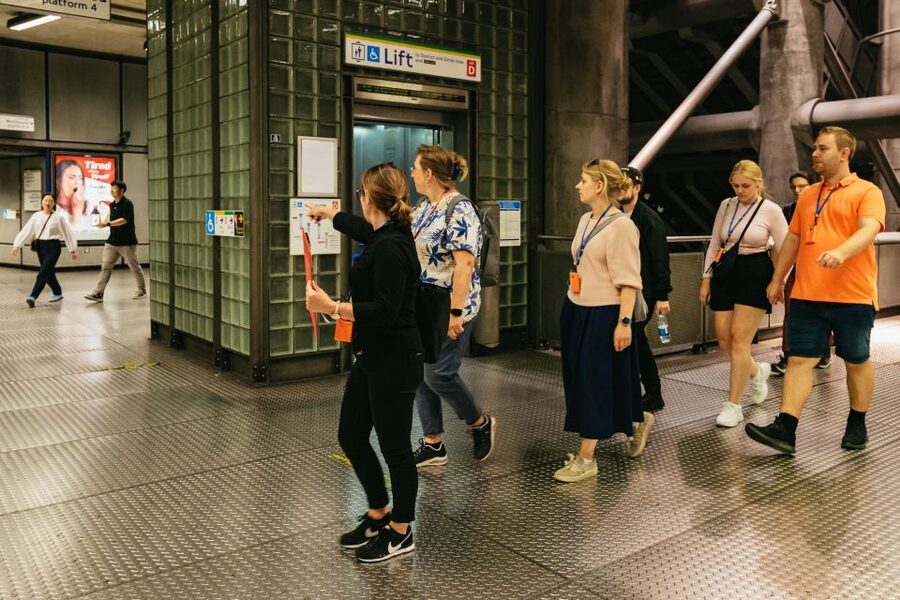
Midway through the experience, you visit the London Transport Museum. This is a smart move for the 2.5 hour format, because it gives your brain a place to “land” after the street-and-station walking.
The museum stop helps connect the Underground’s story to the way the system is represented, especially through design cues like the roundel symbol mentioned in the tour. You get a chance to see how London tells the story of transport, not just how the transport actually worked.
Even if you only skim, the museum visit can help you remember the key themes. It turns the tour from a series of spooky tales and engineering facts into a bigger picture you can carry with you.
Timing, pace, and what to plan for on the day
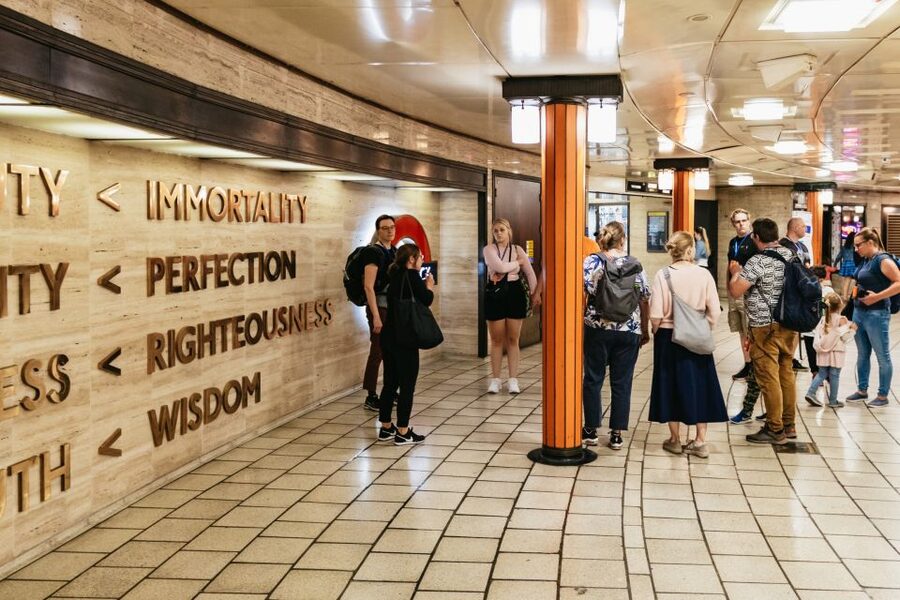
The tour is 2.5 hours total, with a manageable amount of walking and a short public transport segment around 10 minutes. That mix is good for comfort. You are not stuck walking nonstop, but you also are not sitting through most of it.
You’ll want to show up with the right transit access already handled. A specific heads up is that travel cards are required for this tour but are not included. You need to buy a day travel card for Zones 1 to 2 or use an Oyster card before you join. The tour does not include your Underground ticket.
What to bring is straightforward: bring your public transport ticket. What to leave behind is equally important. No baby strollers. No luggage or large bags. These restrictions matter because stations and streets get tight fast, and the tour is designed around group movement.
Who this Tube secrets walk is best for
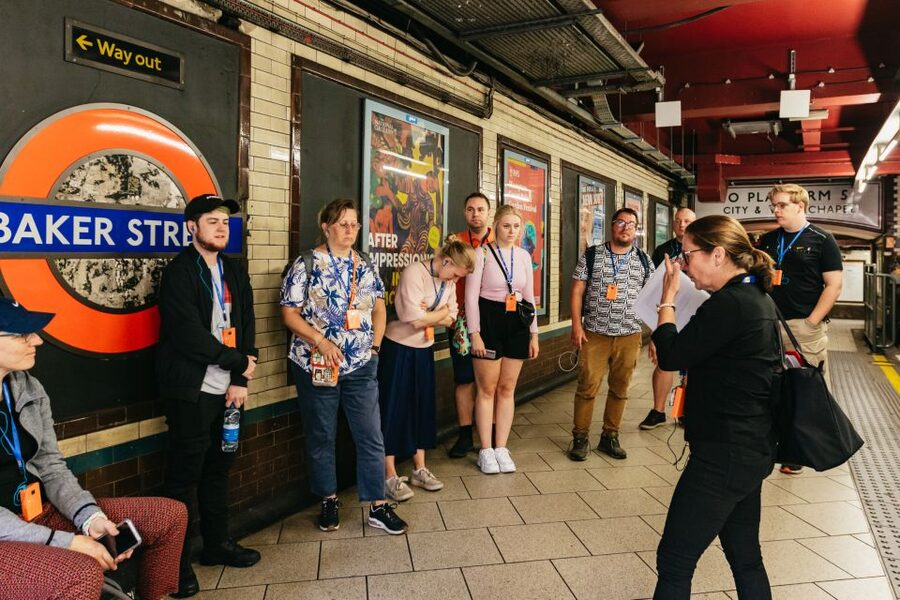
This tour is ideal if you like mixing practical city knowledge with oddball details. It works well for people who want more than “how do I get there,” and instead care about why London developed the Underground into the system you see today.
It’s also a strong choice for families who can handle walking and stairs. One review notes a guide who answered questions from an inquisitive son, and that energy often matches what this format needs. You do not have to be an expert on rail history to enjoy it. You just have to be curious.
If you use a wheelchair, or you need step-free access, skip it. The tour is not suitable for customers with reduced mobility, and the system involves steps. That limitation is not a minor note. It’s central to how the experience is described.
Price and value: is $40 a fair deal?
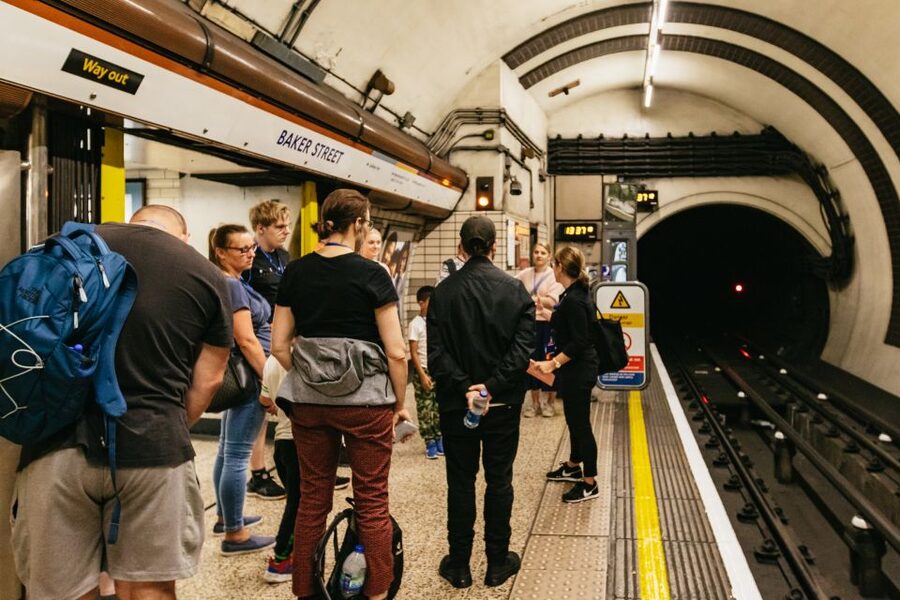
At $40 per person for 2.5 hours, the price can feel like a “normal tour” until you compare it to what is included. You get a tour guide and audio headset, which is valuable in a noisy Tube environment. The guide also handles the story flow, including engineering evolution, abandoned stations, and wartime repurposing.
The main cost you still need to factor in is transit access. The tour does not include your Underground ticket or Oyster or travel card. You also do not get food or drinks, so plan to eat before or after.
So is it value? For me, the best way to see it is this: you are paying for a guided history thread that you cannot easily recreate on your own in the same time. If you already plan to use the Tube a lot that day and you enjoy station-level storytelling, the $40 makes sense. If you are trying to keep the entire day very low cost, the extra travel card spend may change the math.
What makes the guides matter, and why it shows up in the experience
A big reason this type of tour works is delivery. The tour’s structure depends on the guide keeping the facts moving and the group together.
In the bookings shared, guides like John and Peter stand out for being very knowledgeable and entertaining, without rushing people through the story. Aaron and Angela are also mentioned for bringing details to life and staying readable with audio headset support, which matters when stations get loud. Nick is noted as nice and interesting, and Aran is praised for giving a tour packed with fun facts.
You should treat that as a hopeful indicator. Still, remember that any walking tour depends on meeting a guide who can match your pace and your interest level.
Should you book this London Underground Secrets tour?
Book it if you want Tube history that you can walk through in real places, and you like your city facts with a bit of spook and a lot of engineering. You’ll start at an 1863-linked station, learn how the Underground evolved from steam to electrified rails, hear why stations were abandoned, and get wartime stories about the Blitz, aircraft production, and British Museum treasures. The audio headset and guided pacing make it easier than trying to piece it all together alone.
Skip it if steps and mobility barriers are a problem for you, or if you hate walking and station stairs. Also skip or rethink if you are hoping for guaranteed entry into disused underground spaces, since the experience is framed as learning about haunted and disused stations rather than promising full access.
If your goal is a smart, story-driven afternoon that makes the Tube feel new again, this is the kind of tour that can do it in under three hours.
FAQ
Where do I meet the guide?
Meet the guide by the Sherlock Holmes statue outside Baker Street Station.
How long is the London Underground walking tour?
The tour lasts 2.5 hours.
What is the tour price?
The price is $40 per person.
What do I need to buy before the tour?
You need a travel card for Zones 1 to 2 or an Oyster card prior to joining the tour.
Is the Underground ticket included?
No. An Underground ticket or Oyster card is not included.
What is included in the tour price?
The tour includes a tour guide and an audio headset.
What is not included?
Not included are the Underground ticket or Oyster card, hotel pickup and drop-off, and food and drinks.
Is this tour suitable for wheelchair users or limited mobility?
No. It is not suitable for customers with reduced mobility, and wheelchair users are not suitable.
Can I bring a stroller or large bags?
No. Baby strollers and luggage or large bags are not allowed.
Is there free cancellation?
Yes. You can cancel up to 24 hours in advance for a full refund.
Recently reviewed around London
- Bridgerton Tour in London★ 5.0 · 9 reviews
- Tour in Italian: Londra in un Giorno★ 4.9 · 20 reviews
- London in Spanish Privado: Lo Mejor de Londres en un día!★ 4.8 · 12 reviews
- Westminster and National Gallery 3.5-Hour Tour in Italian★ 4.9 · 28 reviews
- Top London Sights Tour – Christmas Day Special!★ 5.0 · 12 reviews
- Tour a Piedi di Harry Potter a Londra★ 5.0 · 20 reviews
- The Royal Express, 2.5 hour tour★ 5.0 · 6 reviews
- London: Royal Hampton Court Guided Tour with Afternoon Tea★ 5.0 · 67 reviews
Walking Tours, compared.

Magical London: Harry Potter Guided Walking Tour
Read our review →

Oxford University Walking Tour With University Alumni Guide
Read our review →
Tour for Muggles The Ultimate Harry Potter Walking Tour in London
Read our review →
Oxford: University and City Walking Tour with Alumni Guide
Read our review →
Harry Potter Movies Walking Tour (Kids Go Free)
Read our review →
Cambridge University Walking Tour by Alumni™ Kings College Option
Read our review →Browse the lists this tour appears in