
Reviewed · LONDON
Burnings, Butchery & Black Death: London’s Bloody Past
London’s Smithfield area is one of those places where the present feels close to the past. This tour takes you through centuries of plague, public punishment, and the grim logistics of how a big city dealt with tragedy. It is not light sightseeing, but it is very human, and the setting makes the stories stick.
Two things I really like: the tour keeps a tight focus on real locations around Smithfield, and it brings the era to life with a guide who can mix facts, myths, and humour without losing the thread. You also get enough time in a small group that questions actually make it into the story.
One drawback to consider: it is built around the darker side of history. You’ll hear about executions and the disposal of Black Death corpses, so if you prefer upbeat, postcard London, you may find the tone heavy.
Key highlights you should care about
- Smithfield’s slaughter legacy, both animal and human, in the very streets where it happened
- Black Death disposal in the 1300s, explained through how the city handled thousands of bodies
- Middle Ages execution methods, tied to place, not just dates in a book
- Dickens and Oliver Twist, showing how the area’s reputation turned into literature
- Small group size (up to 15), which makes the pacing and questions feel personal
- A walking route of about 2 miles in 2 hours, from Barbican to near Farringdon/Ely Place
Walking the Smithfield Trail, Barbican to Ely Place
You start just outside Barbican Station on Aldersgate Street. The guide stands by the exit with a Historic London Tours sign, so you do not waste time hunting. The walk is about 2 miles total and takes around 2 hours, so it feels like a focused history sprint, not a half-day commitment.
What makes this route work is the shape of old London. You’re moving through the edges of the Smithfield story, where markets, hospitals, gates, and grim landmarks all cluster close together. Even if you’ve visited London before, this is a different map. Instead of “must-see sights,” you’re getting cause-and-effect history, where one era leaves marks that the next one repurposes.
Because the group is limited to 15 people, you get better flow. In a small group, the guide can pace to the crowd, answer questions without rushing, and keep the tone controlled. That matters here, since the content can turn unpleasant.
Other London bookings people compare this one against:
- From London: Harry Potter Warner Bros Studio Tour
★ 4.7 · 26,588 reviews - Magical London: Harry Potter Guided Walking Tour
★ 4.7 · 22,044 reviews - London: Madame Tussauds London
★ 4.6 · 20,915 reviews
Charterhouse Square to Smithfield Market: where London’s violence and trade meet
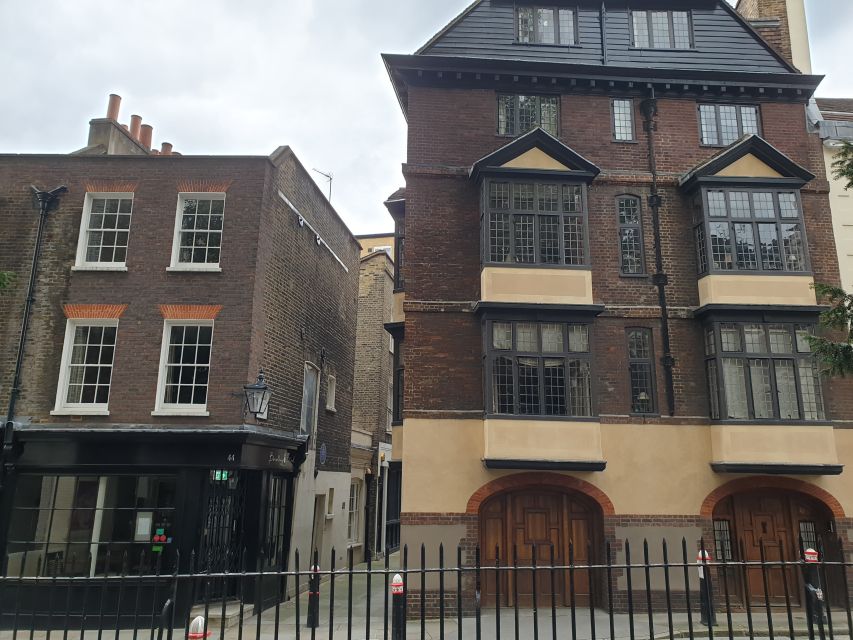
Your first quick stop is Charterhouse Square. It acts like a launch pad, setting context before you move into the Smithfield zone. This is where you start connecting why the area mattered, not just that it was “important” in vague terms.
Then comes Smithfield Market. This is the core of the tour’s theme: Smithfield as a site of slaughter for centuries, for animals and for humans. Standing in the vicinity helps you understand how routine violence can become infrastructure. Markets needed goods. Cities needed order. And public punishment was used to send messages to everyone watching.
You’ll also hear how the city dealt with mass death during the 1300s, when the Black Death hit London hard. The tour explains how London disposed of tens of thousands of corpses. That detail is sobering, but it is also practical history. It answers the question you might not know to ask: where did the bodies go, and what did authorities do when normal systems failed?
One small note: Smithfield is also a working area. You may still see modern London activity between the historical points, which can make the contrast feel even sharper.
St John’s Gate, Cloth Fair, and the streets that shaped reputations
As you continue, you pass through the orbit of St John’s Gate and Cloth Fair. These stops matter because the tour doesn’t treat history as a single dramatic moment. It shows how an area’s reputation can change over time, and how that reputation then becomes a story that others retell.
Cloth Fair connects to the idea of commerce and industry moving through the same corridors as punishment and poverty. The tour uses these transitions well. You get a clearer sense of how people lived next to the machinery of the city, even when that machinery included cruelty.
St John’s Gate helps you shift from “what happened” to “why the space mattered.” It’s the kind of stop where the guide can explain how city planning, access points, and institutional presence shaped who ended up where, and when.
If you like history that feels grounded in real streets, this part delivers. If you want a pure museum-style timeline, you might find the walking segments feel more narrative than linear. Still, the flow makes sense for the topic.
St Bartholomew the Great: turning stories into place-based history
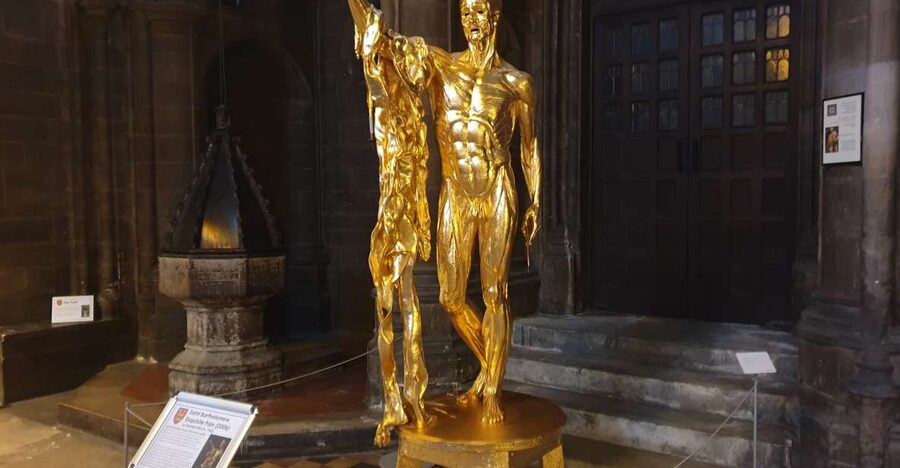
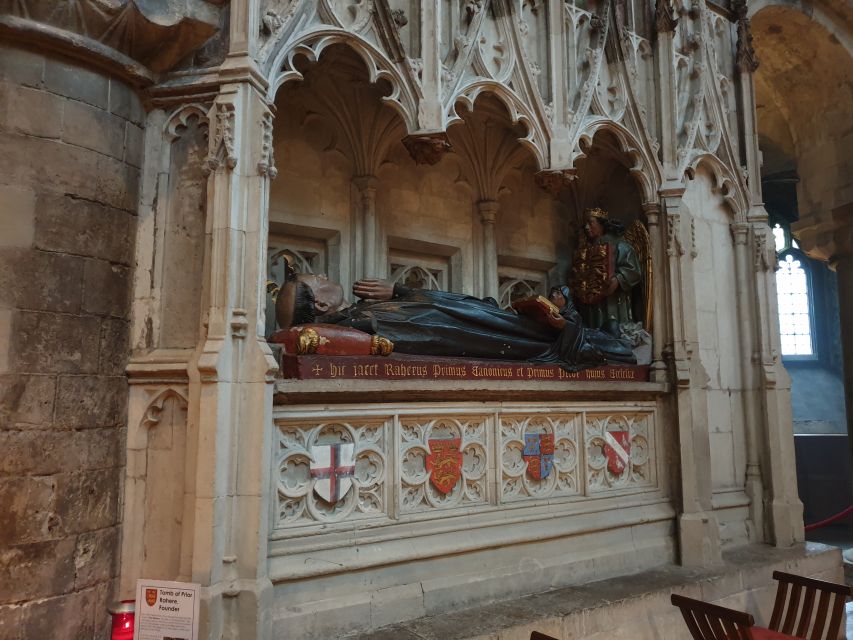
Next you visit St Bartholomew the Great. Churches are a key part of how London kept continuity. Even when institutions changed, the buildings and their locations kept pulling the past into the present.
The tour includes entry to churches, as long as there are no services in progress. That can affect timing slightly, but it also helps you experience the sites rather than just point at them from outside. On a tour like this, stepping inside even briefly can shift your mood, and it gives the history a different weight.
This stop also supports the bigger story: London’s violence and plague response did not happen in a vacuum. People sought care, prayed, buried, and rebuilt. You start to see the contrast between the city’s spiritual and civic layers.
A different sort of day out in London:
- Stonehenge, Windsor Castle, and Bath from London
★ 4.5 · 18,662 reviews - London: Warner Bros. Studio Tour with Transfers
★ 4.7 · 17,586 reviews - London: Tower Bridge Entry Ticket
★ 4.7 · 15,560 reviews - London Big Bus Hop-On Hop-Off Tour with Optional River Cruise
★ 3.5 · 10,803 reviews
Sir William Wallace Memorial: Braveheart, the facts, and the grim reality
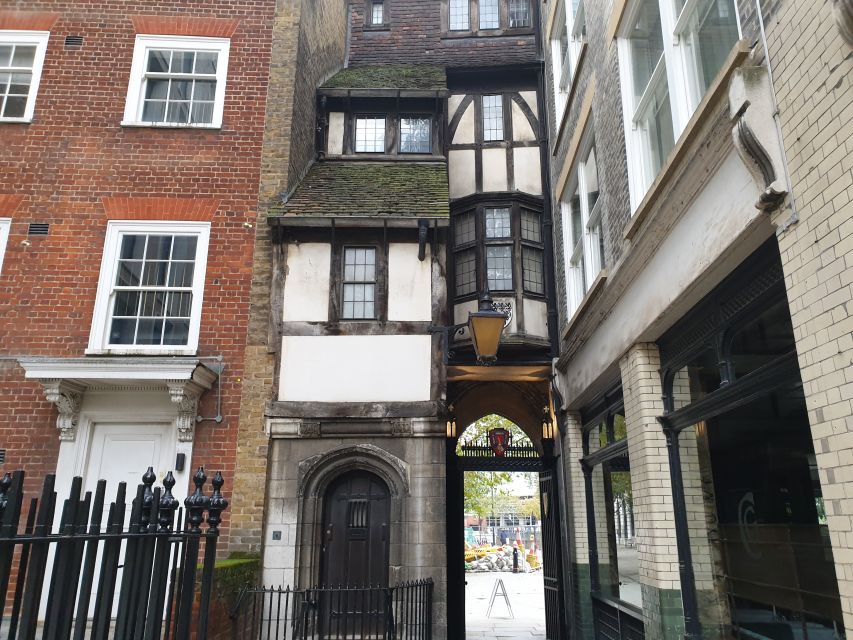
At some point you reach the Sir William Wallace Memorial. This is where the tour brings in William Wallace, the figure often linked to Braveheart. The guide focuses on the reality of his execution, including how his condition was far from the movie version of a heroic shout.
This part is useful even if you already know the popular legend. It’s a reminder that public execution in medieval times was not just punishment. It was theatre. And the point of the memorial stop is to show how later storytelling grabbed an older reality and reshaped it for modern audiences.
If you’re a film fan, you’ll likely enjoy the contrast. If you’re not, you’ll still benefit, because the tour uses Wallace as a bridge into the methods and purpose of executions in the Middle Ages.
St Bartholomew’s Hospital and Ely Place: institutions that grew from crisis
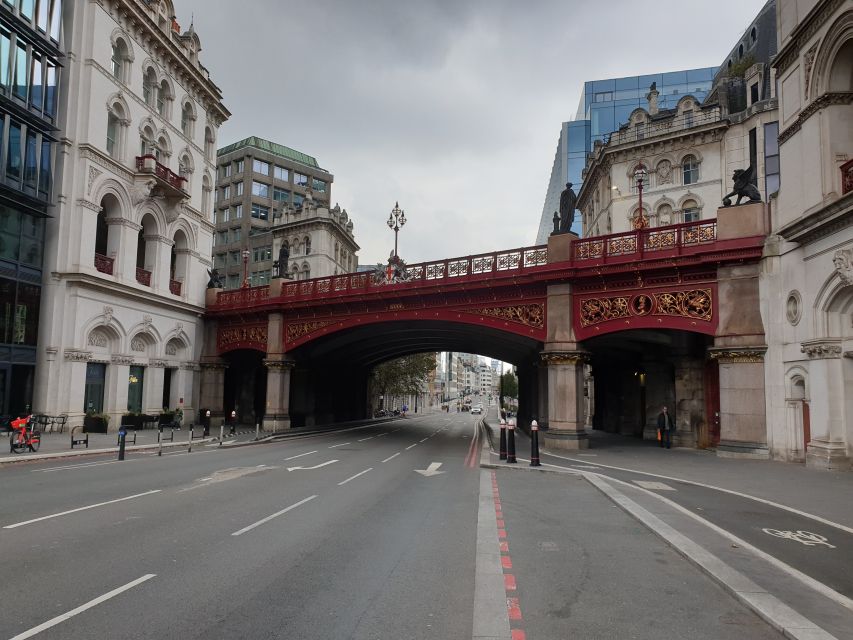
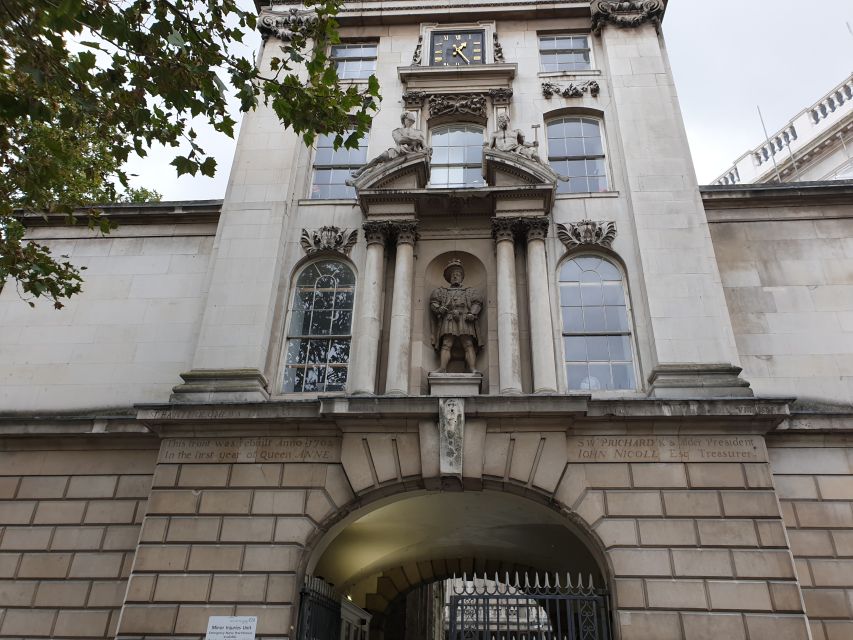
You then move to St Bartholomew’s Hospital. Hospitals are one of the clearest ways to see how a city responds to repeated crises. You can’t miss the institutional question at the heart of this tour: after plague and mass death, what systems do people build or strengthen?
Again, you do not just get a quick mention. The guide ties this stop back to the broader narrative, so it feels like part of one story instead of isolated “cool buildings.”
The tour finishes near Ely Place. Ending there keeps the walk in a practical zone near major transport. More importantly, it feels like a natural closing point to the route, where you’ve moved from market and punishment zones into the layers of civic life.
The pacing is also worth noting. The tour hits its stops without feeling like you’re rushing every two minutes. For a topic this heavy, that matters. You have time to absorb, then carry it to the next landmark.
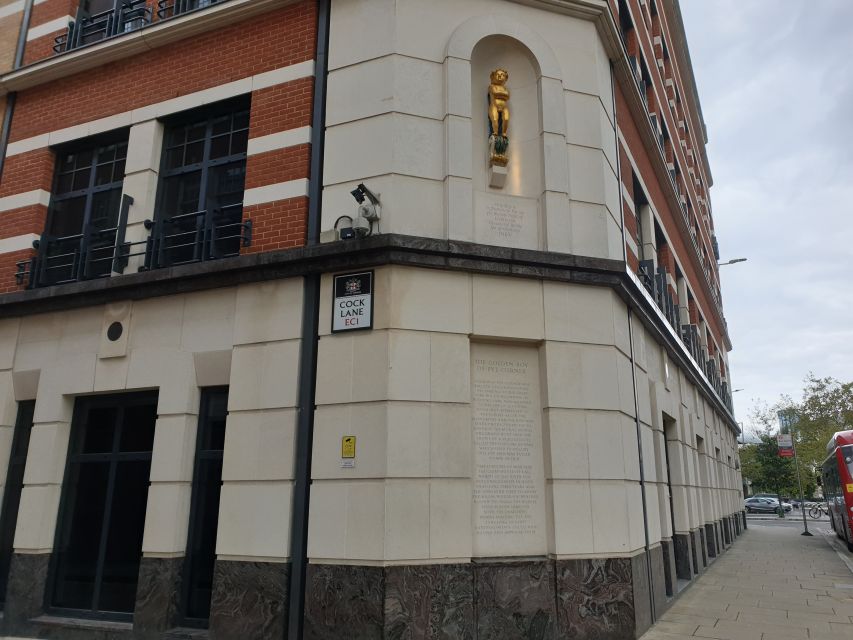
The Golden Boy of Pye Corner and the Dickens connection
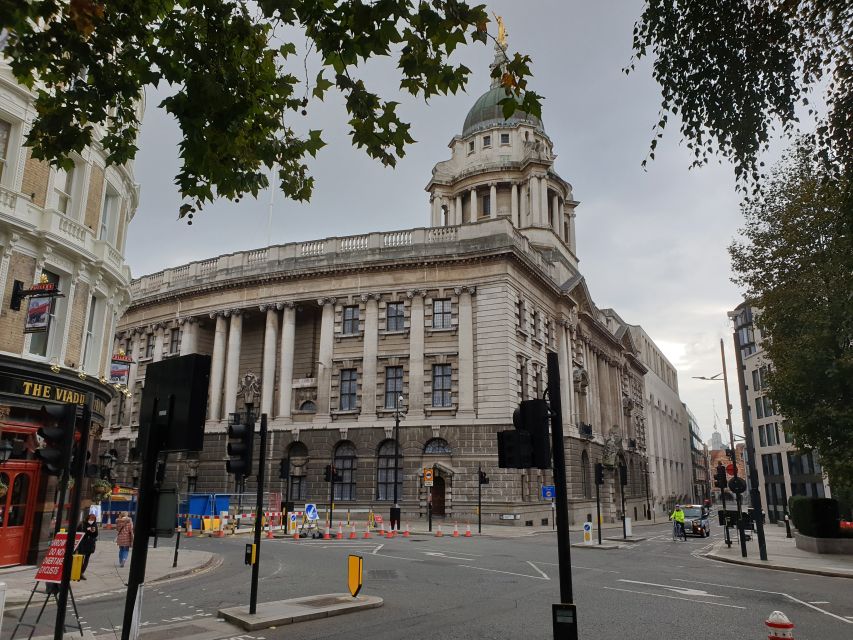
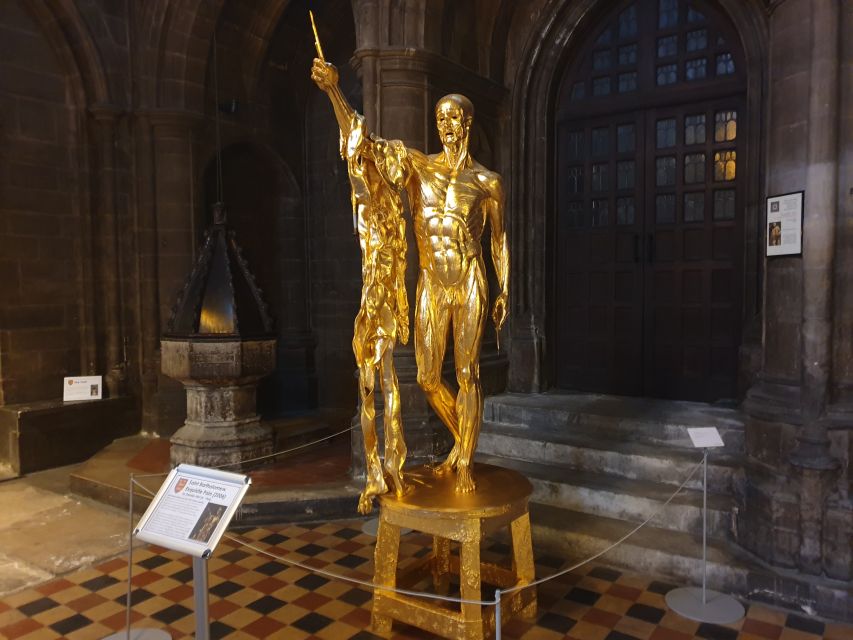
One of the most memorable stops is the Golden Boy of Pye Corner. This is where the tour leans into symbolism, guilt, fear, and the way London tried to mark tragedy in public. The guide uses the site to connect the plague era to later memory, including how the city’s darkest corners became story material.
Then you hear how the area became a notorious slum, memorialised by Charles Dickens in Oliver Twist. This is where the tour earns its literary thread. It shows how places gain reputations over time, and how authors borrow the mood of a neighbourhood to make fiction feel believable.
If you’ve read parts of Oliver Twist, this will sharpen your imagination. If you haven’t, you’ll still understand what the tour is doing: it explains why Smithfield and its surroundings became shorthand for poverty, danger, and desperation.
This part can feel emotional, but it is also empowering in a practical way. You walk away understanding how a city builds cultural memory, not just how it suffers.
London Central Markets and Smithfield Market again: seeing the same area through different eras
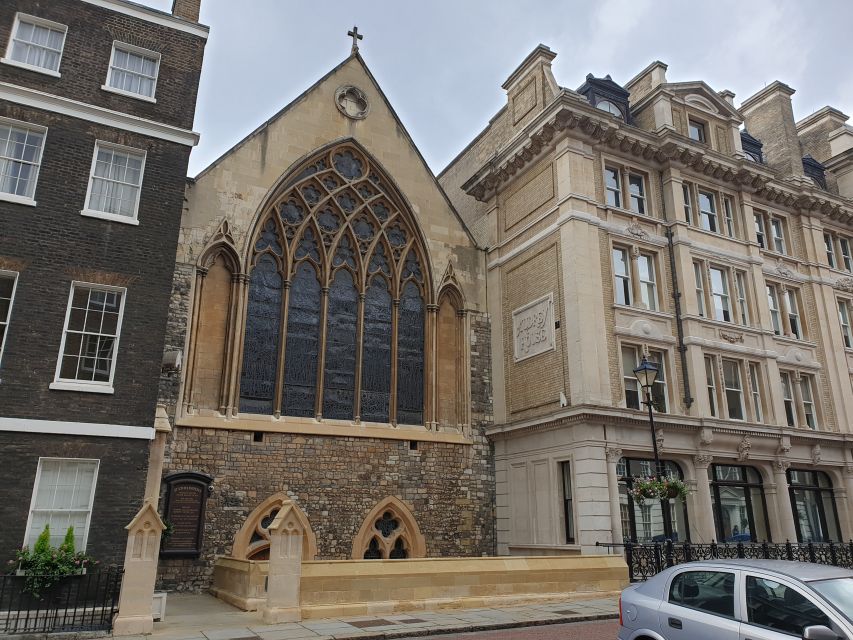
You’ll also spend time around London Central Markets (in the Smithfield area). The repeat focus is actually a strength. You see the same general zone through different lenses, plague logistics, public punishment, and later slum reputation.
Modern markets can make the older story harder to picture, but the guide handles that by keeping you anchored. Instead of asking you to guess what used to stand where, you get explanations that give you a mental map.
This is also where the tour’s “small group” advantage shows. In a larger group, people tune out or get swept along. In a group of up to 15, you can ask about what you’re seeing right now, like the sense of space and the way street layouts guide movement.
The guide experience: entertainment that stays on topic
The biggest consistent praise is about the guide. You get a live English-speaking guide, and the style is fluent, entertaining, and very good at blending historical facts with myths and humour. Timing also seems to land well, with enough structure to keep the walk moving but not so rigid that you feel shut out.
I also like that the tour encourages questions. You’re not just following a script. You can ask the “wait, how exactly did they do that?” questions, and the guide has room to answer.
One more practical detail from real experience: guides on this route are attentive to different group needs. If you’re with older family members, this kind of paced 2-mile walk usually feels manageable as long as everyone can handle city sidewalks.
Price and value: $26 for 2 hours of real London storytelling
At $26 per person for a 2-hour walking tour, this sits in the “serious value” zone. You’re not paying for a museum ticket, you’re paying for someone to translate a complicated, sometimes grim past into something you can actually picture while you walk.
Here’s what you get for that price, in plain terms:
- A focused route built around Smithfield’s key sites
- Entry to churches when they are not holding services
- A live English guide
- A capped group size of 15 for better pacing
If you’re the kind of traveller who likes thematic tours, this is a strong match. If you prefer self-guided history with zero scary bits, you might want to pick a lighter route. But if you can handle heavy subject matter, you’ll likely feel like you got a lot of story per mile.
Who should book, and who might want to skip it
You should book this tour if you:
- Like walking tours that explain how cities worked, not just pretty landmarks
- Want Black Death and medieval execution history tied to actual places
- Enjoy literature connections, especially Dickens and Oliver Twist
- Appreciate humour that helps the story move without turning it into a comedy
You might want to skip it if:
- You want a kid-friendly outing, since it is not suitable for children under 13
- You dislike graphic or grim historical topics
- You only want cheerful “London highlights” and minimal darkness
FAQ
FAQ
How long is the tour?
The tour runs for about 2 hours.
How far do you walk?
The total distance walked is about 2 miles.
Where does the tour start?
Meet just outside Barbican Station on Aldersgate Street. Your guide will be standing there with an Historic London Tours sign.
Where does the tour end?
The tour ends near Ely Place.
What is the price per person?
The price is listed as $26 per person.
Is there a limit on group size?
Yes. Ticket sales are limited to fifteen attendees.
Is the tour family-friendly?
No. It is not suitable for children under 13.
Are churches included?
Entry to churches is included, subject to there being no services in progress.
What language is the tour guide?
The tour guide is live in English.
What if there is a service in a church during the stop?
Churches along the route may be visited if they are not holding services, so entry can depend on what’s happening at the time.
Should you book this bloody Smithfield past?
I think you should book if you like history you can walk through and you want it connected to Smithfield’s specific landmarks, not abstract dates. The small group size and the consistently praised guide style, fluent and entertaining with humour and good pacing, make this feel like a proper experience rather than a rushed lecture.
If the idea of plague disposal and medieval execution methods makes you queasy, you might choose a lighter theme. But if you can handle darker stories, this tour is one of the most focused, place-based ways to understand how London became the city it is today.
Recently reviewed around London
- Bridgerton Tour in London★ 5.0 · 9 reviews
- Tour in Italian: Londra in un Giorno★ 4.9 · 20 reviews
- London in Spanish Privado: Lo Mejor de Londres en un día!★ 4.8 · 12 reviews
- Westminster and National Gallery 3.5-Hour Tour in Italian★ 4.9 · 28 reviews
- Top London Sights Tour – Christmas Day Special!★ 5.0 · 12 reviews
- Tour a Piedi di Harry Potter a Londra★ 5.0 · 20 reviews
- London: Royal Hampton Court Guided Tour with Afternoon Tea★ 5.0 · 67 reviews
- London: Full Day Tower, St. Paul’s, Cruise & Eye Experience★ 4.6 · 168 reviews