
Reviewed · OXFORD TOURS
Oxford: History of Medicine Tour – by Uncomfortable Oxford™
Oxford’s medicine story is interesting because it is not just about discoveries. It is about power, blame, fear, and who gets protected when disease hits. You walk past Oxford’s real buildings while the guide connects them to the hard questions medicine has always faced, like public health vs individual rights and who was left out.
I like the tour’s focus on medical ethics and inequities instead of a shiny list of famous doctors. I also appreciate that the guide is a university researcher with performance training, so the talk feels lively rather than like a classroom lecture. One drawback to consider is that if you mainly want to see specific famous medicine stops (like a quick hit of well known penicillin sites), this tour leans more toward discussion than sightseeing, and it can feel more talk-heavy in cold rain.
Key highlights you will feel on the walk
- A guided, building-based story of disease in medieval Oxford, with modern parallels
- Anatomy and dissection in Oxford’s academic world, presented with the ethical tension it caused
- A frank look at public health policy, including resistance and concerns about rights
- Penicillin-era medical trial themes, shown as part of medicine’s messy progress, not a clean timeline
- University trained guides from Uncomfortable Oxford, combining research with storytelling and performance
Why Oxford Medicine Gets Uncomfortable, and Why That Matters

This is a 90-minute walk where the subject is naturally uncomfortable: plagues, anatomy, and the human cost of controlling bodies. What makes it worth your time is the way the guide treats medical history as something still active in the present. You are not just hearing about the past. You are learning how decisions about health have always been shaped by class, race, gender, and empire.
The tour is also built around a key idea: history does not move in a straight line. Medicine advances, then hesitates, then repeats old mistakes in new forms. The guide frames Oxford’s medical story as a conversation, not a single heroic arc. That approach can make you think on the way, not just during the walk.
At the same time, you should know what you are signing up for. Some people come hoping for a mostly site based route tied to famous medicine locations. If that is you, keep expectations realistic. This tour uses the built environment to talk big ideas, so you may spend more time listening than pointing at plaques.
More Oxford tours:
- Oxford University Walking Tour With University Alumni Guide
★ 5.0 · 6,905 reviews - London: Full-Day Windsor, Stonehenge, and Oxford Tour
★ 4.4 · 5,368 reviews - Windsor Castle, Stonehenge, and Oxford Day Trip from London
★ 4.5 · 5,292 reviews
Your 90 minute route, from Hertford Bridge to St Luke’s Chapel
The tour covers about 2 km and typically moves at a steady pace. Expect short walks between stops, around 15 minutes each in the usual flow, with places to sit along the way. It runs in all weather, so you should dress for Oxford rain, wind, and sudden cold snaps.
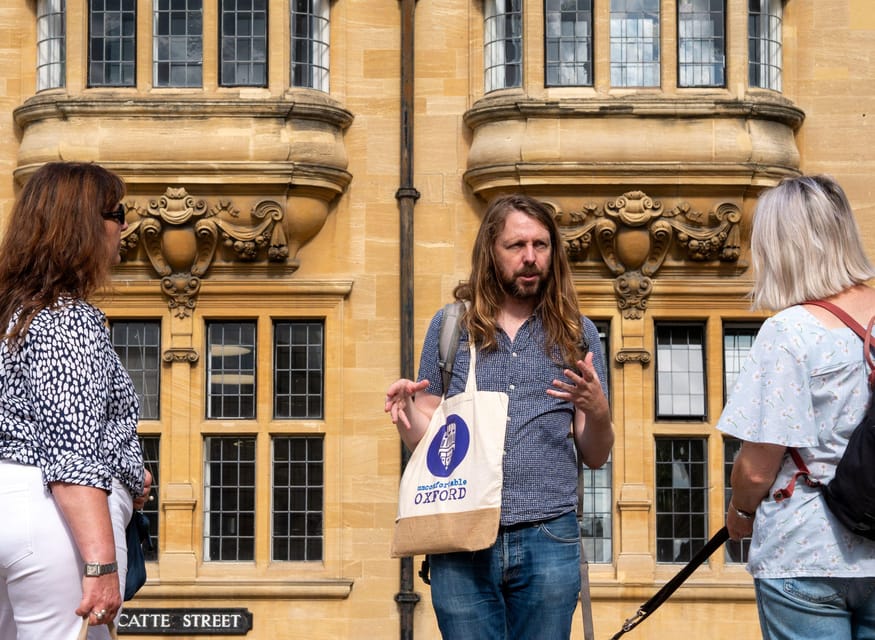
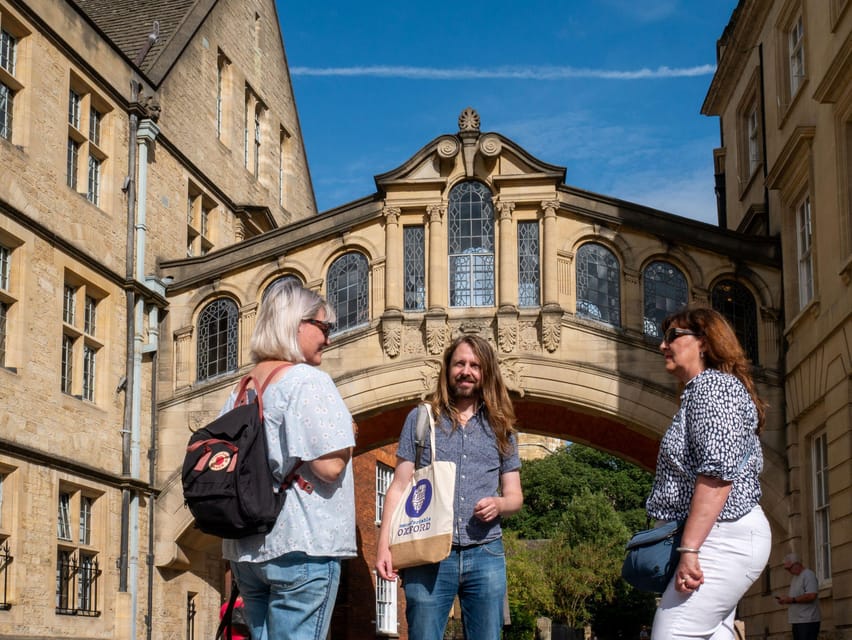
One practical tip: plan to arrive a few minutes early. You meet your guide at the Bridge of Sighs, also called Hertford Bridge, and the guide will be wearing a bright blue vest and carrying an Uncomfortable Oxford tote bag. That makes it easier to find each other quickly, which matters on busy streets.
Also, this is a walk that stays outside. It does not go inside any colleges or libraries. If you were hoping for interior access, this is not that type of tour.
Bridge of Sighs, the setting for disease anxiety and control
You start under Hertford Bridge, and the guide immediately sets the tone: medicine as social power, not just science. From the outside, Oxford looks like stone and scholarship. The tour asks a sharper question, how did communities try to control outbreaks using the spaces they already had?
This first stop matters because it primes you for the rest of the walk. You learn to look at the city as a kind of map of health. Where people lived, studied, worked, or were quarantined becomes part of the story. The guide also emphasizes resistance to public health measures, which is a theme that will show up again later when the tour talks about rights and ethics.
Drawback to keep in mind: the start is outdoors and exposed. If it is raining, bring a water bottle and wear a layer you can move in. The guide will keep things organized, but you will still be walking and listening in real weather.
New College, a University city where bodies and rules collide
At New College, the tour shifts from the feeling of control to the structure behind it. Oxford’s medical history is tied to how a university thinks, funds research, trains practitioners, and enforces norms. Even when the topic is not medicine specifically, the university environment helps explain why medicine in Oxford could become both advanced and ethically strained.
This is where you start hearing about anatomy and how the university studied the body. The key point is not only that anatomy was studied, but that the methods created tension. Dissection and anatomy teaching raised questions that still echo today: Who has the right to use a body for learning? Who decides what is acceptable? Who bears the risk?
If you like your history with real ethical friction, you will probably enjoy this part. The tour does not sugarcoat it, and it ties the debate to the idea of public need versus individual consent.
More history tours in Oxford:
- Oxford: Private City Tour & University Historical Highlights
★ 4.9 · 14 reviews - Oxford: Historic Pubs & Taverns Guided Walking Tour
★ 4.6 · 5 reviews - London Small Group Tour of Historical Pubs
★ 5.0 · 10,422 reviews - Soho Music & Historic Pubs Tour
★ 5.0 · 1,993 reviews
Bodleian Quadrangle, studying knowledge while questioning who benefits

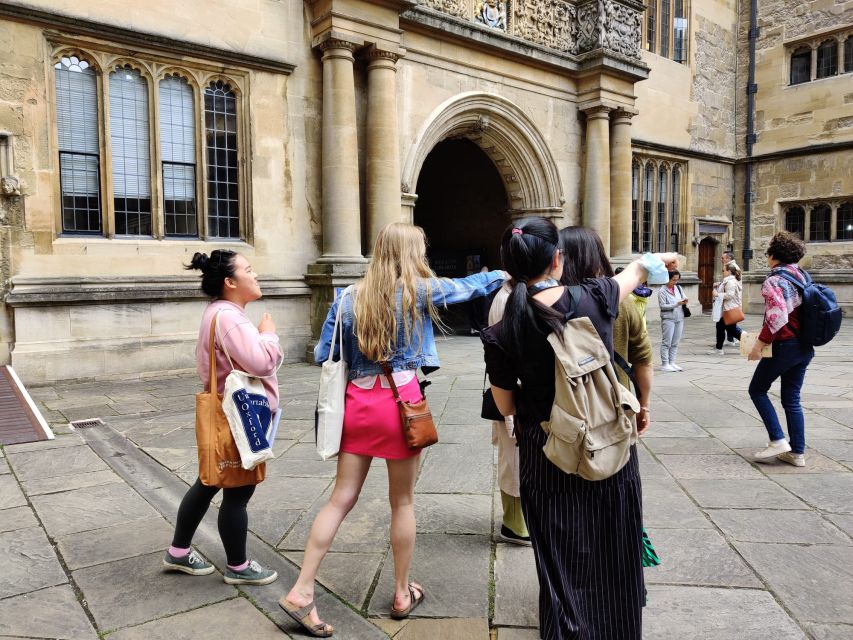
Next you move through the Bodleian Quadrangle area, where the guide connects learning spaces to the history of medical knowledge. The talk here tends to land on how health knowledge was gathered and justified. The university building backdrop helps you understand how research authority can shape public policy.
You will also hear about why medicine does not always treat everyone equally. The tour highlights how stories of medicine connect to empire, race, class, and gender, and how those forces influenced access to care and who counted as deserving protection.
This stop is also useful because it changes how you look at Oxford’s scholarly reputation. Instead of treating the Bodleian area as only “the library vibe,” you learn to see it as part of a broader system where knowledge, governance, and ethics intersect.
If you are expecting a quiet museum-like approach, you might find this section more argumentative than you want. But that is the point of Uncomfortable Oxford: medicine history is not meant to be comfortable.
Clarendon Building, public authority, medical ethics, and the cost of progress
At the Clarendon Building, the tour leans into the tension between public health and individual rights. This is where the guide’s theme becomes clear: when disease spreads, governments and institutions respond fast, sometimes at the expense of personal freedoms.
You will hear about resistance to public health policies. You will also hear why people pushed back, whether those policies were designed to help or designed to control. The tour treats this as a long running debate, not a modern misunderstanding.
This stop is a good example of what makes the tour practical. It gives you historical context for arguments you might already have heard in current public health discussions. You leave with a sense that the conflict is not new, it just changes its language over time.
Oxford University Museum of Natural History, from observation to medical trials
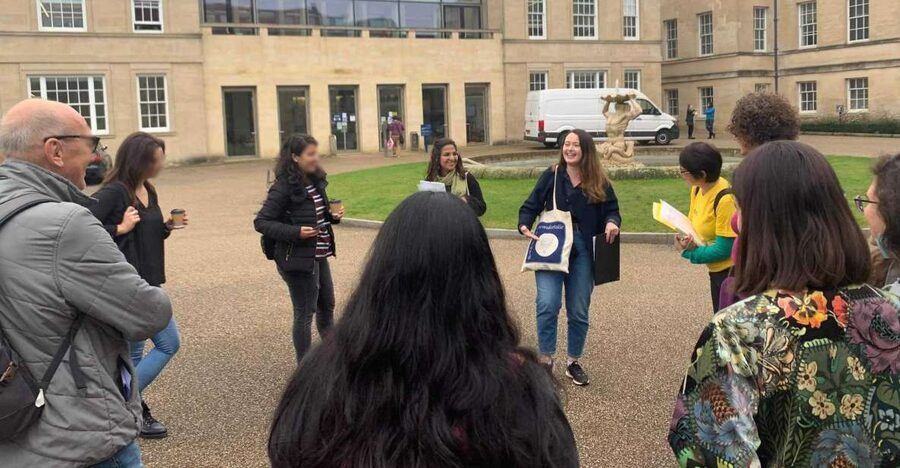
The Oxford University Museum of Natural History stop helps connect the study of nature to the study of disease. Even without going inside, the guide uses the setting to talk about how observation turned into medical experimentation.
This part also points toward the penicillin era, presented as part of the messy reality of medical progress. The guide’s framing is that breakthroughs arrive through complicated systems, not clean hero stories. Trials, ethics, and who gets access all matter.
Why this stop earns its place on the route is simple: it bridges the emotional discomfort of earlier plague stories with the hope people associate with antibiotics. You get both, and you do not let the hope erase the ethical questions.
You should still expect a lot of walking and standing here. If your legs tire easily, use any sitting opportunities the guide offers. The route is only about 2 km, but Oxford sidewalks can feel longer than they look.
War Memorial Garden, where you sense stakes without being asked to forget
The War Memorial Garden gives the tour a tonal shift. Even if you do not get a long lecture about a single conflict, the setting supports the idea that medical progress is tied to human stakes. War and disease have long intertwined, and medicine often accelerates when societies feel urgency.
What I like about this stop is that it helps you hold two truths at once. Medicine can save lives, and it can still cause harm through inequality, coercion, or biased assumptions. The guide keeps steering the conversation back to ethics and who gets protected.
One consideration: this stop can feel more reflective than informational, so if you like data heavy storytelling only, you may want to listen for the concrete themes the guide ties here to the rest of the tour.
Radcliffe Observatory Quarter and St Luke’s Chapel, the long view on disease
In the Radcliffe Observatory Quarter area, the tour broadens its lens. Oxford’s medical history becomes less about one outbreak and more about how people repeatedly tried to measure, explain, and control illness.
This is also where the guide brings the conversation closer to the penicillin story and the idea of trials. The emphasis stays on how medical progress is shaped by power and policy. Even when science improves outcomes, access and fairness still determine who benefits.
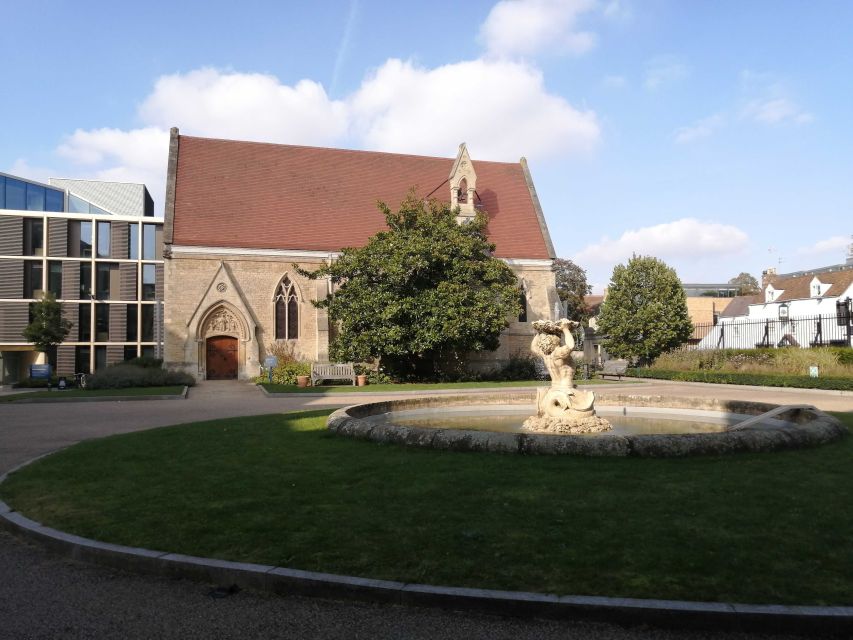
You finish at St Luke’s Chapel, which feels like a deliberate ending. It is a calmer moment at the end of a tougher walk. You are done before your brain fully wants to argue with the ideas in the tour, which is a smart pacing choice.
Guide style: university researchers with performance training
The tour is led by university researchers who have completed the official Uncomfortable Oxford training programme. That matters because you are not just getting facts. You get an approach to storytelling that blends performance with research.
If you like guides who explain clearly, you are in good hands. One review specifically praised a guide named Jonathan for being competent and able to make the subject easy to understand and lively. That kind of delivery is crucial for a topic like this, where the content can turn heavy quickly.
You should also know the format is designed for energy and interaction. It is not just a monotone walk and talk. The tour is described as fun and educational, and the best guides make you feel like you are part of a conversation instead of passively receiving notes.
Price and value at about $29 for 1.5 hours
At $29 per person for about 1.5 hours, the value comes from three places.
First, you are paying for a guide who combines university research with structured training from Uncomfortable Oxford. Second, you get a curated walk through Oxford that uses major landmarks as story anchors, not just random street corners. Third, the themes are high impact and current, health equity and medical ethics, so you leave with a mindset you can use beyond the tour.
If your goal is to collect famous medicine sites like a checklist, you might feel shortchanged. One review noted a mismatch between expectations for specific medicine related sites and the tour’s stronger emphasis on inequities and biases. That is not a flaw in the tour. It is a fit issue.
So treat the price as access to thinking, not just access to buildings.
Who this tour suits, and who should think twice
This tour is a strong fit if you:
- Want medical history that includes ethics and inequity, not just dates and discoveries
- Like walking tours that connect old debates to current questions
- Enjoy active guides who can explain complicated ideas in plain language
It may be less satisfying if you:
- Only want classic medicine sightseeing and would rather skip uncomfortable discussion
- Prefer inside access to colleges and libraries
- Are hoping for a super site focused route tied to very specific famous medicine locations
It is recommended for ages 12 and older, which makes it a good family option if your teens can handle hard topics. Because it runs in real weather, it is also a good pick for travelers who can handle being outside for about 2 km.
FAQ
FAQ
Where do I meet the guide?
Meet your guide under the Bridge of Sighs, also called Hertford Bridge. The guide wears a bright blue vest and carries an Uncomfortable Oxford branded tote bag.
How long is the tour?
The tour lasts about 1.5 hours.
Does the tour go inside colleges or libraries?
No. This tour does not go inside any colleges or libraries.
Is the tour wheelchair accessible?
It is wheelchair accessible, but there can be mild uneven cobblestones and busy streets on weekends.
What is the walking distance and pace like?
The tour covers about 2 km and includes places for sitting throughout. It runs in all weather, so plan for being outdoors the whole time.
What language is the tour in?
The live tour guide speaks English.
Should you book this Oxford history of medicine tour?
If you want a straightforward medical history, this is not that. If you want to understand how disease stories connect to ethics, rights, and inequality across centuries, it is a smart use of 90 minutes in Oxford.
I would book it if you like guides who can make uncomfortable topics clear and if you are happy to trade some classic sightseeing for a stronger storyline. Skip it only if your main goal is famous medicine locations and you prefer a lighter, more factual route with less discussion.
Recently reviewed around Oxford
- Cotswolds and Oxford Small-Group Tour from Bath★ 5.0 · 51 reviews
- Oxford: City and Universities Express Tour & Audio Guide★ 4.5 · 18 reviews
- Southampton: London via the Cotswolds, Oxford and Pub Lunch★ 4.4 · 49 reviews
- London: Small Group Oxford, Stratford and Cotswolds Day Tour★ 4.9 · 104 reviews
- Oxford University: Guided Small Group Walking Tour★ 4.8 · 90 reviews
- Oxford: University Tour for Prospective Students★ 4.9 · 26 reviews
- Oxford: City, Universities and Pubs Walking Tours★ 4.2 · 6 reviews
- Oxford: Alumni-Led Walking Tour w/New College Entry Option★ 4.6 · 124 reviews
Oxford Tours, compared.

Oxford University Walking Tour With University Alumni Guide
Read our review →
Full-Day Windsor, Stonehenge, and Oxford Tour
Read our review →
Windsor Castle, Stonehenge, and Oxford Day Trip from London
Read our review →
Harry Potter Studio Tour and Oxford Day Trip
Read our review →
Oxford: University and City Walking Tour with Alumni Guide
Read our review →

Oxford, Stratford-upon-Avon, Cotswolds & Warwick Castle Day Trip
Read our review →Windsor Castle, Stonehenge, and Oxford Day Trip from London
Read our review →Browse the lists this tour appears in