
Reviewed · STONEHENGE TOURS
Salisbury: Old Sarum Entry Ticket
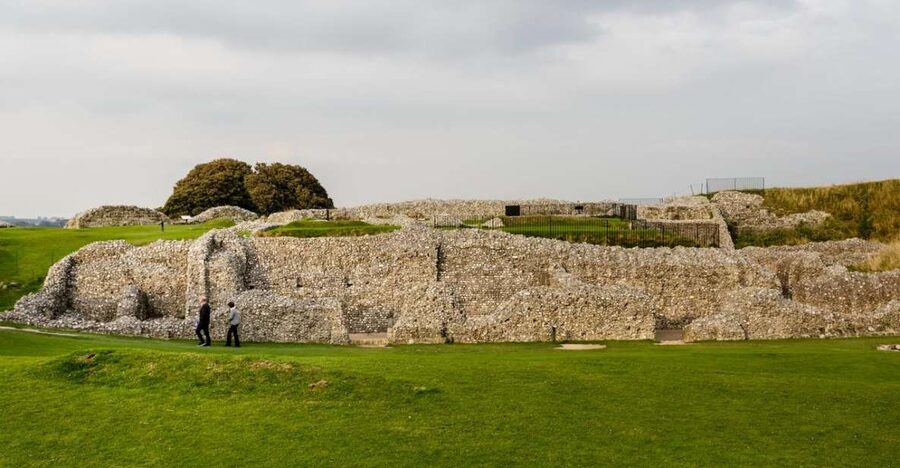
Old Sarum is one of those places where the “ruins” are actually a whole story you can walk through. You climb through ramparts and motte-and-castle remains that show how power shifted here for centuries, long before Salisbury became what it is today.
I really like the way the site lets you connect the big themes fast: government, faith, and strategy, all layered on one hill. You’ll also get outstanding panoramic views over the Wiltshire plains, plus a look back toward Salisbury and its cathedral from the walls.
One thing to consider: this is walking on uneven ground among remnants, so it’s not a sit-and-zoom kind of stop, even though the entry ticket is straightforward.
Key highlights worth your time
- 2,000 years on one hilltop, starting with Iron Age ramparts and moving through later eras
- Medieval royal castle and cathedral footprints, so you can picture the original grandeur
- Wiltshire plains and Salisbury Cathedral views from the ramparts
- William the Conqueror’s strategic connection, with the site tied to major government power
- Salisbury’s original cathedral site and the move to the new cathedral in town
- The “rotten borough” era, plus the eventual end of its administrative importance
Old Sarum’s hilltop story, from Iron Age to medieval power
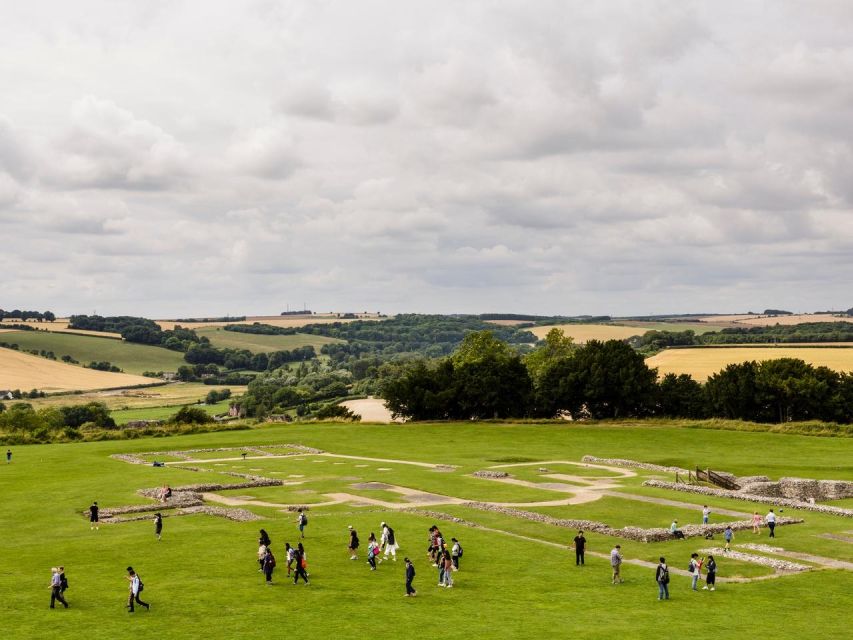
Old Sarum sits on a commanding piece of high ground near Salisbury in south west England. When you arrive, it already feels like the key idea is simple: if you control the hill, you control the view, the routes, and the prestige that comes with them. This ticket is for walking through the remains of an earlier city and imagining it at full strength.
What makes Old Sarum special is that it is not just one monument. It’s a timeline you can follow with your feet. You start with the early defensive works, then you move into the medieval period where royal and religious power basically shared the same address. The site also keeps reminding you that history doesn’t move in straight lines. It rises, changes hands, and eventually gets left behind.
If you love places where you can read the past like clues in a mystery, you’ll enjoy how the different parts fit together. The ticket experience is designed for that kind of self-guided, on-site understanding, with clear informational signage to help you connect the dots.
More Stonehenge tours from London:
- Stonehenge, Windsor Castle, and Bath from London
★ 4.5 · 18,662 reviews - Stonehenge, Windsor Castle and Bath with Pub Lunch in Lacock
★ 4.5 · 7,402 reviews - Stonehenge Admission Ticket
★ 4.6 · 6,388 reviews
Getting in smoothly: what your ticket actually buys you
This is an English Heritage entry ticket for Old Sarum, valid for one day. The price you pay is structured as a group ticket up to four people, which can be a good value if you’re traveling with someone you can share the cost with.
Practically, the big benefit is that you skip the ticket line. That matters here because you’ll likely want to spend your time walking, not waiting. Also, the experience is a small group format limited to four participants, so you’re not herded around with a crowd.
Your meeting point is simple: go to the entrance of Old Sarum, recognizable by the informational signage. Once you’re through, you’re free to explore at your pace, using the site layout and explanations to guide your route.
One more practical note: the experience is wheelchair accessible. At the same time, the site involves walking on uneven surfaces, so accessible routes may still feel bumpy and require careful footing. If you’re mobility-limited, it’s smart to plan for a slower pace and more time.
Start at the entrance signage, then read the site like a map
Right when you enter, the signage is there for a reason. You’ll get the quickest payoff if you treat it like the opening chapter, not background noise. I like how the explanations help you understand what you’re looking at before you wander too far.
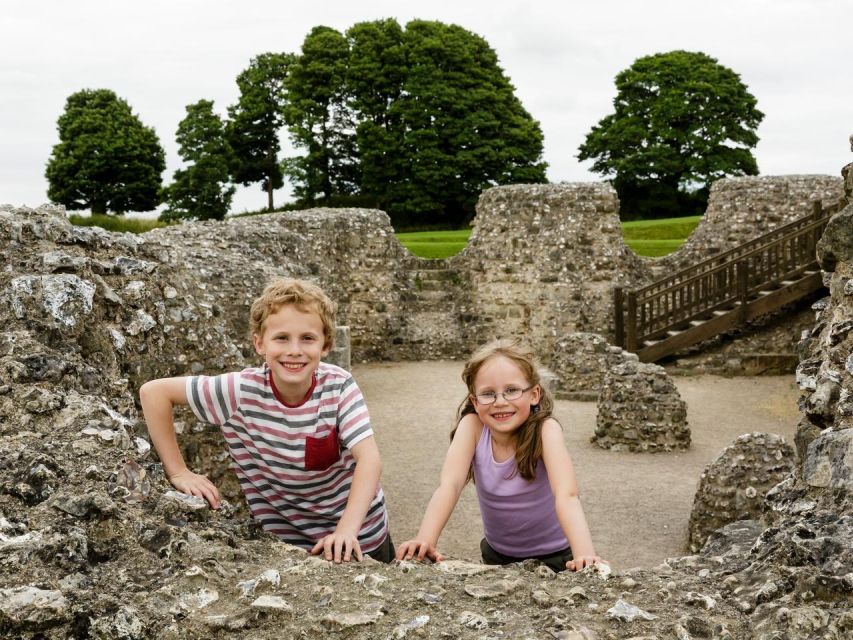
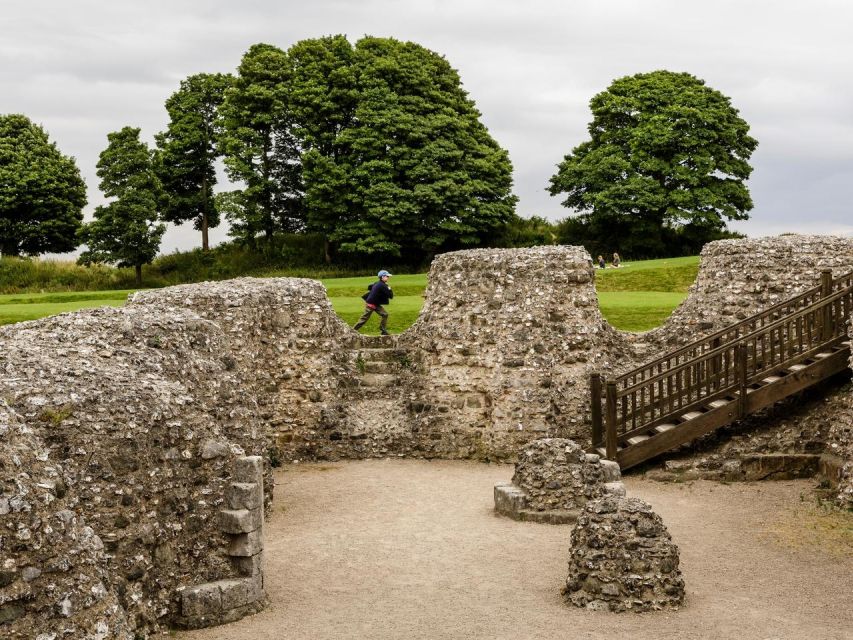
Your best approach is to walk deliberately from stop to stop. Pause where the ground changes or where a boundary line appears. Old Sarum’s remains can look subtle from a distance, but close up they start to make sense. You’ll likely notice how earthworks and stone remnants guide you toward the bigger story: where defenses ran, where important buildings stood, and where the hilltop’s leadership lived.
This is also one of those sites where a calm pace helps. If you hurry, it turns into “a bunch of ruins.” If you slow down and connect each section to the next era, it becomes a coherent history lesson you don’t have to sit inside to enjoy.
Iron Age ramparts: the first reason this place mattered
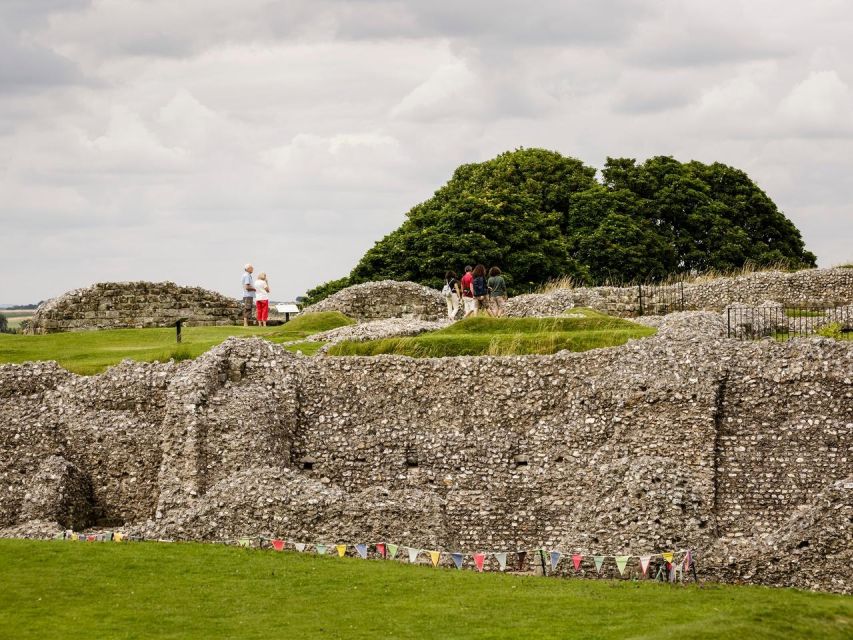
Old Sarum begins long before the medieval castle look. The site’s importance stretches back to its Iron Age beginnings, when ramparts created a fortified presence on the hill.
As you look at the earth and the shape of the defensive works, you’ll start thinking in terms of geography. Higher ground means visibility, and visibility means control. Even without superimposing modern details, it’s easy to imagine why people chose this spot again and again. The hill didn’t just offer shelter, it offered leverage.
One of the strongest values here is perspective. Standing on the remains, you can feel how strategic the location was, even if the structures themselves are gone. It’s not a “museum room” experience. It’s more like walking through the outline of a fortress.
Then history layers itself on. The site later connects to Roman, Norman, and Saxon influence, which helps explain why the place never stayed in one identity for long. If you like patterns, you’ll notice the same theme repeating: the hill is valuable, so power returns to it.
More day trips out of London:
- Windsor Castle, Stonehenge, and Oxford Day Trip from London
★ 4.5 · 5,292 reviews - Stonehenge and Bath Tour from London
★ 4.5 · 4,295 reviews - London: Stonehenge Morning or Afternoon Tour Optional Lunch
★ 4.4 · 3,966 reviews - From London: Stonehenge Morning Day Trip with Admission
★ 4.8 · 3,423 reviews
William the Conqueror and the hill as a government center
Old Sarum didn’t just serve as a defensive site. It became tied to major political weight, including William the Conqueror. The idea is that a strategic hilltop could function as an important center of government, not only a stronghold.
If that sounds abstract, here’s how to make it real while you’re walking: watch for the shift from “defense” to “authority.” When the explanations point toward government or leadership, you’re meant to visualize officials, administrators, and decisions taking place close to where people could protect them.
This is where Old Sarum rewards your attention. You start to see why medieval Europe often revolved around places that were both practical and symbolic. A site like this could represent control, stability, and legitimacy, even as the political wind changed.
The medieval royal castle and cathedral remains you can actually picture
Once you reach the medieval layers, the experience gets more vivid. You’ll see remnants that relate to a medieval royal castle built atop the motte, along with architectural traces connected to the religious power that followed.
The castle remnants help you imagine height and prominence. A motte-based structure would have signaled dominance from far away, and that visual authority is part of the story. Even though what you see is partial, you can still piece together how the layout supported command and protection.
Then comes the big religious thread. You can walk through the footprint of Salisbury’s original cathedral, plus learn about the importance of the first and second cathedrals in the area. That detail matters because it explains why Old Sarum eventually lost its role. The cathedral moved, and with it, the center of gravity shifted toward the town you can visit today.
This is also where the site gets emotional in a quiet way. You realize that buildings weren’t just buildings. They were anchors for communities. When a major cathedral relocates, it doesn’t simply change worship. It changes roads, jobs, and influence.
The ramparts: where the views turn history into a feeling
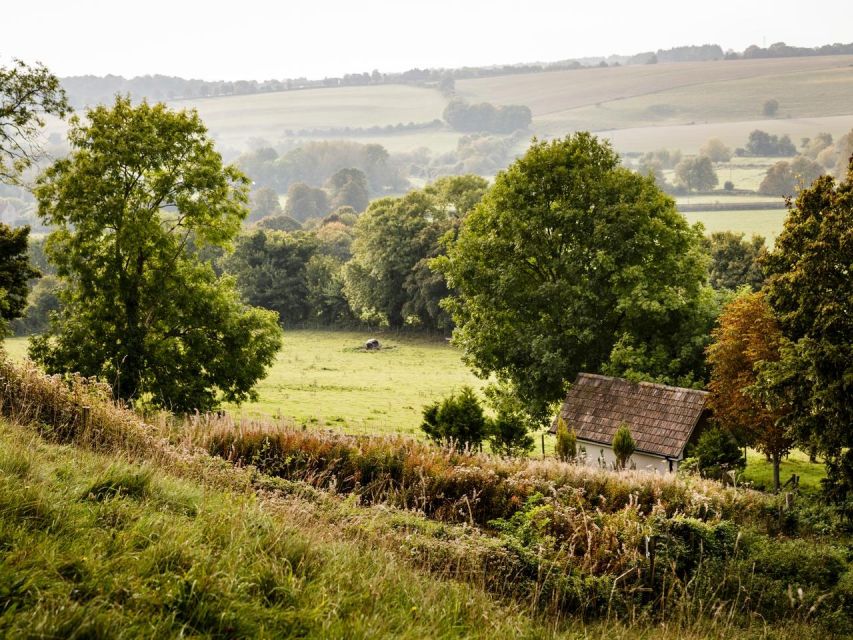
If you only remember one part of Old Sarum, make it the ramparts. From here, the Wiltshire plains open up, and you get a sense of scale that you can’t get in a town street or inside a single building.
The view also makes the medieval strategy feel obvious. From the walls, you can understand what people meant by control. In a practical sense, the hilltop vantage helps you see routes and activity across the region. In a symbolic sense, it shows why a ruler and a cathedral could share the spotlight.
You also get a view back toward Salisbury and its cathedral. That back-and-forth perspective is powerful because it ties the old and new together in your mind. You’re not just looking at remnants. You’re seeing the reason the history changed location.
I also like that this portion doesn’t require special imagination. Even if you’re not a hardcore history buff, the sightline does the work for you. It makes the past feel closer, not buried.
Salisbury’s original cathedral site, and why the big move happened
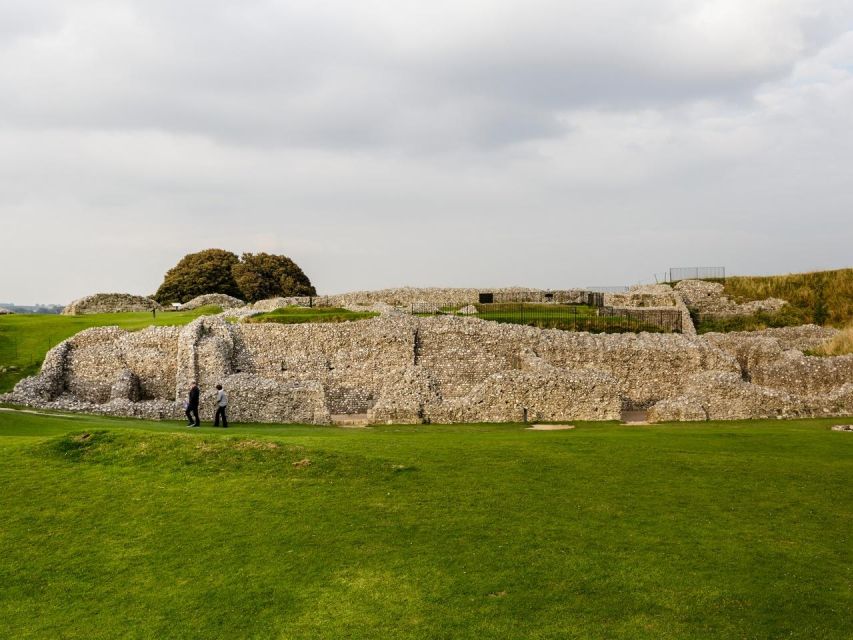
One of the most useful parts of the visit is standing where the original cathedral footprint is. It helps you understand that Old Sarum wasn’t simply a castle with a church nearby. The cathedral was central.
As the explanations guide you, you learn about the importance of the first and second cathedrals and how Old Sarum was abandoned for the new cathedral in Salisbury. That is the turning point that makes the rest of the history make sense.
If you want to get the most out of this segment, slow down and look for the way the grounds and remains hint at building placement. The site doesn’t give you a full intact cathedral, so your brain has to help reconstruct it. That’s the deal here, and it’s also why the experience feels satisfying when it clicks.
Later decline: from major influence to a “rotten borough”
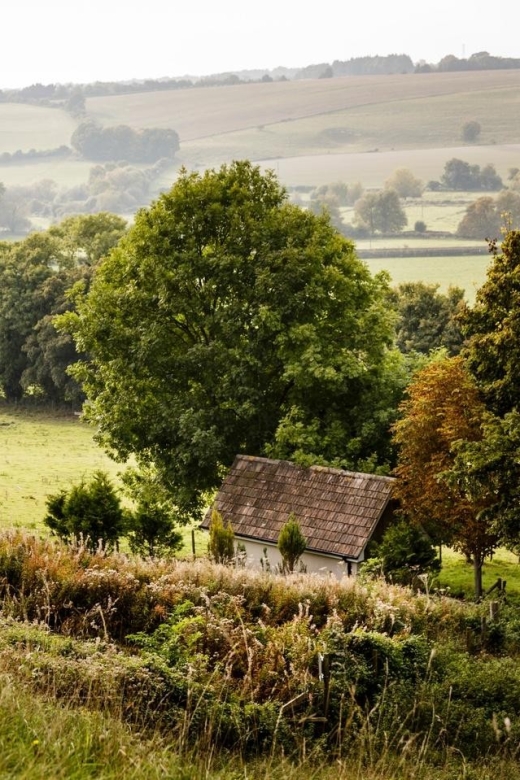
Old Sarum’s story continues after the medieval peak. You’ll pick up how the place later became known as a rotten borough, a term that signals how political power can become detached from real representation. It’s a reminder that systems can age badly, even when the buildings still cast long shadows.
Then you learn about the final cessation of Old Sarum’s administrative role. That idea lands differently when you’ve spent time walking the ground. You see the contradiction: a site once tied to power eventually loses the authority that made it matter in the first place.
This final phase is what turns the visit from a “cool ruins stop” into a real lesson about how places win and lose relevance over time.
Price and value: is $13 per group up to 4 a fair deal?
At about $13 per group up to four, the ticket price can be good value, especially if you’re traveling as a pair or family. Entry tickets often charge per person, so group pricing can make a noticeable difference here.
That said, Old Sarum is still what it is: architectural remnants rather than a fully intact city. One person’s “quiet, charming ruins” is another person’s “I can see why buildings are gone, but I want more.” If you prefer fully restored sites with big indoor displays, you might feel like the experience is smaller than expected.
My take: if you come for views, earthworks, and the thrill of tracing a timeline with signage, the price feels right. If you come expecting a cathedral you can step inside, set your expectations to match the fact that this is primarily a walking site on the traces of what was once here.
How long to plan, and what to wear
You’re buying entry for one day, but you don’t need to fill every minute. The useful way to plan is to allow time for pauses, photos, and reading the key points on signs. This kind of place rewards breathing room.
Bring comfortable shoes. The terrain is uneven, and parts of the visit are basically a gentle reminder that you’re on a hill with real ground, not carpet. Weather-appropriate clothing also matters. Even when it looks calm outside, the open ramparts can feel more exposed.
If you want your visit to feel effortless, I’d also bring a small layer you can adjust quickly. Wind and sun can flip quickly at exposed heights.
Who should book Old Sarum, and who might skip it
This entry ticket is a strong fit if you:
- like walking through history where you can connect eras in a single loop
- enjoy views and enjoy learning how geography shaped power
- want a calmer alternative to ticketed indoor attractions
It might be less satisfying if you:
- want mostly intact buildings and hands-on interpretive exhibits
- need fully flat paths and minimal walking
- expect a long, guided story rather than signposted self exploration
If you’re already in Salisbury, Old Sarum works especially well because it gives context for what you see later in town. You’ll understand why the cathedral moved and what changed in the political map.
Should you book the Old Sarum entry ticket?
If you’re the type of traveler who likes using your eyes and a good map of explanations, yes, book it. For the cost, you get a high payoff: rampart views, visible remnants of royal and religious power, and a timeline that goes back to the Iron Age.
If you’re sensitive to uneven ground or you’re expecting an active full-day guided tour with a lot of indoor elements, consider adjusting expectations or pairing it with easier stops nearby.
One last practical tip: before you go, confirm the site is open for your date. On at least one occasion, visitors have found it closed, so it’s worth checking status on the day you plan to arrive.
FAQ
Where is the meeting point for the Old Sarum entry ticket?
Go to the entrance of Old Sarum, recognizable by informational signage.
How long can I spend at Old Sarum with this ticket?
The ticket is valid for 1 day.
Can I skip the ticket line with this entry ticket?
Yes. The experience includes skipping the ticket line.
Is Old Sarum wheelchair accessible?
Yes, it is listed as wheelchair accessible. Keep in mind the site involves walking on uneven surfaces.
How much does the ticket cost?
The price is $13 per group, up to 4 participants.
What should I bring for the visit?
Wear comfortable shoes and bring weather-appropriate clothing.
Is there free cancellation?
Yes, you can cancel up to 24 hours in advance for a full refund.
Recently reviewed around Stonehenge
- Stonehenge & the Cotswolds Including Admission from Bath★ 5.0 · 145 reviews
- ‘Stonehenge & Secret England’ from Bath for 2-8 curious adventurers★ 5.0 · 54 reviews
- Stonehenge and Bath City Tour – Private tour from Bath★ 5.0 · 33 reviews
- Secrets of Stonehenge Private Half-Day Tour from Bath★ 5.0 · 6 reviews
- Stonehenge Private Tour – Half-Day Tour from Bath★ 5.0 · 145 reviews
- Private Day Tour from Bath to Stonehenge and Salisbury with Pickup★ 5.0 · 9 reviews
- Stonehenge Private Full-Day Tour from Bath for 2-8 guests★ 5.0 · 23 reviews
- Private Day Tour from Bath to Avebury and Stonehenge with Pickup★ 5.0 · 4 reviews
Stonehenge Tours, compared.

Stonehenge, Windsor Castle, and Bath from London
Read our review →
Stonehenge, Windsor Castle and Bath with Pub Lunch in Lacock
Read our review →

Full-Day Windsor, Stonehenge, and Oxford Tour
Read our review →
Stonehenge, Windsor Castle and Bath Full Day Guided Tour
Read our review →
Windsor Castle, Stonehenge, and Oxford Day Trip from London
Read our review →
Windsor, Stonehenge, Bath, and Roman Baths Day Trip
Read our review →
Browse the lists this tour appears in