
Reviewed · WALKING TOURS
3-Hour City of London Walking Tour
London moves fast, but this 3-hour walking tour slows things down just enough to make the city’s big stories feel personal. You’ll start near your hotel, ride part of the route by double-decker bus, then cover key sights on foot, from famous church steps to the darker edge of medieval power.
I love how the route stitches together London’s landmark faces with the street-level places that shaped everyday life, especially around Strand and Fleet Street. I also like that the guide ties the scenery to major turning points, like the Great Fire and Great Plague, so you’re not just looking at buildings, you’re understanding why London looks the way it does. The one potential drawback: it’s a walking tour through old streets and cobbled lanes, so if you dislike uneven pavement, plan your shoes and pace accordingly.
Key points to know before you go
- St. Paul’s Cathedral: You’ll hear how it was rebuilt after the Great Fire, and you’ll connect that story to national moments like the wedding of Charles and Lady Diana Spencer.
- Strand and Fleet Street: Expect a media-history walk, including how these streets powered major newspapers until the 1980s.
- Great Fire and Great Plague: You’ll get the “what happened and why it mattered” behind two of London’s biggest shocks.
- Millennium Bridge to Southwark: The Thames crossing helps you see how the city’s geography feeds its history.
- Borough Market and Southwark Cathedral: You’ll pause in areas that balance food culture and centuries-old faith architecture.
- Tower of London at London Bridge station: You’ll learn how this 11th-century stronghold shifted roles from palace to prison to execution ground.
Where the tour starts, and how the double-decker helps you get oriented
The experience runs for about 3 hours and begins at 10:00. Your guide meets you in the reception area of your hotel at the start time, so you do not have to solve the city first thing in the morning. Since the group is private and the pricing is set for up to 2 people, the tour feels more like a guided walk you set up with someone local than a big bus-and-brush-through sightseeing plan.
One smart touch is the double-decker bus segment. You’re still on your feet later, but the bus helps you cover distance early without burning your energy. It also gives you a quick visual map of London’s layout, which makes the walk sections easier to follow. If you hate being stuck waiting for unclear directions, this “meet at your hotel, then move” structure usually keeps things smooth.
Because transportation is not included, you should assume you may need to pay for that bus ride segment yourself, even though the tour describes taking a double-decker. When it matters, ask directly before you start: is the bus portion ticketed in your booking or not. That avoids surprise costs.
More walking tours in London:
- Magical London: Harry Potter Guided Walking Tour
★ 4.7 · 22,044 reviews - London: The Original Jack the Ripper Walking Tour
★ 4.7 · 7,833 reviews - Tour for Muggles The Ultimate Harry Potter Walking Tour in London
★ 5.0 · 4,684 reviews
Strand and Fleet Street: the old-news spine of London
After the initial transit, you’ll move into some of London’s famous streets and cobbled alleyways, with a focus on the Strand and Fleet Street. These names are famous for a reason. This area was home to Britain’s major newspapers up until the 1980s, which means you’re walking through the physical history of how news was printed, edited, argued over, and delivered.
What I like about this stop is that it’s not just “look at a street.” The guide’s job is to connect the street layout to power and influence. These streets were a working world, not a museum set. When your guide points out where newsrooms clustered, where journalists would move, or how the street life shaped what got attention, London feels less like a list of famous places and more like a machine that ran on words.
Practical tip: plan to slow down and let your guide set the rhythm. Cobblestones can make your stride shorter, and if you rush ahead you’ll miss the small context points. If you wear flexible shoes, you’ll enjoy this part more and get to the next sights without feeling beat up.
St. Paul’s Cathedral and the Great Fire rebuilding story
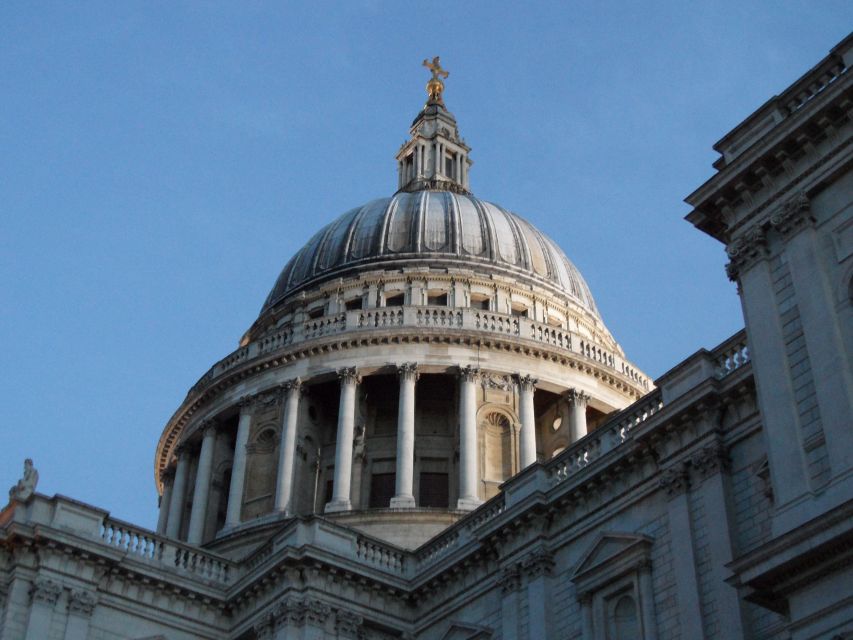
Then you’ll head to St. Paul’s Cathedral, a site the tour frames as the highest point in London for over 1,400 years. That line matters because it explains why this cathedral became a visual anchor. When a city has a long skyline tradition, one building that dominates the horizon becomes a reference point for identity, politics, and public life.
You’ll also learn why St. Paul’s matters beyond its beauty. The story centers on how it was rebuilt after the Great Fire of London. The Great Fire wasn’t just a tragedy, it changed the city’s materials, planning choices, and confidence about how London could be rebuilt. Hearing that while standing in front of St. Paul’s gives you a cause-and-effect feeling that you simply don’t get when you visit a cathedral as a standalone photo stop.
There’s also the modern tie-in: St. Paul’s has hosted notable national events, including the wedding of Charles, Prince of Wales, and Lady Diana Spencer. This is a good reminder that London’s major sites keep getting reused for current meaning. The past isn’t sealed behind glass. It’s still part of the calendar.
A consideration: cathedrals and big public buildings can attract crowds at certain times. Since this tour is timed within a 3-hour window, your best bet is to trust the guide’s pacing. If there’s congestion, you’ll get the explanation without trying to outsmart the crowd yourself.
The Great Plague: how a grim chapter changes what you see
You’ll continue through London’s oldest district and connect your walk to two major crises: the Great Fire and the Great Plague. The tour specifically calls out the plague as killing a third of London’s population. That’s the kind of statistic that stops being abstract when you realize you’re walking through the neighborhoods where those losses would have been felt immediately.
I appreciate that this part is framed as context, not shock value. The value for you is in the mental model: London’s early neighborhoods, its density, and the way people lived close together made outbreaks more dangerous. Once your guide gives you that background, streets and landmarks start to feel like evidence of how people survived and adapted, not just scenery.
If you prefer light, comedy-first sightseeing, this segment might feel heavy. But if you want London to make sense, it’s hard to skip. The city’s resilience is one of its biggest stories, and the plague is part of why that resilience exists.
A few more London tours worth a look
- City Sightseeing London Hop-On Hop-Off Bus Tour & Bookable Extras
★ 4.0 · 1,224 reviews - London: Go City Explorer Pass® – Tickets for 2-7 Attractions
★ 4.3 · 1,111 reviews - London: Speedboat Tour Through Heart of the City
★ 5.0 · 387 reviews - London: Upside Down House Westfield White City Entry Ticket
★ 4.0 · 338 reviews
Millennium Bridge to Southwark: crossing the Thames with a purpose
Next you’ll cross the Millennium Bridge, which is more than a photo bridge. The way the tour uses the crossing helps you see the Thames as a divider and a connector, depending on what period you’re talking about. One side of the city historically played different roles than the other, and your guide’s narrative gives the bridge meaning.
After the crossing, you’ll visit Borough Market and Southwark Cathedral. Borough Market is one of those places where the modern food scene sits on top of older rhythms of trade and gathering. Even if you do not plan a full meal, the stop is useful because it shows you how London layers everyday life on top of historical importance.
Southwark Cathedral adds a different flavor. Cathedrals in this part of town help you understand how religion, community, and political change moved together across centuries. Again, your guide’s job is to connect what you see to why it exists here.
You’ll also see Golden Hinde II, tied to Sir Francis Drake’s famous galleon. This matters because it shifts the story from purely domestic London to the wider world. Drake’s sea story is part of how England projected power and built national identity. When a galleon sits in a historical riverside area, you get a clearer picture of how the city was linked to exploration and ambition.
Practical consideration: Borough Market can be crowded, and your time here is limited by the 3-hour total. If you want to taste something, keep it simple so you don’t lose the thread of the guide’s narrative. Treat it like a short stop to absorb the vibe, not a full food day.
London Bridge station and Tower of London legends in the same breath
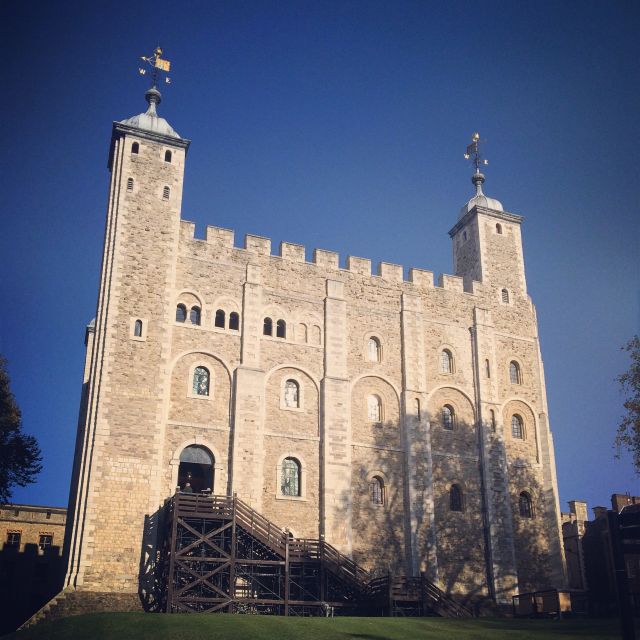
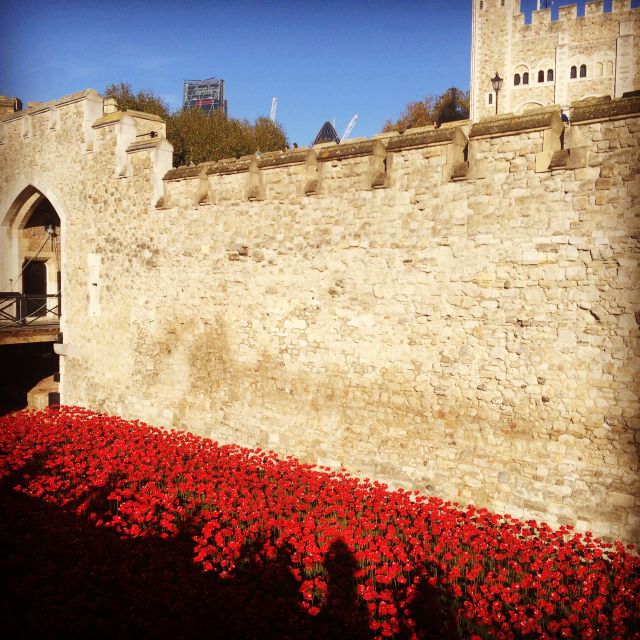
Near London Bridge station, the tour shifts to the Tower of London story. You’re learning about the 11th-century stronghold of William the Conqueror, and you’ll hear how it served as a palace, a prison, and an execution place.
This is where the tour’s storytelling style really matters. The tower is famous, but it’s easy to remember only the headline version. The guide’s job is to show how one site could hold multiple roles over time, because power rarely stays in one form. A palace turns into a prison when politics harden. A fortress becomes a tool for enforcing order when rulers need fear to do the work.
A specific, chilling detail you’ll hear: Anne Boleyn, Henry VIII’s second wife, who met her end at the Tower in 1536. This kind of story gives you a human hook to what might otherwise be reduced to stone walls. The tower becomes less like a dramatic backdrop and more like a mechanism of state.
Balanced reality check: this portion leans dark. If you’re sensitive to executions or political violence, you might want to mentally brace for the theme. If you can handle it, the payoff is a London that makes sense across centuries, not just a London that looks impressive.
Pricing and value: is $376 for up to 2 a smart deal?
Let’s talk value in plain terms. The price is listed as $376 per group up to 2. That means you’re not paying per person for a huge group experience, you’re paying for a private guide for about 3 hours.
What’s included is the tour guide. What is not included is transportation and any museum admission fees. That’s important for budgeting. Since you’ll likely take a double-decker bus part of the time, and since transportation isn’t included, you should assume there may be extra spending for that transit segment.
So is it worth it? It often is if:
- you want a guided narrative instead of doing the sights on your own with an app
- you’re traveling as two and want the flexibility of a private pace
- you care about connections, like how the Great Fire and Great Plague shaped the city, not just the name of the cathedral
It may not be the best deal if:
- you’re a solo traveler looking for the lowest cost possible
- you’re mainly after quick photo stops and do not care about guided context
- you plan to spend time inside multiple ticketed sites, since museum admissions are not included and the route appears built around outside viewing and street-based context
My practical rule of thumb: if two people split the cost, and you value a human guide who can explain what you’re seeing, it tends to land as good value. If you’re traveling alone or only want minimal guidance, shop around.
Pace, comfort, and what to bring for cobbled London
This is a walking tour with cobbled alleyways and classic central-city streets. You’re covering major sights in only 3 hours, so the pace is probably steady rather than leisurely. If you want a relaxed stroll, wear comfortable shoes and keep your expectations realistic.
Bring:
- comfortable walking shoes, especially with decent grip for uneven pavement
- a light layer, since London weather can shift fast even when the forecast looks good
- water, especially if you’ll pass through Borough Market and want a snack later
If you have hearing issues or you get lost easily, early positioning matters. Choose a spot where you can hear clearly and ask questions when they come up. This kind of tour works best when you communicate early instead of waiting until you’re confused.
Language options and how to get the most from your guide
The tour offers a live guide in Spanish, English, French, German, Italian, Russian. That’s a genuine advantage because language changes comprehension. You’ll get more out of the history if your guide can explain it at a pace and tone that feels natural.
Your guide is meeting you at your hotel reception area, so you have a clear moment to confirm you’re in the right place and that you can hear well. If something feels off, say so early. This is not a situation where you want to quietly guess your way through.
One more small detail from guide experiences: names like Denis come up in available feedback, and the notes describe him as strong on storytelling and keeping you safe at the end of the walk. I can’t guarantee who you’ll get, but it’s a good reminder that the guide quality matters a lot on a compact 3-hour route.
Should you book this City of London 3-hour walking tour?
I’d book it if you want an efficient, guided route that connects the major sights to the events that reshaped London. You’ll get St. Paul’s with the Great Fire context, you’ll walk Strand and Fleet Street with media history, and you’ll finish with Tower of London stories tied to William the Conqueror and Anne Boleyn. For two people, the private setup can feel like better value than paying separately for multiple attractions.
Skip it if you want a pure sightseeing checklist with minimal walking, or if you strongly prefer ticketed museum time. This tour focuses on streets, viewpoints, and meaning, not on long indoor stops.
If you do book, I suggest one simple strategy: decide you’re here to understand London’s cause-and-effect. Then the walk will feel like a story you can carry with you, not just a collection of famous stops.
FAQ
Where does the tour start?
You meet your guide at 10:00 at the reception area of your centrally located hotel.
How long is the walking tour?
The tour lasts 3 hours.
What major sights will I see?
You’ll visit or see St. Paul’s Cathedral, walk along the Strand and Fleet Street, cross the Millennium Bridge, visit Borough Market and Southwark Cathedral, see Golden Hinde II, and learn about the Tower of London near London Bridge station.
Is a tour guide included?
Yes, a live tour guide is included.
What languages are available?
The guide is available in Spanish, English, French, German, Italian, and Russian.
Is transportation included in the price?
No. Transportation is not included, even though the tour describes using a double-decker bus during the experience.
Are museum admission fees included?
No. Museum admission fees are not included.
Is this a private group?
Yes, this is a private group experience, priced for up to 2 persons.
Do I need to pay right away?
You can reserve now and pay later, meaning you can book your spot and pay nothing today.
Recently reviewed around London
- London: Harry Potter Walking Tour with Platform 9 3/4★ 4.6 · 37 reviews
- London: Harry Potter Walking Tour and River Thames Cruise★ 3.6 · 24 reviews
- London: Harry Potter Tour & The London Dungeons Tour★ 3.8 · 28 reviews
- London: Harry Potter Tour, River Cruise & The London Dungeon★ 4.4 · 8 reviews
- London: Harry Potter Tour and London Bridge Tombs Experience★ 3.8 · 4 reviews
- London: Harry Potter Walking Tour and Tower Bridge Ticket★ 4.4 · 7 reviews
- London: Harry Potter Walk, Hop-on Hop-off Bus Tour & Cruise★ 4.1 · 105 reviews
- London: Harry Potter Sights and Shrek’s Adventure Combo Tour★ 4.6 · 3 reviews
Walking Tours, compared.

Magical London: Harry Potter Guided Walking Tour
Read our review →

Oxford University Walking Tour With University Alumni Guide
Read our review →
Tour for Muggles The Ultimate Harry Potter Walking Tour in London
Read our review →
Oxford: University and City Walking Tour with Alumni Guide
Read our review →
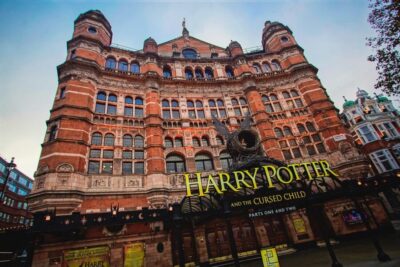
Harry Potter Movies Walking Tour (Kids Go Free)
Read our review →
Cambridge University Walking Tour by Alumni™ Kings College Option
Read our review →Browse the lists this tour appears in