
Reviewed · WALKING TOURS
City of London Mystical and Dragons Walking Tour
London’s Mystical and Dragons Walking Tour is interesting because it treats the City of London like a living map of myths, not just an area of stone and offices. I love the way the guide links iconography in buildings to what you see on the street, and I love the sheer range of places you cover in just 2.5 hours. One thing to think about, it is not a sit-down history lecture, so if you want lots of quiet time or a very traditional timeline, you may find the tone more story-driven than academic.
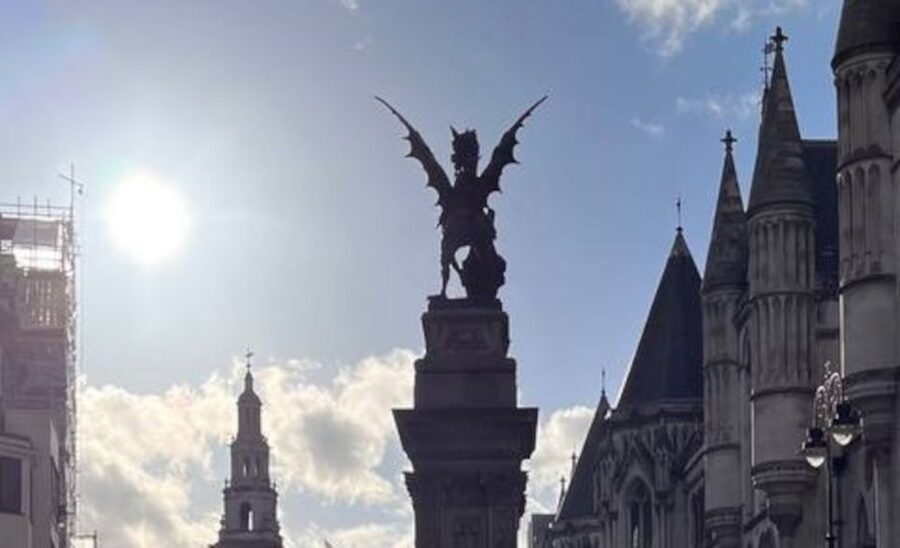
You’ll move through standout landmarks and smaller sacred spaces, from London Stone to St. Paul’s Cathedral, then down to Temple Church, finishing at the Temple Bar Memorial. The vibe stays friendly and focused thanks to a small group limited to 8 people, and the review comments I read highlight how the guide, Arjun, weaves sites together through story, myth, and visual symbolism.
Key highlights to look forward to
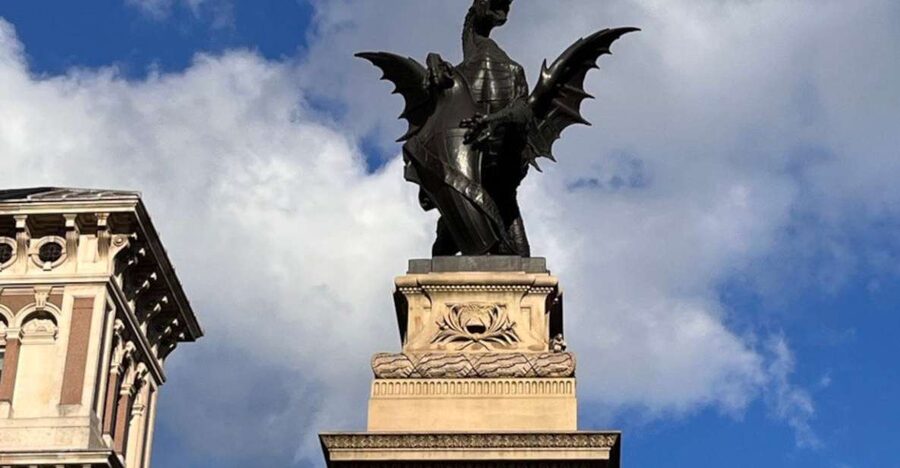
- Dragon lore mapped onto real City of London sites, so the myth feels local, not random
- Sacred spaces and forgotten waterways that change how you read the streets
- Architecture symbolism you can actually spot even after the tour ends
- Ley lines and ancient mounds as a thread tying multiple stops together
- A route from early, mythical beginnings to St. Paul’s Cathedral, including Temple Church with the Knights Templars
Price and value for a $25, 2.5-hour City of London story walk
At $25 per person, this tour is priced like a mid-range walking experience, but it feels lean and purposeful rather than padded. The big value is the pacing: you get a full 2.5 hours of guided interpretation across many sites, with short guided stops so the story keeps moving.
The other value signal is the group size. A cap of 8 people means you are more likely to get your questions answered, and it is easier for the guide to keep the route tight through central streets. If you’ve ever done big group walks where you only catch half of the story, this format is a direct fix.
More walking tours in London:
- Magical London: Harry Potter Guided Walking Tour
★ 4.7 · 22,044 reviews - London: The Original Jack the Ripper Walking Tour
★ 4.7 · 7,833 reviews - Tour for Muggles The Ultimate Harry Potter Walking Tour in London
★ 5.0 · 4,684 reviews
Meeting outside Joe and how the route stays manageable
You meet outside Joe and the Juice, and the easiest way to spot your guide is by the longish hair and beard plus a felt image of a green dragon on a backpack. From there, you start in the City core, where the tour packs a lot into short legs on foot.
The route is designed for walking. The guided chunks at each stop are typically 5 to 15 minutes, and you spend only about 5 minutes on a pure transfer segment between areas. That structure matters in London, because it reduces the time you spend standing around with nothing happening. You also avoid the all-day fatigue that can happen on longer themed walks.
Also note: the tour is listed as wheelchair accessible. That does not mean every curb will be fun, but it does indicate the provider expects mobility needs to be workable along the route.
London Stone and the feel of ancient markers in the modern City
You start at London Stone, specifically the remaining part. Even if you have only seen pictures of it before, seeing it in place changes the mood. This stop is less about a textbook and more about the idea that the City has layers, and people have been reading meaning into small, stubborn leftovers for a very long time.
In this tour’s framing, London Stone works like a doorway. It sets the theme that the City’s identity does not begin with the most famous buildings. It begins with symbolic points, sacred alignments, and remembered geography. You’ll pick up the tone right away: the guide will connect architecture and street-level details to mythology rather than treating it as a separate costume story.
Forgotten streams in Bloomberg Arcade, where hidden waterways become storytelling fuel
Next you head to Bloomberg Arcade, focusing on forgotten streams. This is the type of stop that can be easy to miss if you are just passing through for shopping. Here, you get a different lens: the arcade becomes not only a covered passage, but part of a larger water-and-sacred landscape.
This is one of the tour themes that I think is genuinely useful. When you hear the story of lost waterways, you start noticing how London’s built environment grew around older routes and channels. Even when you cannot see water today, the tour trains you to read the space as if the city once flowed differently.
A few more London tours worth a look
- City Sightseeing London Hop-On Hop-Off Bus Tour & Bookable Extras
★ 4.0 · 1,224 reviews - London: Go City Explorer Pass® – Tickets for 2-7 Attractions
★ 4.3 · 1,111 reviews - London: Speedboat Tour Through Heart of the City
★ 5.0 · 387 reviews - London: Upside Down House Westfield White City Entry Ticket
★ 4.0 · 338 reviews
London Mithraeum and sacred symbolism you can read without a degree
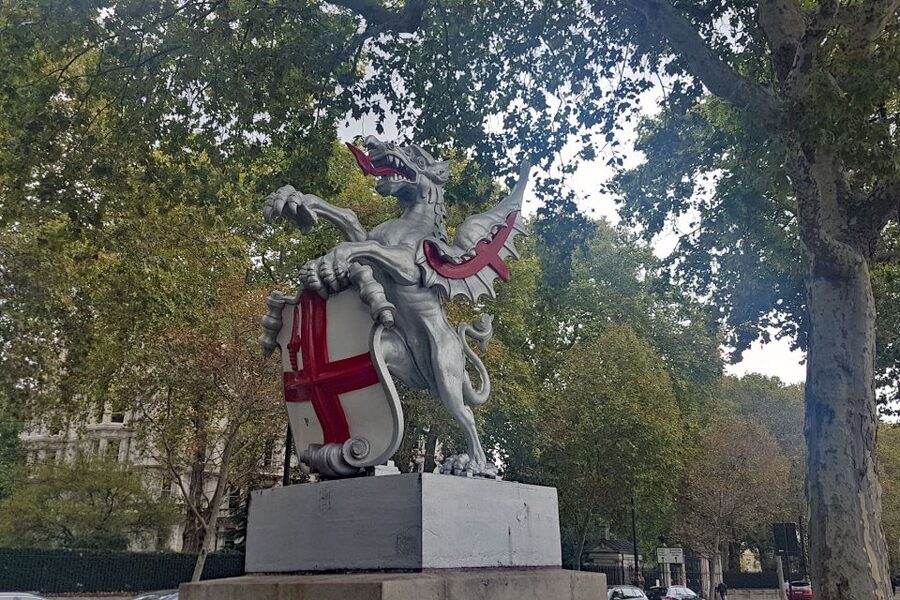
Then you explore the London Mithraeum area. The name alone signals a sacred site, and the tour uses that to talk about symbolism and how cities preserve meaning in stone and placement.
The practical takeaway is this: you do not need to be a mythology expert to follow the logic. The guide focuses on what you can observe, and on how symbols repeat in different forms across the City. That helps you build a mental checklist for later. You’ll start to look at entrances, shapes, and visual motifs as clues, not decoration.
If you enjoy myth that has a visual component, this stop is a big reason the tour earns such high marks in feedback. Reviews specifically note the guide’s ability to weave sites together through story and iconography, and Mithraeum-style locations are where that skill pays off.
Bank of England to St Mary-le-Bow: where power meets spiritual architecture

The route then passes the Bank of England, and after that you reach St Mary-le-Bow Church. These stops can feel unrelated at first glance, because one is associated with finance and the other with worship. But the tour’s approach makes them compatible.
Here’s what you should expect. The guide uses these buildings to show how London’s symbolism can survive even as the city’s dominant functions change. The architecture is read as language: a way communities marked importance, protection, and identity over time.
St Mary-le-Bow is especially important for the “read the city” skill. Churches are designed to communicate. Even if you do not catch every reference, you’ll leave more aware of how religious symbolism and civic symbolism share visual DNA.
Finding an oldest tree in the City of London, because living things carry memory too
The next stop is an oldest tree in the City of London. This is a smart choice, and not just for atmosphere. Trees give you a different kind of continuity. Buildings tell one story, and living landmarks tell another.
In a tour about ley lines and ancient mounds, this stop adds balance. You get a pause from stone, and you get reminded that time in London is not only measured in eras and dates, it is also measured in what keeps growing through them.
St. Paul’s Cathedral: the moment the myth points toward the famous
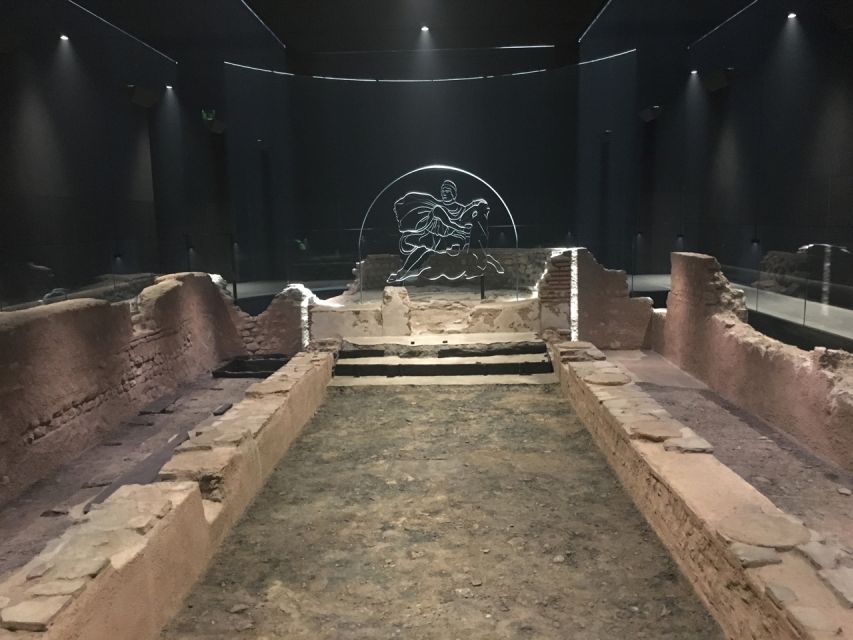
When you reach St. Paul’s Cathedral, the tour aims to trace the City’s evolution, moving from earlier mythical framing toward a modern landmark that people recognize instantly.
This is one of those stops where your own expectations matter. If you already love grand architecture, you’ll enjoy the way the guide positions St. Paul’s as part of the bigger spiritual and symbolic conversation. If you are newer to London’s landmark scene, you’ll still get value because the guide connects the cathedral to the tour’s recurring threads, especially the idea that old narratives keep shaping what gets built and where.
The best part is that St. Paul’s is not treated as a final boss. It is treated like a major chapter.
St Martin Ludgate and Ludgate Circus: reading thresholds and turning points
The tour continues to the Church of St Martin Ludgate, then to Ludgate Circus. In a story walk, these locations work well because they sit in the “threshold” zone of London, the in-between spaces where people move from street to street, direction to direction.
This is where you learn the tour’s method. The guide links architecture symbolism and mythic mapping to movement through the city. You begin to understand how the City’s identity can be felt in corners and crossings, not only in the big-name sights.
If you have ever felt like London is hard to orient, this part helps. You do not need perfect street knowledge to follow. The guide gives you a story map.
St Bride’s Church and St Dunstan-in-the-West: more sacred stops, more repeated symbols
You then reach St Bride’s Church and St Dunstan-in-the-West. These are both key to the tour’s promise of unraveling symbolism in London’s architecture. Rather than doing one stop and moving on, the tour clusters several sacred sites in a way that lets you compare.
That comparison is valuable. You’ll start noticing how different churches can echo each other through shape, placement, and visual motifs. Even if your brain cannot name each symbol on the spot, you’ll leave with a sense of patterns.
And that helps for the rest of the walk, because Temple Church becomes more meaningful when you already practiced reading sacred architecture.
Temple Church, Knights Templars, and the dragon lore payoff at the end
The route finishes at Temple Church, explicitly tied in the tour framing to the Knights Templars. This stop often feels like the emotional peak of themed City walks, because it brings together the tour’s main ingredients: sacred architecture, legend, and the sense that London’s past was guarded and structured.
The guide’s job here is to connect the dots. You’ll be hearing about how dragons have shaped London’s lore for millennia, and how ley lines and ancient mounds are used as a framework to tie the stories together across time. You do not have to believe everything literally to enjoy the method. The method is the point. It trains you to see connections.
Finally, you end at the Temple Bar Memorial. That ending makes sense because it feels like a symbolic boundary marker, a place that signals transition. You finish with the impression that London’s myths are not trapped in museums, they live in street corners and stone details you can still reach with your own feet.
Ley lines and ancient mounds: what this tour gets right about myth
The tour repeatedly brings up ley lines and ancient mounds, so you might wonder if it will feel like vague folklore. Here’s what I think the good version of this approach looks like, and what you can expect from this specific tour style.
Instead of treating ley lines as magic trivia, the guide uses them as a way to organize the route. You’ll hear the idea that certain alignments and ancient features shaped where people built and how they interpreted power in a place. Ancient mounds work similarly, as a reminder that earlier landscapes influenced later ones, even if the original features are no longer obvious.
That makes the myths functional. They become a tool for walking and observing, not just a list of claims.
And that aligns with the strongest feedback in the reviews I saw: people enjoyed the mystical angle and came away with a new perspective on how London is put together. If you are looking for a tour that helps you see the city differently, this ley line thread is the engine.
What to look for during the walk so you feel it more
To get the most from a symbol-heavy tour, you want to do two things as you go.
First, watch for repeated visual motifs. Even without being able to identify every detail, you can tell when something is being emphasized by design.
Second, listen for how the guide links stops together. The best dragon lore tours do not treat each site as a standalone story. They stitch them together into a route with logic. This tour is built for that, and review comments specifically call out how the guide, Arjun, weaves sites into one connected narrative through story and iconography.
If you keep that mindset, you will leave with more than photos. You’ll leave with a mental way to read London.
The guide matters, and Arjun sets a strong tone
The strongest praise in feedback centers on the guide. Multiple comments highlight that Arjun is very knowledgeable and interesting, with a kind, engaging style. One review also calls out that he was informative and entertaining at the same time.
That combination matters for a themed walking tour, because the subject crosses genres. You are hearing mythology, symbolism, and city evolution in the same breath. If the guide only tells stories without grounding them in what you can see, it can feel fluffy. If the guide only gives facts without story, it can feel dry. The notes on Arjun suggest you get the balanced blend.
Who this tour suits best
This is a good fit if you like:
- city walks that focus on symbols and meaning
- myth and folklore connected to real places
- short stops with guided interpretation rather than long lectures
It may be less ideal if you want:
- only major landmarks with minimal walking
- a strict, date-by-date history without mythic framing
- lots of time sitting and studying details slowly
Should you book this City of London Mystical and Dragons Walking Tour?
If you want a City of London experience that makes you look twice at ordinary stone, book it. The price is reasonable for the amount of guided time, and the small group size helps you actually follow the story without feeling lost. The route is packed, but it is structured with short, guided stops that keep the energy up.
I’d especially recommend it to you if dragons, ley lines, or architecture symbolism are your kind of fun. You do not have to be a specialist. The guide’s style, including Arjun’s story weaving, is built for curious people who want real places paired with mythic interpretation.
If you want a more straightforward, purely factual sightseeing day, you might prefer a standard landmark tour. But if you’re open to a story-driven walk where sacred sites, forgotten streams, and meaning in stone all connect, this one is worth the $25.
Recently reviewed around London
- London: Harry Potter Walking Tour with Platform 9 3/4★ 4.6 · 37 reviews
- London: Harry Potter Tour & The London Dungeons Tour★ 3.8 · 28 reviews
- London: Harry Potter Tour, River Cruise & The London Dungeon★ 4.4 · 8 reviews
- London: Harry Potter Walking Tour and River Thames Cruise★ 3.6 · 24 reviews
- London: Harry Potter Tour and London Bridge Tombs Experience★ 3.8 · 4 reviews
- London: Harry Potter Walking Tour and Tower Bridge Ticket★ 4.4 · 7 reviews
- London: Harry Potter Walk, Hop-on Hop-off Bus Tour & Cruise★ 4.1 · 105 reviews
- London: Harry Potter Sights and Shrek’s Adventure Combo Tour★ 4.6 · 3 reviews
Walking Tours, compared.

Magical London: Harry Potter Guided Walking Tour
Read our review →

Oxford University Walking Tour With University Alumni Guide
Read our review →
Tour for Muggles The Ultimate Harry Potter Walking Tour in London
Read our review →
Oxford: University and City Walking Tour with Alumni Guide
Read our review →
Harry Potter Movies Walking Tour (Kids Go Free)
Read our review →
Cambridge University Walking Tour by Alumni™ Kings College Option
Read our review →Browse the lists this tour appears in