
Reviewed · BLACK CAB TOURS
Black Taxi Tour Of London
A private Black Taxi Tour of London is a smart way to get your bearings fast, without the big-bus squeeze. You get a driver-guide who can shape the day around your interests, and the taxi itself is built for looking, with big windows and a glazed roof.
I really like two things here: the flexibility to request stops or let the guide steer, and the comfort that comes with a small group of up to six. One thing to keep in mind, though, is that this is a 4-hour overview by car, so you should expect street-level viewing of major sights rather than a long, ticket-based visit inside every building.
Key Highlights That Matter
- A private black cab for up to six means no headcounts, no waiting for strangers, and easier conversation
- Request stops so the route fits your time, like Parliament one minute and St Paul’s skyline the next
- Big viewing windows plus a glazed roof make it easier to see landmarks and take photos
- Accessible, spacious vehicles are a real plus if mobility is limited, and service animals are allowed
- Top Westminster sights plus Thames bridges cover the most “postcard London” areas efficiently in 4 hours
- Guides like Morris, Bryan, Dave, Tony, and Brian show up again and again in the feedback for a reason, clear explanations and smooth timing
Why a Private Black Cab Makes London Feel Less Big
London can be intense on foot, even when you’re excited. This tour is interesting because it gives you a car-based loop through the city’s most recognizable corridors, so the geography starts to click quickly. You’re not stuck guessing which street runs where, and you get context for what you’re seeing, not just names stuck on a map.
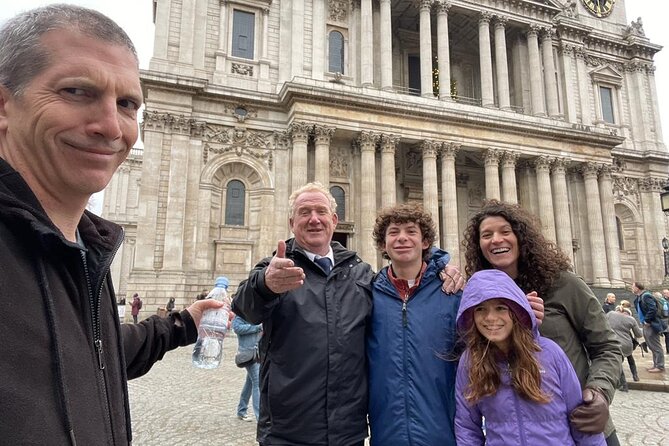
The small-group setup is the other big deal. Up to six people in one vehicle is the difference between listening and constantly raising your voice. It’s also why this works well for families, because the guide can handle different interests in the same ride. In the feedback, guides like Morris and Bryan are repeatedly praised for tailoring the day and explaining the stories behind the sights in a way kids can follow.
The one practical drawback is simple: London landmarks are spread out. With a 4-hour time window, you’ll get broad coverage, not deep dives. If you want to spend an hour inside one place, you might want to pair this with a separate ticketed visit later.
More black cab tours of London:
- The Premier Classic London: Private 4-Hour Tour in a Black Cab
★ 5.0 · 2,737 reviews - Private Tour: Black Taxi Tour of London
★ 5.0 · 1,153 reviews - London Sightseeing Private Black Cab Tour with Hotel Pick Up
★ 5.0 · 917 reviews
Price and Value for a 4-Hour Taxi Circuit
The price is $603.08 per group, up to six, for about 4 hours. That sounds like a lot until you do the math. If you’re filling all six seats, the per-person cost drops a lot compared with paying for separate private guides or multiple taxis.
This value equation also makes sense because you’re paying for two things at once: driving plus interpretation. The best part of a London taxi tour is that you’re not just traveling through traffic, you’re learning why these places matter and how they connect. In the feedback, guides are credited with knowing the roads well, keeping things moving efficiently, and making photo stops more productive than wandering on your own.
Where it might not be the best fit is if you’re traveling solo or as a couple and you’re price-sensitive. In that case, you’re still paying for a full group vehicle. But if you want a premium, low-stress overview that avoids the randomness of self-planning, this setup can still feel worth it.
Meet at Embankment Place, Then Settle In for a Smooth Start

The tour starts and ends back at Embankment Place, London WC2N. Pickup is available within a 5-mile radius of Trafalgar Square, and that pickup is free. You can also arrange pickup from your hotel or Airbnb, as long as you fall within that radius.
The general starting time is 10:00 AM, with a broader window noted as 9:00 AM to 11:00 AM. If you need something different, you’re expected to contact the provider ahead of time. I like this for visitors who want a clean plan on day one, especially when you’re building the rest of your trip around the tour.
One more practical note: airport pickups are not included, but they can be arranged for an extra charge. If you’re using Heathrow or another airport, this is one of those moments where you’ll want to confirm timing early so the day stays calm.
Apsley House and Wellington Arch, Constitution Hill in One Ride
This is a strong opener because it sets up a core theme of London: power, empire, and the way the city reuses symbols. From the taxi, you’ll look at Apsley House, the home of the Duke of Wellington, dating to 1825. It sits at Number One London, and the location alone tells you you’re in the “look at me” part of the city.
Across from it is Wellington Arch, which has an interesting backstory. The arch was moved to function as an outer gate for Buckingham Palace, and today it faces Constitution Hill. The sculpture story is the kind of detail that makes the ride feel like more than sightseeing trivia. After Queen Victoria’s decision to take down the earlier huge Wellington statue, a smaller Wellington statue took its place, and the current quadriga statue was installed in 1912. The center figure is Nike the Goddess of Victory, riding the chariot.
Apsley House and Wellington Arch are also useful because they anchor the rest of Westminster. You’re building a mental map of where leadership, ceremony, and government sit in the same tight geography. The only drawback is that this is mostly an exterior view, so you’ll get stories and context, not interior architecture unless you plan a separate stop.
A different sort of day out in London:
- From London: Harry Potter Warner Bros Studio Tour
★ 4.7 · 26,588 reviews - Magical London: Harry Potter Guided Walking Tour
★ 4.7 · 22,044 reviews - London: Madame Tussauds London
★ 4.6 · 20,915 reviews - Stonehenge, Windsor Castle, and Bath from London
★ 4.5 · 18,662 reviews
Westminster Hall and the Houses of Parliament Rebuilt Through Fire
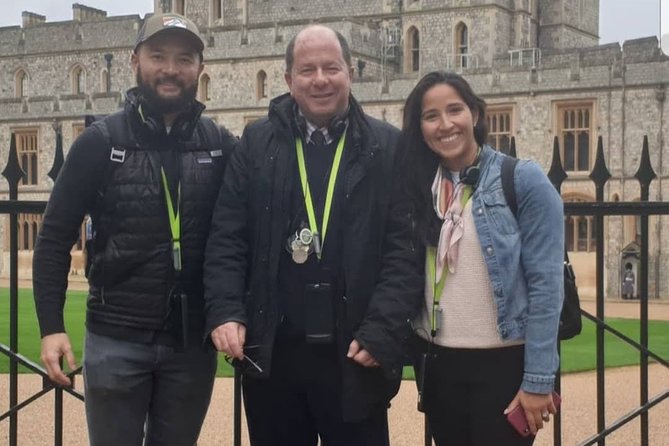
Next comes the part of London where the city’s survival history becomes obvious. You’ll move toward the Palace of Westminster area, with its layers of rebuilding after major destruction.
The original building on this site is traced back to the 11th century, when it served as a monarch’s palace under William the Conqueror. Then there was the fire in 1512, followed by another major destruction in 1834, with only key parts surviving, including the Crypt, the Jewel Tower, and Westminster Hall.
Westminster Hall is the star here for “scale and longevity.” It dates to 1097 under King William Rufus, which means you’re looking at something that has outlived regimes, wars, and even the idea of what London should be. Then you’ll see the Houses of Parliament as you know them today, rebuilt from 1834 to 1870 by architects Augustus Pugin and Charles Barry. These are the House of Commons and House of Lords, sitting on the north bank of the Thames.
Why this stop is valuable is that it explains how London’s politics are tied to its survival. It also helps you understand what you’re seeing later with the clock tower and the ceremonial sites, because the Parliament area is the backbone of Westminster.
The only consideration: street-level viewing means you might not get close-up details like carved stone work. If you love architectural detail, you’ll likely want extra time on your own afterward.
The Elizabeth Tower, Better Known as Big Ben

Few places in London need an introduction, but the tour framing helps you see Big Ben with better understanding. Big Ben is a nickname often used for the bell, the clock, and the tower, but the official name is The Clock Tower, renamed The Elizabeth Tower in 2012 for Queen Elizabeth II’s Diamond Jubilee.
You’ll learn that the tower opened in 1859 and was designed in the Gothic Revival style attributed to Augustus Pugin. That matters because the design choices were not random. They connect this landmark to the wider Victorian-era push for grandeur and historical style.
This stop also works well because it’s one of the easiest places to photograph from the road, especially if you’re riding in a cab with the viewing setup. With the large windows and glazed roof, it’s simpler to line up shots without constant repositioning.
The drawback is crowd reality. Even if the taxi reduces your stress, the immediate area can still be busy. The advantage here is that you’re not spending your day waiting in queues to move through it.
Downing Street and Westminster Abbey, the Royal-Political Core
From there, the route swings toward the London you recognize from headlines and ceremonies.
You’ll pass Downing Street with its two most famous addresses: Number 10 for the Prime Minister and Number 11 for the Chancellor of the Exchequer. Downing Street was built in 1680 by Sir George Downing and sits between major landmarks, near Whitehall on one side and Trafalgar Square on the other.
Then comes Westminster Abbey, one of the UK’s most important religious buildings. It’s formally called the Collegiate Church of Saint Peter, mainly Gothic, and it’s tied to royal history in a way that’s hard to replicate. Every coronation since William the Conqueror has taken place here. It has also hosted sixteen royal weddings, and it is the burial site of many English and later British monarchs.
You’ll also hear why the building feels like multiple time periods layered together. It was founded around 960 AD. Alterations came in the 13th century under King Henry III, which is tied to the nickname Henry the Builder, and major rebuilding happened again in 1517 during King Henry VIII’s reign. The visible towers you notice today were added in the 18th century by Nicholas Hawksmoor, a close associate in the orbit of Christopher Wren.
This stop is valuable because it links government and monarchy into one walkable mental picture, even if you never step inside. If you love royal pageantry, this is a must. If you’re short on energy, it can still be a good fit because you’ll get the story quickly, then move on.
Thames Bridges and Victoria Embankment: Big Views, Fast Context
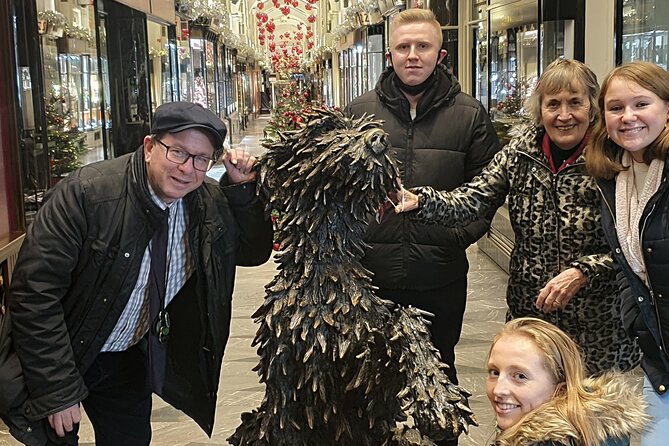
After Westminster, the tour shifts into river mode, and this is where the taxi setup really earns its keep. From the road, you’ll see how London’s identity shows up in bridges, memorials, and the river edge.
You’ll start with London Bridge, the original stone bridge built between 1176 and 1209, remembered as the first stone bridge across the Thames. It was the longest inhabited bridge in Europe, nearly 906 feet, and it supported shops, houses, restaurants, and even a chapel. The bridge you see today is the third London Bridge.
Then you’ll move toward Tower Bridge, built between 1886 and 1894. It’s a combined bascule and suspension bridge, with bascule meaning see-saw in French, and it’s often called the Wonder Bridge. This is the kind of landmark that makes the Thames feel engineered for drama.
You’ll also pass Albert Bridge, connecting Chelsea to Battersea. Its lighting is known for spectacular river views, and it has appeared in films. There’s even a military-logic note about stability, marked by a sign telling troops to break step. The bridge is still known as the Trembling Lady.
Between all of this, you’ll cover the Victoria Embankment on the north bank of the Thames from the Palace of Westminster to Blackfriars Bridge. It includes memorials like the Battle of Britain memorial and retired vessels such as the H.M.S. President, plus public gardens. Construction ran from 1865 to 1870, directed by Joseph Bazalgette, and the work influenced the Thames by narrowing parts of the river.
Why this section is valuable: bridges teach you direction. If you’ve ever been disoriented by the Thames, this helps you lock in where everything sits. The only drawback is time. River-edge sights can feel quick from a moving vehicle, so if you want one bridge as a deep photo stop, plan for that with your guide.
St Paul’s Cathedral on Ludgate Hill, From Dome to Legacy
The final landmark sweep lands at St Paul’s Cathedral, perched on Ludgate Hill, which is why it stays such a visual anchor across the city.
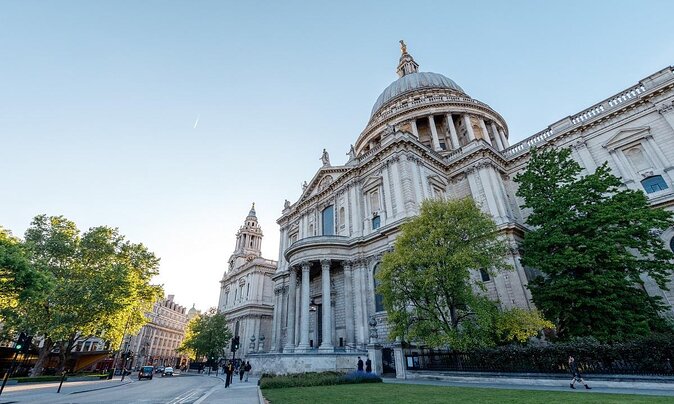
The site has held cathedrals for centuries. You’ll hear that the first record of a building there goes back to 604 AD under Bishop Mellitus, and that there have been four cathedrals on the site. The current cathedral was built between 1675 and 1710, and you can see architect Christopher Wren’s work prominently. Wren is also buried under the dome.
The older cathedral, often called Old St Paul’s, stretched from 1087 to 1314 and was the largest building in the UK until it burned in the Great Fire of London in 1666. The modern St Paul’s is in English Baroque style. The dome is 365 feet high and weighs around 65,000 tons.
This stop gives you an emotional closing to the Westminster-heavy first half. Westminster is about power and ceremony. St Paul’s is about endurance and rebuilding after catastrophe, and it visually brings the whole city together because you can spot the dome’s silhouette in a lot of London scenes.
The consideration here is the same as all exterior stops: this tour gives you the big picture fast. If you want close-up interior details, St Paul’s is best as a separate planned visit.
How the Guide Turns the Route Into Your Day
One of the most praised aspects across the experiences is customization. I like that the guide isn’t locked into a rigid script. You can request stops around your interests, or you can let the guide choose, and the key is that it’s responsive.
In the feedback, Morris is repeatedly singled out for matching the route to each person’s interests and handling families smoothly, including for kids. Dave shows up for customizing even when time is tight, and for being sensitive to mobility limits, with flexible pacing. Guides like Tony and Brian are credited with making the experience friendly and comfortable while still focused on clear explanations.
Another small but meaningful detail is how the taxi supports getting pictures and viewing landmarks. The taxis are described as comfortable and clean, with air-conditioned interiors and big viewing surfaces. For mobility needs, there are comments about wheelchair compatibility and an easier process for getting in and out, including a ramp setup reported by one party using a mobility scooter. That’s a practical win because it reduces stress at every turn.
If you want this to feel smooth, do one thing before you go: pick 4 or 6 “must see” priorities. Then decide what’s flexible. That gives your guide something to work with, so you get a coherent route instead of a long list of half-decisions.
Should You Book This Black Taxi Tour of London?
Book it if you want a high-comfort, low-stress London overview with flexibility. It’s especially good if you’re short on time, traveling with kids, mixing ages, or you want a guided explanation that makes Westminster and the Thames make sense quickly.
Skip it or pair it carefully if you’re hoping for long interior museum time at each stop. This is built to show you the landmarks and the connections, not to replace full ticketed visits.
If you’re deciding based on value, I’d book it when your group can fill most of the seats or when you place a high value on a guide who can reshape the day. In London, that kind of time-saving and clarity is often what makes the difference between a trip that feels scattered and one that feels confidently planned.
FAQ
How many people can ride in the taxi?
The tour is a private experience for your group, with a flat fare covering groups up to six people.
How long is the Black Taxi Tour of London?
The duration is about 4 hours.
Where is the tour meeting point?
The start (and end) is Embankment Place, London WC2N.
Is pickup included, and how far away can you be for free pickup?
Pickup and drop-off are included within 5 miles of Trafalgar Square, and pickup is also offered from your hotel or Airbnb.
Are airport pickups included in the price?
Airport collections are not included, but they can be arranged for an extra charge. Contact the provider for a quote.
Is the tour offered in English, and is it accessible?
The tour is offered in English. The taxis are described as accessible and spacious, and service animals are allowed.
Recently reviewed around London
- London: Harry Potter Walking Tour with Platform 9 3/4★ 4.6 · 37 reviews
- London: Harry Potter Tour & The London Dungeons Tour★ 3.8 · 28 reviews
- London: Harry Potter Tour, River Cruise & The London Dungeon★ 4.4 · 8 reviews
- London: Harry Potter Walking Tour and River Thames Cruise★ 3.6 · 24 reviews
- London: Harry Potter Tour and London Bridge Tombs Experience★ 3.8 · 4 reviews
- London: Harry Potter Walking Tour and Tower Bridge Ticket★ 4.4 · 7 reviews
- London: Harry Potter Walk, Hop-on Hop-off Bus Tour & Cruise★ 4.1 · 105 reviews
- London: Harry Potter Sights and Shrek’s Adventure Combo Tour★ 4.6 · 3 reviews
Black Cab Tours, compared.
The Premier Classic London: Private 4-Hour Tour in a Black Cab
Read our review →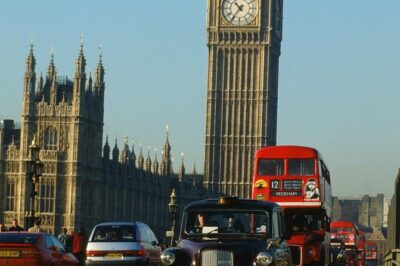
London Sightseeing Private Black Cab Tour with Hotel Pick Up
Read our review →
Rock Cab Tours presents Music Legends Private Taxi Tour of London
Read our review →
The Ultimate 6-hour Private Tour of London in an Iconic Black Cab
Read our review →
Black Taxi Tour of London: Classic Sightseeing Bespoke & Fun
Read our review →
Harry Potter Black Taxi Private Tour of London with Hotel Pickup
Read our review →
Browse the lists this tour appears in