
Reviewed · CAMBRIDGE TOURS
Cambridge: The Original Uncomfortable Cambridge™ Tour
This Cambridge walk is interesting because it treats the city like a live question, not a postcard tour. You trace the big centre landmarks, then switch gears into stories about race, class, and gender, and how the university helped shape who had power. I like that it nudges you to read the streets with fresh eyes, even when the scenery looks familiar.
I also love the pace and focus. In just 1.5 hours, you get a compact route that hits classic sights like Great St Mary’s and the Old Schools, plus the Corpus Clock, while keeping the conversation grounded in memory and modern debate.
One possible drawback: this is not a quiet facts-only loop. If you want pure sightseeing with no push to weigh difficult topics, the format may feel a bit too head-on.
Key things to know before you go
- A university-led, question-driven guide: the tour is led by university researchers.
- No college entry: you see key college exteriors, without going inside any colleges.
- Classic Cambridge sites, re-read: Kings College, Great St Mary’s, the Old Schools, The Backs and Darwin College, plus the Corpus Clock.
- Talks connect past to present: statues, names, colonial objects, and the legacy of imperialism in the city and university.
- About 2 km on mostly flat ground: wheelchair accessible, with cobblestones and one ramp on and off a bridge.
Starting at Cambridge Tourist Information Centre, then getting your bearings fast
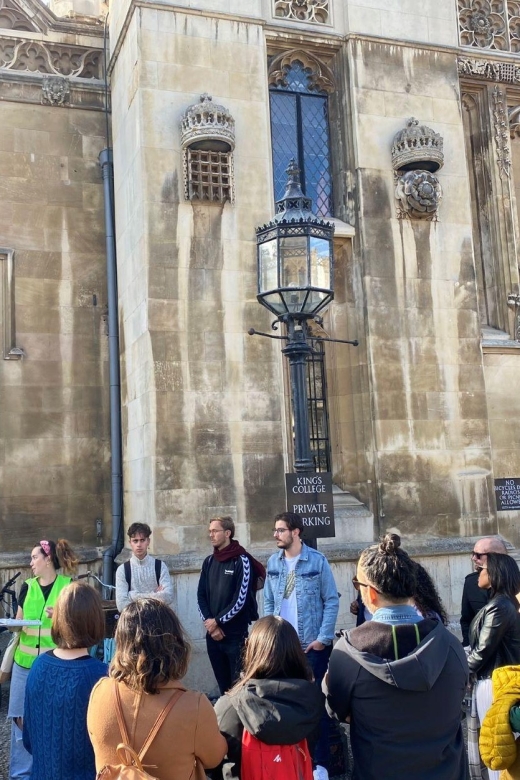
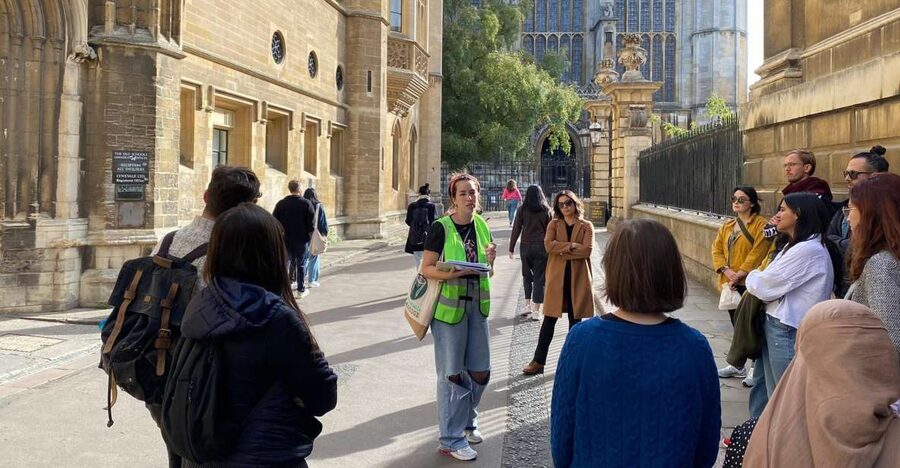
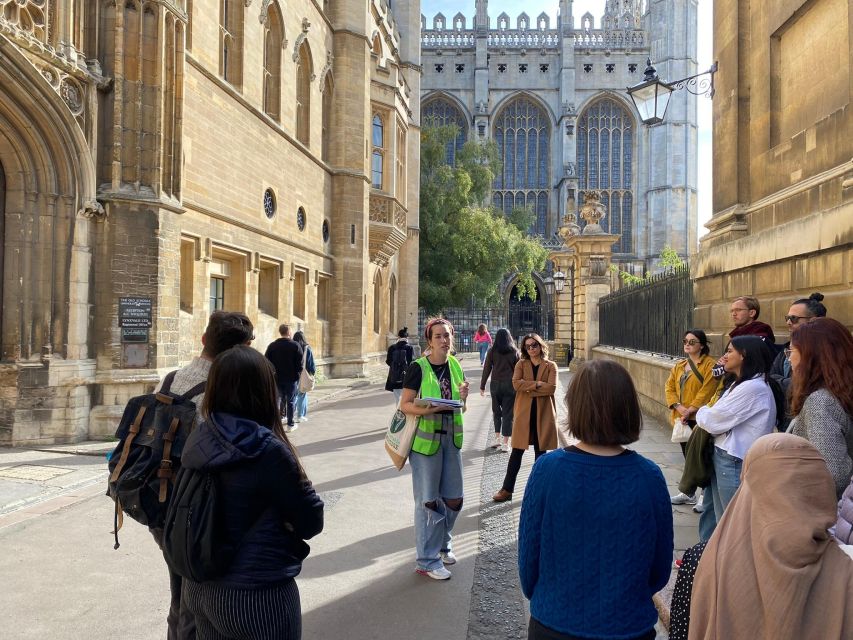
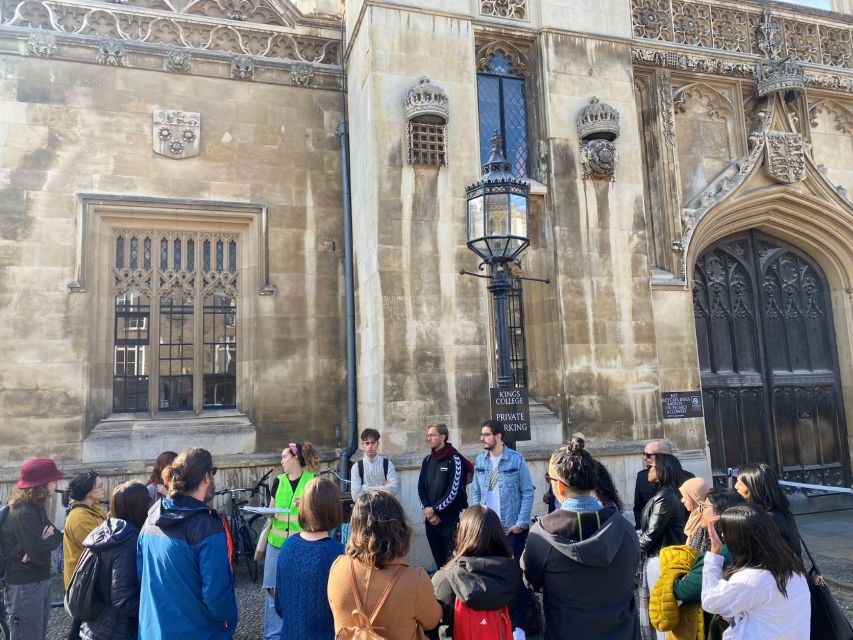
You meet outside the main entrance of the Cambridge Tourist Information Centre. Your guide wears a badge and carries a green Uncomfortable Cambridge Tours tote bag, so you won’t be hunting around for the right person.
The tour keeps things simple. It’s about 2 km total walking, mostly flat, and it lasts 1.5 hours. That’s a sweet spot for a first visit, or for days when you don’t want a full half-day plan tied up in tickets and queues.
Within the first stretch, you get scenic views on the way, about nine minutes of looking outward before the conversation starts to sharpen. This matters because it sets the rhythm: you’re not just moving from building to building. You’re learning how Cambridge looks, and then learning what those visuals can hide.
Also, plan for real city conditions. There are some street crossings and uneven cobblestones, and on weekends the central streets can be quite busy. Comfortable shoes help here, even if you’re not doing long distances.
More Cambridge tours:
- Cambridge: Guided River Cam Punting Tour
★ 4.7 · 1,469 reviews - Cambridge: University Alumni Tour with Kings College Option
★ 4.7 · 1,282 reviews - Cambridge: Alumni-Led Walking Tour w/ King’s College Option
★ 4.8 · 1,177 reviews
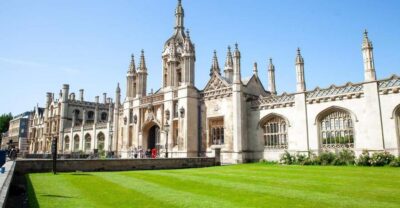
Kings College from the outside: impressive architecture with a pointed story
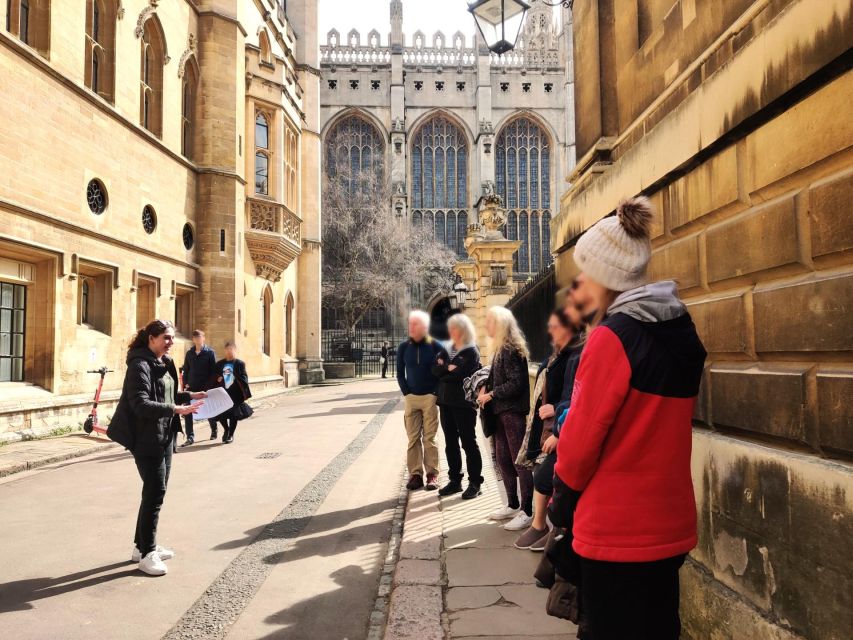
The tour’s first major landmark is Kings College. You’ll view it as part of a wider city story, not as a standalone icon.
This is where the tour’s format does something clever. Cambridge is famous for monumental buildings, and it’s easy to treat them like neutral scenery. Here, you’re encouraged to ask who benefited from the institutions behind those walls, and who got shut out. That kind of framing changes how you look at details you might otherwise ignore.
Because you’re not going inside any colleges, the focus stays on the public-facing Cambridge: the streets, the edges, and the way the city interfaces with the university. That can be a relief if you dislike tight entry times or prefer to keep walking while the story is fresh.
A practical consideration: from the street, angles matter. If the group pauses quickly, you may only catch one viewpoint of the façade. If you want photos, position yourself early and stay patient with the guide’s pauses.
Great St Mary’s and the University Church: power, tradition, and who the story served
Next up is Great St Mary’s, the University Church. On the surface, it’s classic Cambridge, part church, part university identity.
What makes this stop valuable on an Uncomfortable Cambridge walk is the lens. You’re not just learning what the building is. You’re learning what the university has historically represented in daily life, and how tradition can hide unequal access.
The tour also brings in topics you can usually feel in Cambridge but rarely hear clearly during a standard introduction. You’ll examine histories linked to race, class, and gender, and you’ll hear how those themes connect to who was educated, who had influence, and how the university’s public face shaped perceptions.
One more thing I liked: this stop is strong even if you’re not religious. You can treat the church as an anchor point for understanding the university’s culture, rather than as a place you have to interpret spiritually.
If you’re someone who prefers straightforward timelines, you might find the discussion style changes the tone. It’s still structured, but the guide will ask you to think, not just memorize.
The Old Schools: when Cambridge’s institutions met the wider town
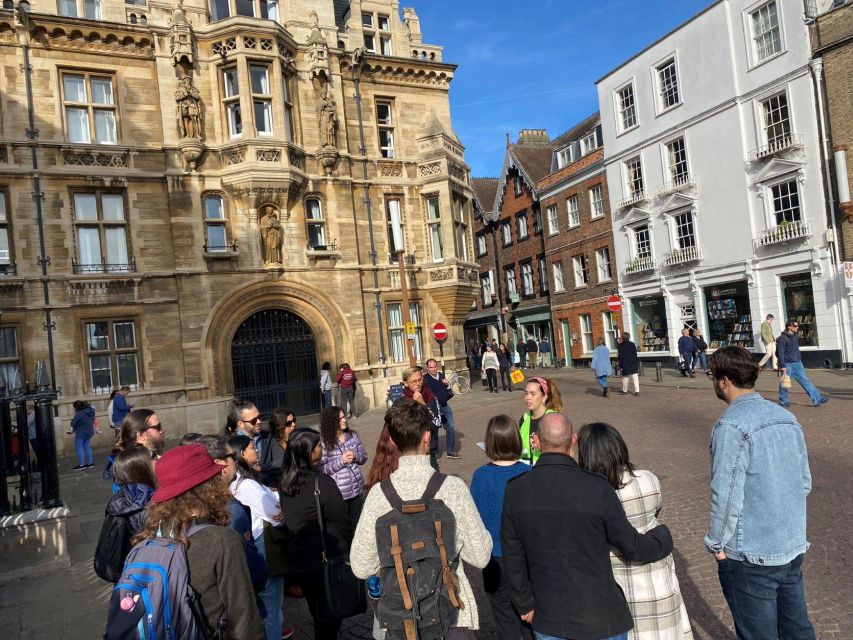
The Old Schools is one of those Cambridge locations that feels like it should come with a simple explanation. A university building with university purpose. Done.
The tour refuses to leave it there. You’ll look at this area as a meeting place between institutional Cambridge and the surrounding town life. That’s where questions about power and belonging become practical.
You start to see how boundaries worked, who crossed them easily, and who had to fight for access. These themes connect to larger discussions about the city and university relationship, including how minority communities and women’s education have been treated over time.
I like that this stop helps you connect Cambridge’s physical layout to human outcomes. It’s not just, here is a building, now move on. It’s, here is a building, now notice what it suggests about control and opportunity.
A small drawback to consider: the tour is walking-focused, so you won’t linger for a long photo session at every stop. If you want deep architectural photography, balance your time by grabbing quick shots during the transitions.
More day trips out of London:
- Cambridge: City Sightseeing Hop-On Hop-Off Bus Tour
★ 4.4 · 520 reviews - Cambridge: Shared Punting Tour with Guide
★ 4.7 · 427 reviews - Cambridge: Alumni-Led Walking & Punting Tour w/Kings College
★ 4.6 · 418 reviews - Cambridge: Guided Shared River Punting Tour
★ 4.8 · 298 reviews
The Backs and Darwin College: reading the “pretty” parts with sharper questions
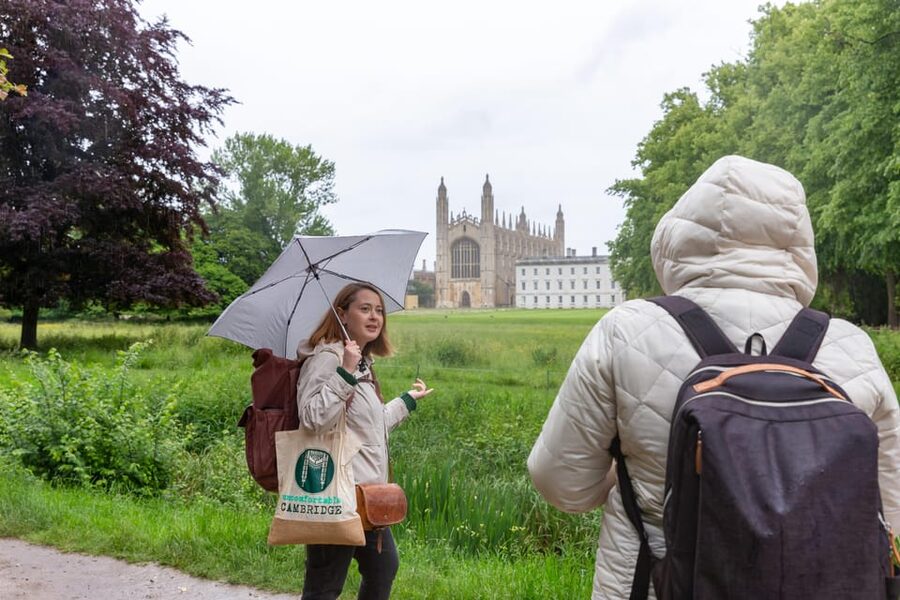
Then you move to The Backs and Darwin College. This is where Cambridge looks postcard-perfect, and that’s exactly why it’s a strong choice for an Uncomfortable Cambridge tour.
The Backs are often photographed for the view and the calm. This tour keeps that beauty in view, but it also pressures you to ask what that calm required. You’ll examine how class, access, and institutional priorities shaped everyday life around the university.
Darwin College enters as another reminder that modern Cambridge still carries old patterns. Even when you’re standing somewhere new, you’re seeing an ecosystem formed by older decisions.
One of the best parts of this section is the way the conversation can include your reactions. In one past run, the guide actively involved the group in conversation about how people might feel when looking at past restrictions and difficulties, including issues tied to women’s education. That kind of discussion turns the tour from a lecture into something more personal.
If you don’t like group participation, you can still follow along. You’ll just contribute less directly. The guide should still keep you oriented and moving.
The Corpus Clock: a landmark you can’t ignore, and a lesson about modern debate
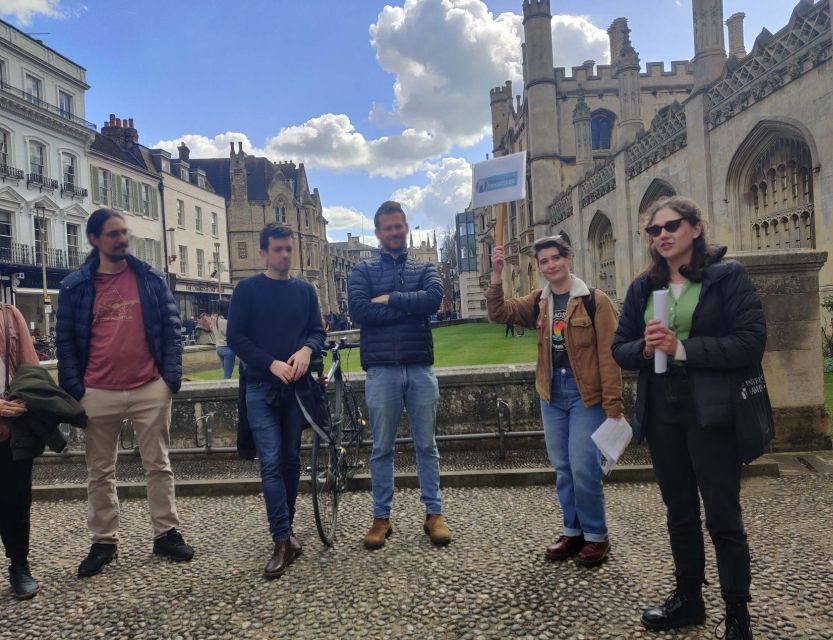
Finally, you hit the Corpus Clock. It’s one of Cambridge’s more instantly recognizable public pieces, and it’s also a great closing stop because it’s about time, measurement, and how information gets presented.
For this tour, the Corpus Clock isn’t just a quirky thing to photograph. It’s a springboard into modern controversy and interpretation. You’ll talk about controversies surrounding statues and names, and you’ll hear how colonial objects and the legacy of imperialism show up in the university and city.
That’s the heart of why this tour works for many people. It takes what often feels like abstract debate and anchors it to real city objects. You leave with a sense of how public memory gets curated, and how institutions decide what to show, what to rename, and what to keep.
If you’re the kind of traveler who likes to understand how current debates got started, this stop lands well. If you’re uncomfortable with controversy, you might want to mentally prepare for the conversation to be candid and not overly softened.
Why the tour’s “uncomfortable” framing is actually useful
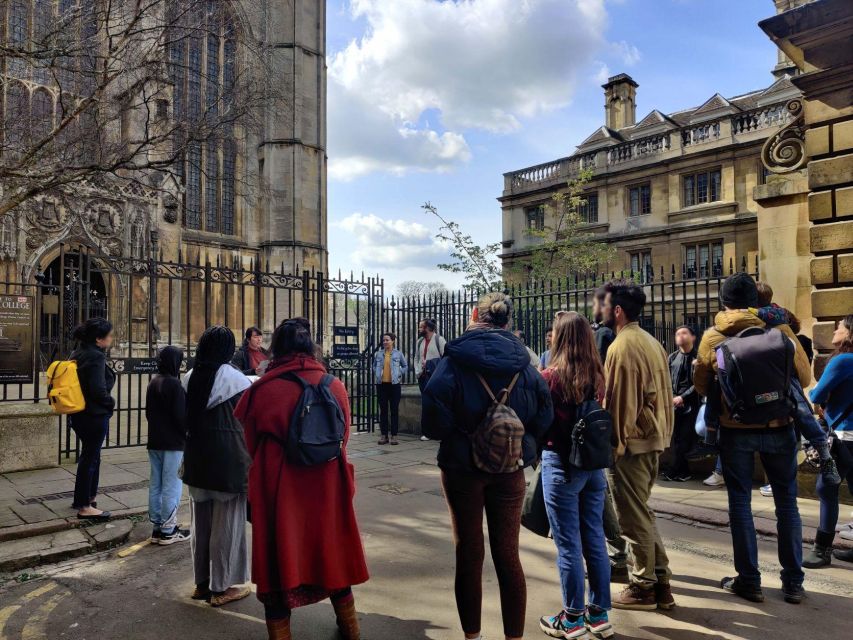
The tour’s whole premise is that traditional narratives can flatten messy reality. In Cambridge, that flattening is common because the buildings look timeless and the story is often told as a neat sequence of achievements.
Here, you’re asked to question that comfort. You’ll look at histories of race, class, and gender, plus the modern controversies around naming, statues, colonial objects, and imperial legacies. That means you get a tour that doesn’t just explain the past, it shows how the past is still active in the present.
What I like is that it’s not just critical for the sake of criticism. It’s practical. You learn how to read the city like a document, and you learn to spot what’s missing when a tour only gives the official version.
Guides like Ruari and Oscar have been praised for being friendly and able to keep the group engaged while holding the discussion to the route. That matters because uncomfortable topics can easily turn awkward. The best guides keep it respectful, focused, and grounded in the places you’re actually standing.
What you actually get for $26 in 1.5 hours
The price is listed as $26 per person, and in my view the value comes from three concrete extras, not just the walking.
First, you get a certified Uncomfortable Cambridge Tours guide who is tied to university research. That’s the difference between a basic scripted city tour and a guided conversation backed by more academic care.
Second, you get an Uncomfortable Cambridge souvenir sticker. It sounds small, but it’s a tiny marker that you took a specific kind of tour, not just any walking loop.
Third, you get a reading list compiled by university researchers. This is the part that keeps paying off after your feet stop hurting. If you’re the type who wants to continue the learning on your own time, this helps you do that without hunting around.
Time-wise, 1.5 hours is short enough to fit into almost any itinerary, even if you’re touring other parts of East England. It also means the route stays focused on central Cambridge, where most first-timers spend their time anyway.
Price check in your head: if you spend the same money on a standard “highlights” tour, you might get nicer photos, but you won’t necessarily come away with questions to carry. This one aims for that.
Getting the most out of the route: practical tips that matter
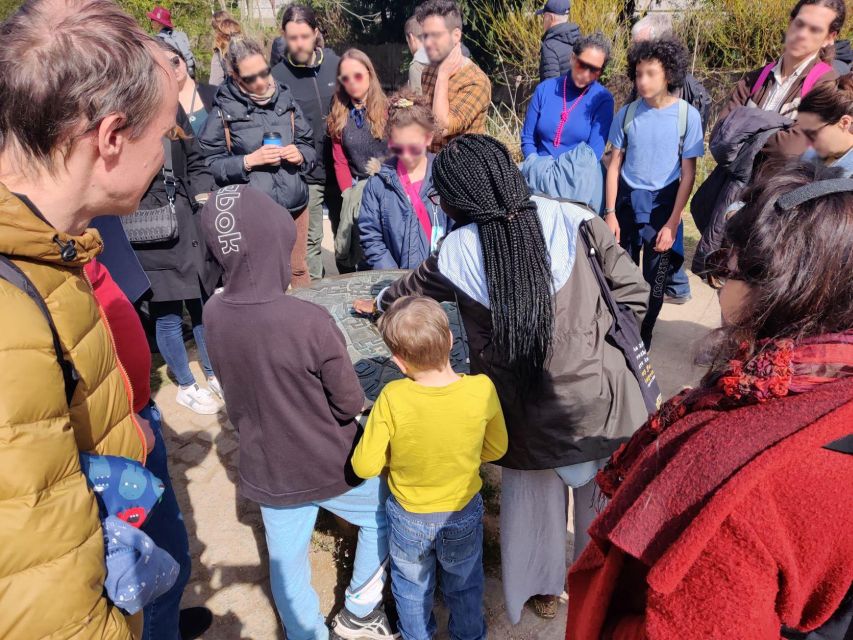
This is a walk of about 2 km, with some cobblestones and street crossings. It’s mostly flat, but you should expect uneven paving, especially around older streets.
If you’re bringing mobility aids, plan for the details the tour notes. It’s wheelchair accessible with no steps, and there’s one ramp on and off a bridge. You should be able to join comfortably, and there are spaces to sit or lean if needed. Carers attend free and do not require booking.
Toilets are available in local pubs along the route, which is a lifesaver if you’re touring during a day when you don’t want to hunt for bathrooms on your own.
The tour doesn’t go inside any colleges, so you can skip worries about entry restrictions and timed access. Still, wear weather-appropriate clothing and bring layers if you’re visiting in changeable conditions.
On busy weekends, arrive with a little patience. The centre gets crowded, and this walk is sensitive to group flow because discussion pauses are part of the format.
Who this tour suits best, and who might prefer something else
This is a great fit if you want a quick introduction to Cambridge that doesn’t treat the university as a neutral backdrop. You’ll enjoy it if you like context, if you care about social history, and if you want modern debates tied to specific city locations.
It’s also a strong choice if you have limited time. 1.5 hours gives you a structured way to see the main sights in the city centre, including Kings College, Great St Mary’s, the Old Schools, The Backs and Darwin College, and the Corpus Clock.
You might not love it if your ideal tour is purely light entertainment or only architectural commentary. Even though the route includes beautiful landmarks, the tone is intentionally “uncomfortable.” You’ll be asked to think about race, class, gender, and imperial legacies.
It can still work for many visitors who are new to these topics, because the guide keeps the story anchored in place and invites you to engage at a pace that feels human, not academic.
Should you book the Uncomfortable Cambridge Original Tour?
Book it if you want a first-time Cambridge walk with a brain and a point of view. For $26 and 1.5 hours, you get a focused route, a university-research guide, and take-home support via a reading list. More importantly, you leave with tools to read Cambridge beyond the usual highlights.
Skip it if you want a relaxed sightseeing loop with minimal discussion. This tour is designed to challenge what you assume when you see a beautiful university city.
If you’re on the fence, here’s my practical advice: treat it as an orientation tool. You’re not trying to “finish Cambridge.” You’re learning how Cambridge conversations work, then deciding what to explore deeper on your own.
FAQ
Where do I meet the guide?
Meet your guide outside the main entrance to the Cambridge Tourist Information Centre.
How long is the tour?
The tour runs for 1.5 hours.
Does the tour include entry into colleges?
No. The tour does not go inside any colleges.
What are the main sights on the route?
You will see Kings College, Great St Mary’s (the University Church), the Old Schools, The Backs and Darwin College, and the Corpus Clock.
Is the tour wheelchair accessible?
Yes. The terrain is mostly flat, but there are some cobblestoned streets. There are no steps, and there is one ramp on and off a bridge. There are also places to sit or lean if needed.
What should I bring?
Bring weather-appropriate clothing. The route includes uneven cobblestones and street crossings, so plan for comfortable walking conditions.
Is the tour in English, and can I reserve without paying now?
The live tour guide is in English. You can reserve now and pay later, meaning you can book your spot and pay nothing today.
Recently reviewed around Cambridge England
- From Cambridge: Guided Day Tour to Bath and Stonehenge★ 4.8 · 14 reviews
- From Cambridge: Guided day trip to Stratford & The Cotswolds★ 4.7 · 4 reviews
- Cambridge: University Walking Tour★ 4.6 · 104 reviews
- Cambridge: Shared Chauffeured Punting Tour★ 4.8 · 18 reviews
- Cambridge: Sightseeing Walking Tour with a Local Guide★ 3.0 · 5 reviews
- Cambridge: Ghost Tour Led by University Alumni Guide★ 4.5 · 108 reviews
- Cambridge: Private Chauffeured Punting Tour★ 4.8 · 3 reviews
- Cambridge: City Walking Tour & Exploration Game★ 3.7 · 7 reviews
Cambridge Tours, compared.
Cambridge University Walking Tour by Alumni™ Kings College Option
Read our review →
Cambridge University With Alumni: Optional Kings College Entrance
Read our review →
Cambridge: University Alumni Tour with Kings College Option
Read our review →
Cambridge: Alumni-Led Walking Tour w/ King’s College Option
Read our review →
Cambridge Walking & Punting Tour by Alumni™ King’s College Option
Read our review →Browse the lists this tour appears in