Reviewed · GUIDED
Clapham South: Subterranean Shelter Guided Tour
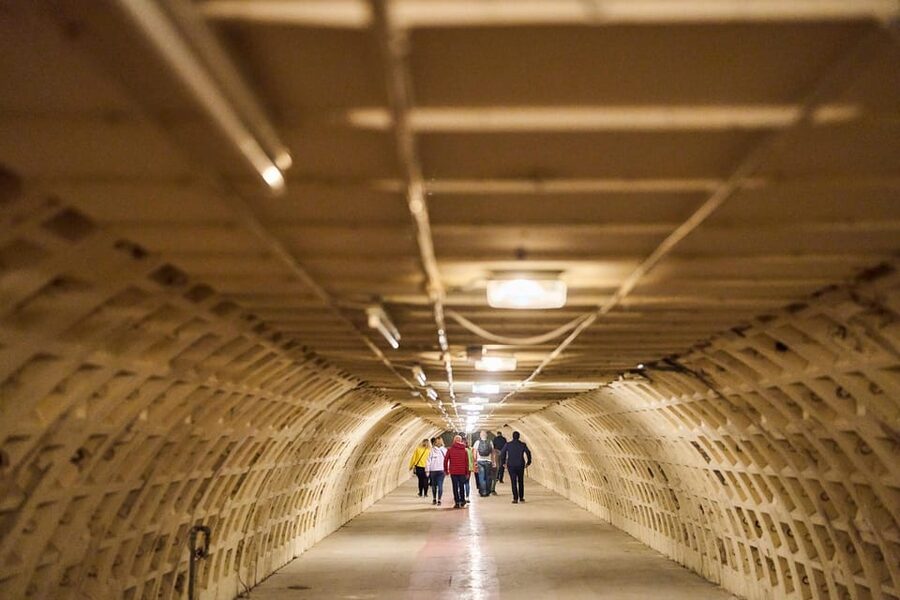
This tour is interesting because London’s wartime life did not just happen above ground. Here you go down into a secret deep-level shelter network hidden below Clapham South, and you can still see the spaces where people tried to survive the air raids. You’ll travel 30 metres underground, into tunnels that stretch for over a mile.
I also love how the guides bring the story to life with period-style staging and clear character work. One guide portrays an ARP Warden, and the other supports the tour with extra historical context and hands-on moments that feel practical, not just lecture-based.
One possible drawback: this is a confined, underground walk, so claustrophobia is a deal-breaker for many people. You should also expect uneven ground and low lighting, plus stairs and static escalators as part of the route.
Key highlights at a glance
- 30 metres underground into a deep-level shelter under Clapham South station
- Over a mile of tunnels to explore during a 75-minute guided route
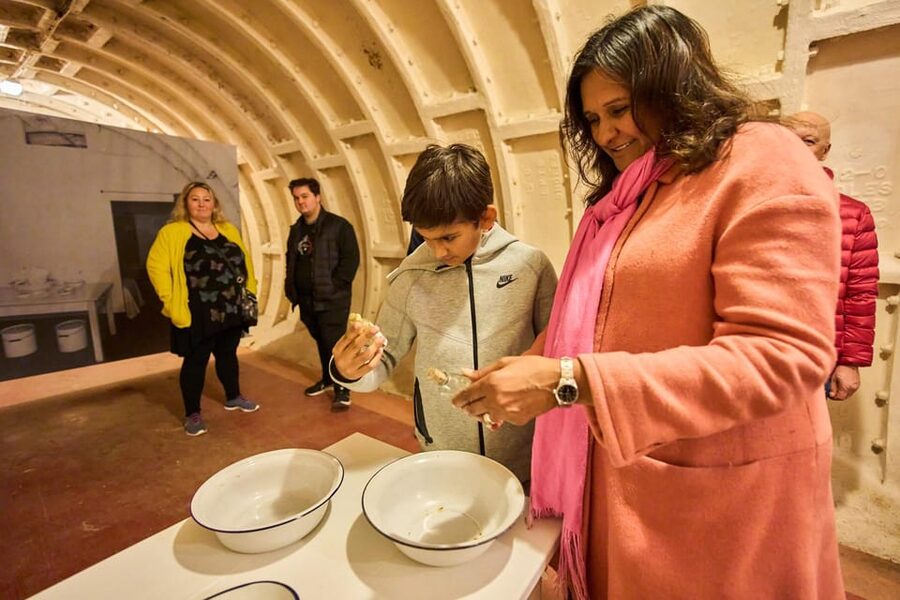
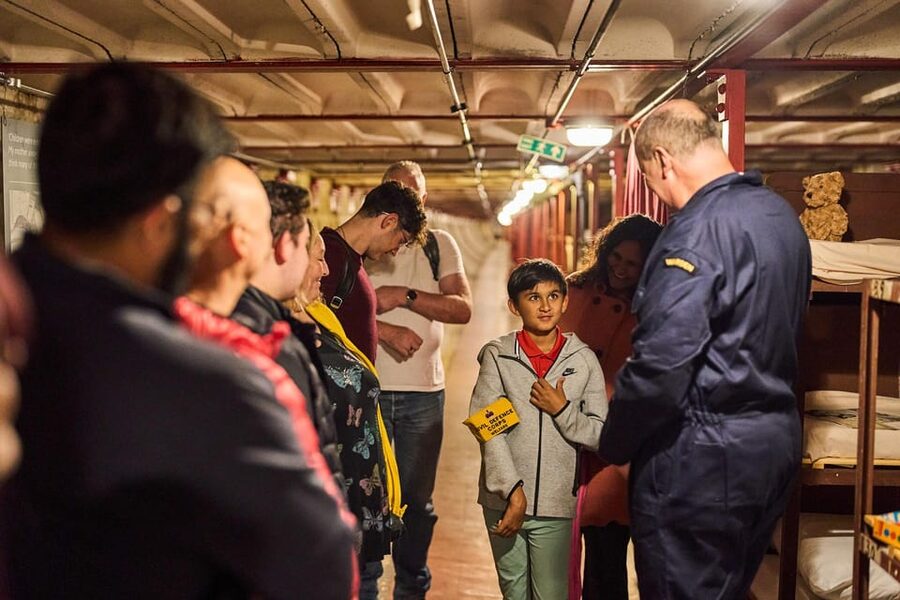
- ARP Warden role play plus real wartime atmosphere in recreated rooms
- Original bunks, canteen, and warden’s spaces returned to a 1940s look
- WWII artefacts and hands-on-style moments like torches and Anderson shelter details
- Windrush-era stories, including connections to HMT Empire Windrush
London’s secret deep-level shelter under Clapham South station
Clapham South runs as one of London’s deep-level air raid shelters, built in the 1940s to protect thousands during bombing. The shelter opened in 1944 and was designed to shelter over 8,000 people, which helps you understand why it needed proper spaces for sleeping, eating, and basic care.
What I like about this setup is how it turns the underground into something you can navigate. It is not just one room with boards and labels. You follow a route through tunnels and you get a real sense of the scale, including the fact that it is completely hidden beneath the streets of South London.
You’ll also get the big story arc, from the wartime shelter mission to what happened afterward. The tour explains how the site was repurposed in post-war years, including its connection to early Caribbean migrants to Britain arriving on HMT Empire Windrush.
A few more London tours worth a look
- Magical London: Harry Potter Guided Walking Tour
★ 4.7 · 22,044 reviews - London: Emirates Stadium Entry Ticket and Audio Guide
★ 4.7 · 5,513 reviews - Stonehenge, Windsor Castle and Bath Full Day Guided Tour
★ 4.5 · 5,346 reviews
Getting underground: what the 11-story descent feels like
This tour starts with a serious change of setting. You descend 11 stories underground and start exploring the mile of tunnels hidden beneath the station, with the sense of London moving above your head as trains pass overhead.
Expect it to feel different from typical museums. Even when the lighting is handled well, you’re still in a subterranean environment, so keep your eyes on the guide and give yourself time to adjust. The route includes uneven ground and low lighting, and you will be walking up and down on the static escalator sections.
Good footwear matters here. Bring comfortable shoes you can trust on stairs and uneven surfaces, and dress for the weather since you’ll spend time outside before you go in. There’s no cloakroom, so keep your load light.
The guides: how the ARP Warden scene sets the tone
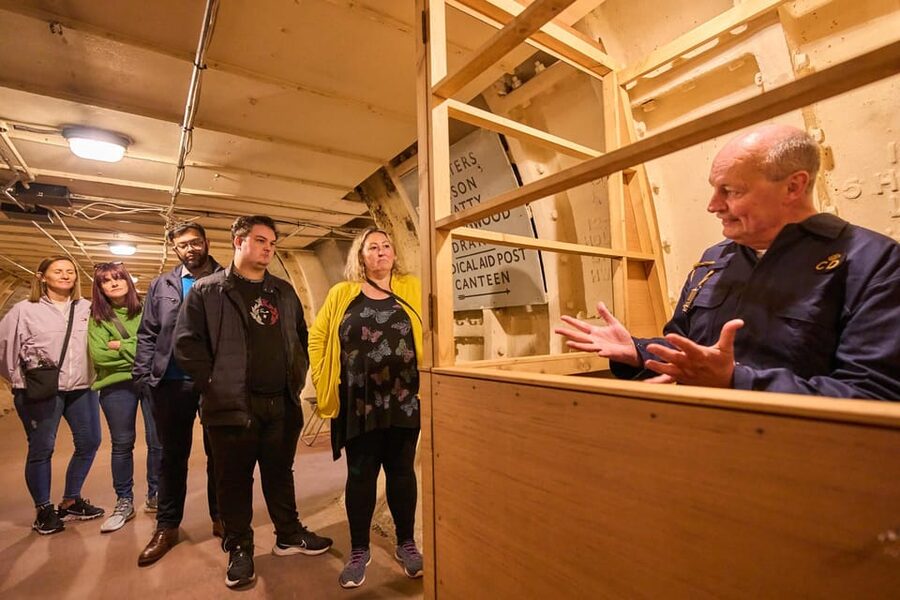
A big reason this tour scores well is the way it is staged. The format uses two expert guides, and one takes on the role of an ARP Warden, essentially acting as the voice you would have heard coordinating shelter life during the Blitz era.
When you hit the early recreated spaces, the role play does more than entertain. It helps you picture routine, priorities, and the mood of a night when air raid warnings could change everything quickly. The warden character also helps connect the practical details, like where people spent their time and how they moved through the shelter.
I like that the emphasis is on clarity, not fear. The guide structure means you are not left guessing what you’re looking at, and you get frequent reminders of what this place was for and how it worked.
Recreated wartime spaces: warden’s cabin and canteen
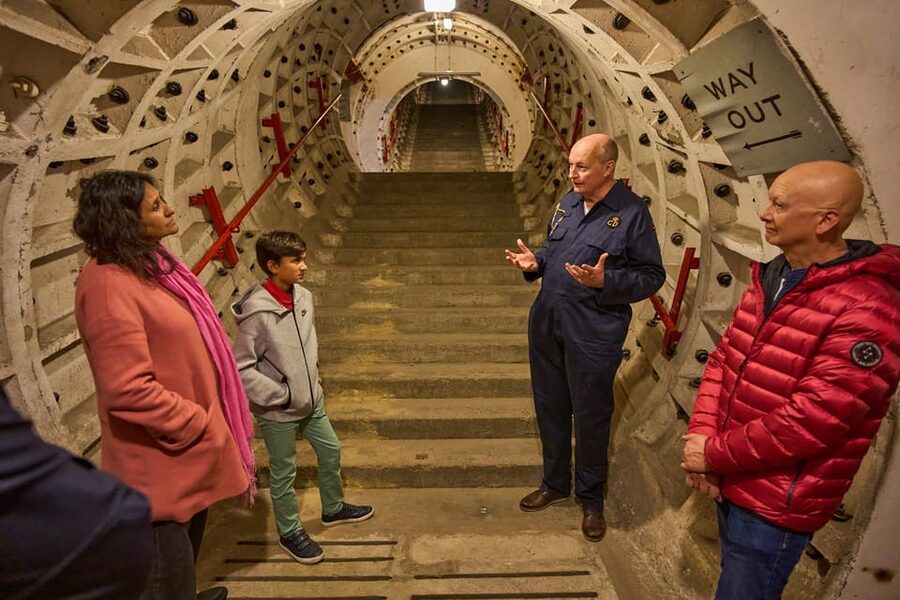
Once you’re properly underground, you step into newly refurbished spaces that aim to reflect the shelter’s 1940s state. You’ll spend time in key areas such as the warden’s cabin and the canteen, which are carefully recreated based on historical archive findings.
This is one of the most valuable parts of the tour because it shows you systems, not just scenery. A shelter was not only for sleeping. There needed to be roles, supervision, basic provisions, and a place where people could gather during the hours they expected to be there.
You’ll also hear how the shelter served as a safe haven even though it remained invisible to most of the city above. That contrast makes the site feel more real, because London’s surface could look normal while thousands of people were underground preparing for raids.
A different sort of day out in London:
- From London: Harry Potter Warner Bros Studio Tour
★ 4.7 · 26,588 reviews - London: Madame Tussauds London
★ 4.6 · 20,915 reviews - Stonehenge, Windsor Castle, and Bath from London
★ 4.5 · 18,662 reviews - London: Warner Bros. Studio Tour with Transfers
★ 4.7 · 17,586 reviews
Original bunks and the artefacts that make the past physical
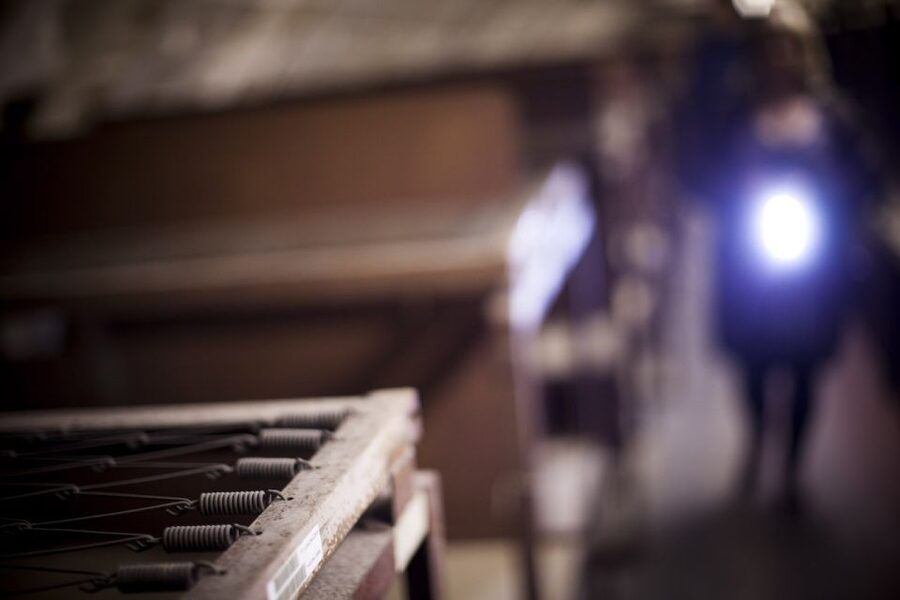
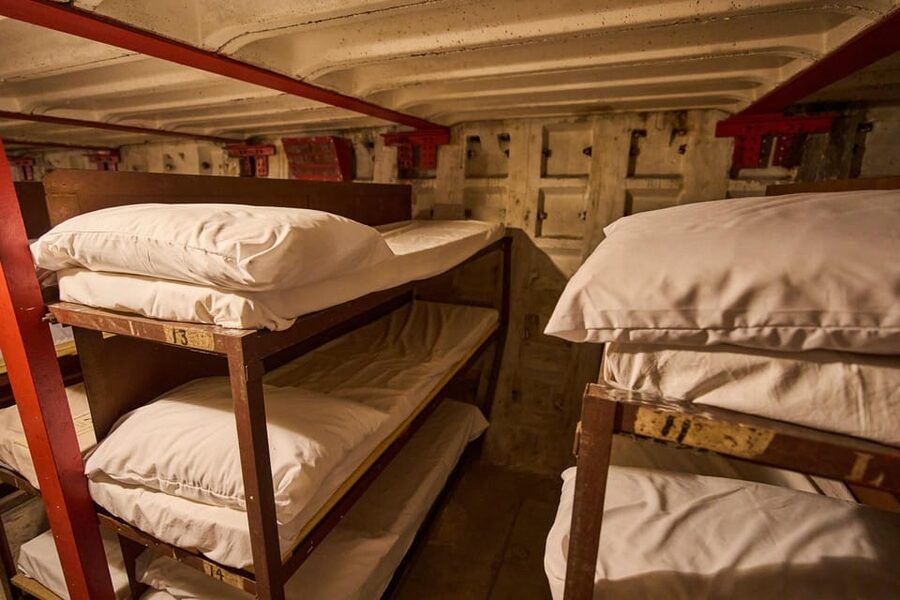
The tour doesn’t stop at recreated rooms. You get to see the original cramped bunks where thousands slept overnight during air raids, and you’ll also encounter how those bunks were later repurposed into benches for evening use.
This part is powerful because it is specific. Instead of vague statements about hardship, you can see what cramped sleeping meant in real terms. The sightline of these beds, the closeness, and the layout help you understand why space itself was a survival issue.
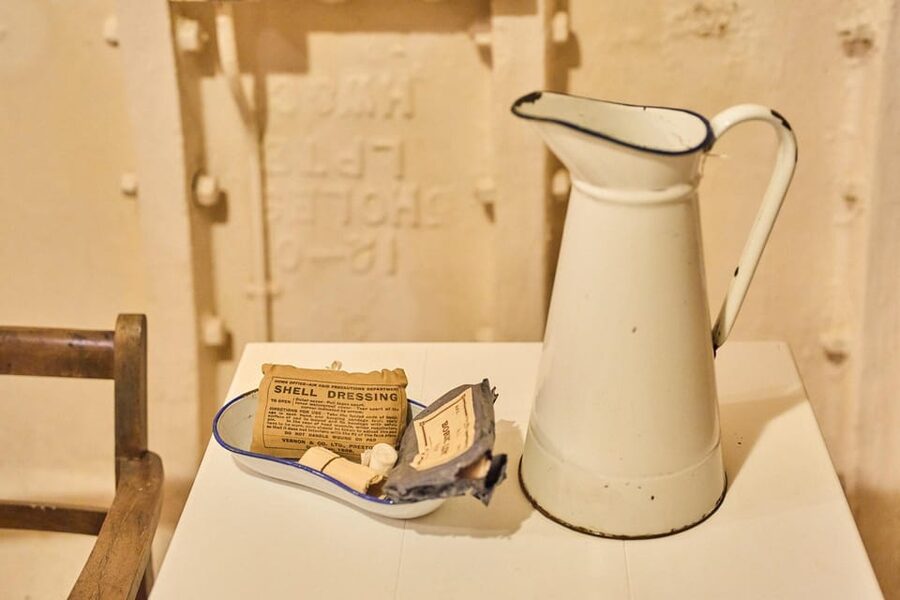
You’ll also get hands-on style moments with authentic Second World War items, including torches. You might also see details that connect to what an Anderson shelter looked like, which helps link the deep-level shelter story to the wider network of British air raid protection.
The graffiti story: messages left by shelter occupants
One surprisingly human element is the historical graffiti. The tour invites you to read the marks left by people who stayed in the shelter, and that is where the site shifts again from infrastructure to personal memory.
Graffiti in a shelter has a different meaning than graffiti on a street wall. Here it is tied to waiting, confinement, and shared nights where people needed a way to mark time and space. Even without a single guide-led lecture, you can feel that these were messages from real occupants, not props.
If you like history that has fingerprints on it, this is your moment. Look closely, and let the guide’s context do the heavy lifting.
From air raids to Windrush: the post-war repurposing connection
The tour moves forward in time, and that matters. Once the war ended, the shelter did not simply close forever. It was repurposed, and the story connects to the arrival of the first Caribbean migrants to Britain.
You’ll hear about links to HMT Empire Windrush, and the tour also references visitors during the Festival of Britain. This helps you see that the shelter’s use changed with the decades, even though it remained an underground structure built for emergency protection.
For many people, this arc is the takeaway. It reframes the shelter from a single-episode wartime location into a site that carried forward into post-war life. That means you leave with a sense of continuity, not just a freeze-frame of the 1940s.
How the 75 minutes usually plays out
Your tour runs for 75 minutes, so the pacing stays tight. You’ll spend the first stretch getting oriented underground and starting the tunnel route, then you move through the recreated shelter spaces, artefact moments, and original bed areas.
By the time you reach the hands-on items and the graffiti sections, you have enough context to notice what the guide points out. That sequencing is important. Without early grounding in what the shelter was and how it functioned, details like the bunks, the canteen setup, and the warden spaces can feel like separate exhibits.
At the end, you should feel like you’ve mapped the place in your head. Even though the shelter is large, the guide route is designed so you understand the logic of the space: sleeping zones, roles, provisions, and shared movement through tunnels.
If you’re prone to getting distracted, save your photos for the moments the guide indicates. Low lighting and tight spaces mean safety and attention come first.
Price and value: what $51 buys in a 75-minute tour
At $51 per person for a 75-minute guided experience, the value comes from the combination, not any single detail. You’re paying for expert-guided storytelling, staged period interpretation with an ARP Warden character, and access to a subterranean shelter that most people will never see.
You also get a layered package: recreated rooms (so you understand the layout), original sleeping bunks (so you grasp the scale of crowding), and authentic artefact moments (so the past feels touchable). The tunnel length of over a mile is also key, because it turns the ticket into an actual route and physical experience, not a quick walkthrough.
Is it expensive compared to a free museum exhibit? Sure. But for a guided, behind-the-closed-doors underground site with hands-on-style historical elements, it is a straightforward deal.
Practical planning: where to meet and what to bring
Meet in front of the Marks & Spencer Food Hall on Balham Hill, SW12 9EA. It’s about a 2-minute walk from Clapham South station, and you should turn right when you exit. If you want the smoothest start, arrive 15 minutes early so you can get oriented before you head underground.
Bring:
- Comfortable shoes
- Weather-appropriate clothing
- A passport or ID card
Don’t bring:
- Food and drinks
- Luggage or large bags
And remember, there is no cloakroom, so plan to carry what you need without adding bulk.
Who should book, and who should skip
This tour is best for adults and older kids, since it is not suitable for children under 10. It is also not a good match for anyone with mobility impairments, and it is not step-free, which matters because the route includes walking, uneven ground, and static escalators.
Most importantly, skip it if you have claustrophobia. You’re going 30 metres underground and spending real time in confined tunnels and rooms, so this is not the kind of experience you want to test.
If you’re someone who enjoys WWII Britain through lived details, this is a strong pick. It is also a great choice if you like history that changes time periods, because you get the wartime shelter story plus the post-war Windrush connection.
Should you book the Clapham South shelter tour?
If you want a London experience that is rare and specific, I’d book this. The underground setting is the star, but the real win is how the guides stage the story with a practical warden role and strong scene-setting in recreated spaces. You’ll come away with a clear mental map of how shelters worked, and you’ll understand why this site mattered well beyond the war.
If you’re uncomfortable in tight spaces or you need step-free access, skip it and look for a different London Transport Museum experience. For everyone else who can handle walking in low-light areas, this is one of those tours that turns history into something you can actually picture.
FAQ
How long is the Clapham South subterranean shelter guided tour?
The tour lasts 75 minutes.
How deep do you go on the tour?
The experience takes you 30 metres underground.
Where do I meet for the tour?
Meet in front of the Marks & Spencer Food Hall on Balham Hill, SW12 9EA, which is about a 2-minute walk from Clapham South station. Turn right when you exit the station.
What time should I arrive?
Please arrive 15 minutes before your tour time.
What should I bring with me?
Bring comfortable shoes, weather-appropriate clothing, and passport or ID card.
What is not allowed during the tour?
You cannot bring food and drinks, and you should not bring luggage or large bags.
Is the tour suitable for people with claustrophobia?
No. The tour involves low lighting and underground, confined areas, and it is not suitable for guests with claustrophobia.
Is the tour step-free?
No. The tour is not step free and includes walking up and down static escalators.
What age is the tour suitable for?
It is not suitable for children under 10.
Recently reviewed around London
- London: Harry Potter Walking Tour with Platform 9 3/4★ 4.6 · 37 reviews
- London: Harry Potter Tour & The London Dungeons Tour★ 3.8 · 28 reviews
- London: Harry Potter Tour, River Cruise & The London Dungeon★ 4.4 · 8 reviews
- London: Harry Potter Walking Tour and River Thames Cruise★ 3.6 · 24 reviews
- London: Harry Potter Tour and London Bridge Tombs Experience★ 3.8 · 4 reviews
- London: Harry Potter Walking Tour and Tower Bridge Ticket★ 4.4 · 7 reviews
- London: Harry Potter Walk, Hop-on Hop-off Bus Tour & Cruise★ 4.1 · 105 reviews
- London: Harry Potter Sights and Shrek’s Adventure Combo Tour★ 4.6 · 3 reviews
Guided, compared.

Magical London: Harry Potter Guided Walking Tour
Read our review →
Oxford University Walking Tour With University Alumni Guide
Read our review →
Emirates Stadium Entry Ticket and Audio Guide
Read our review →
Stonehenge, Windsor Castle and Bath Full Day Guided Tour
Read our review →
London Jack the Ripper Guided Tour with Ripper-Vision
Read our review →
Oxford: University and City Walking Tour with Alumni Guide
Read our review →
Original Harry Potter Locations Tour – Guided Tour of London
Read our review →