
Reviewed · JACK THE RIPPER TOURS
Las noches de Jack the Ripper in Spanish
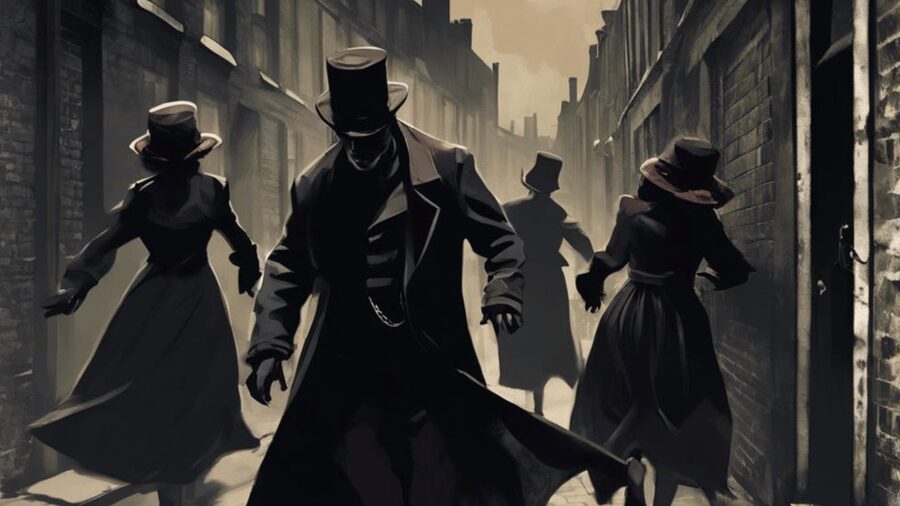
A street walk through East London, performed by the spirit of Jack the Ripper, turns famous names into a moving story you can follow block by block. The best part is that it is delivered in Spanish, and it kicks off right at Tower Hill with a clear, real-world route.
What makes it especially interesting is the mix of dramatized tone with a strong insistence on factual storytelling.
I love two things about this experience. First, I like the way the walk uses specific locations like Goulston Street and Spitalfields Market as anchors, so you never feel lost in vague rumors. Second, I love the role work, especially when the guide is Javier, who takes characterization seriously and explains the case in a way that stays sharp.
One drawback to consider: this is not a light, family-friendly stroll. The tour focuses on the five Whitechapel femicides of 1888, and the guide leans into terror, so you should be ready for dark subject matter and an intense atmosphere.
Key highlights you will feel on the walk

- Spanish live guide who guides you through the story for a full 2 hours
- Tower Hill sundial start, with views that connect medieval London to the later Whitechapel streets
- Dramatized storytelling with sarcasm and terror, while still aiming for true information
- Landmark stops that map the narrative to places you can point at, like Mitre Square and Roman Wall of Londinium
- Off-the-usual-path streets, including Artillery Passage, with a darker corner mood
- Historic texture at the finish, ending at The Ten Bells, tied to the last night
Why a Jack the Ripper tour in Spanish works so well
If you know the name Jack the Ripper, this tour will give you something better than a checklist of facts. It takes the case, called Jack el destripador, and places it into the streets where the story is remembered. You are not just reading about 19th-century London, you are walking it, with the guide talking as if Jack’s spirit is leading you.
The language also matters. Spanish delivery changes the experience in a good way because you can actually follow the details as they come, instead of trying to translate in your head. You get live guidance for the full 2 hours, so the story has time to build, then land.
And the tone is a key selling point. The tour is described as dramatized, with sarcasm and terror, so it feels theatrical without turning into pure fantasy. You are explicitly told to expect true information and no fiction, which is a big deal if you want the mystery presented with seriousness.
More Jack the Ripper walks:
- London: The Original Jack the Ripper Walking Tour
★ 4.7 · 7,833 reviews - London Jack the Ripper Guided Tour with Ripper-Vision
★ 4.5 · 4,840 reviews - London: Jack the Ripper Small Group Tour
★ 4.7 · 3,159 reviews
Meeting at Tower Hill, right by the sundial
Your day starts outside Tower Hill Station, a few meters from the exit. Look for the sundial, and go to the right side at that point. The guide will be waiting with a red mask and an umbrella, so you can spot them quickly.
This start location is smart for two reasons. First, it is easy to find without hunting through side streets. Second, the sundial spot lets you orient fast, and you can even see the medieval castle from there, which helps you understand you are stepping into a city with layers, not one flat time period.
Wear shoes you can stand in comfortably for a couple of hours. You will be walking and stopping in multiple locations, including outdoor streets. If you know you get cold easily, dress for that. Even though the tour is not described as only nighttime, the topic and mood lean dark.
The deal on price and what you actually get
At about $5.39 per person, this is priced like a bargain for a live, Spanish, 2-hour guided experience. The price includes your place on the tour, so you are not adding a ticket fee on top later.
Also note what is not included. Tips are not included, so if you plan to tip, you should set aside a little cash or be ready on whatever payment method your guide prefers.
Is it a “cheap” tour in the bad sense? Not really, because you get the essentials: live guide, multiple guided stops, and a performance style that is central to the experience. The only tradeoff you are really making is intensity. The story is heavy, and the atmosphere is meant to feel tense.
How the guide blends performance and factual focus
The tour is guided by the spirit of Jack the Ripper, which means the storytelling is dramatized. The descriptions point to sarcasm and terror, so you can expect the guide to use tone and character delivery, not just read a lecture.
But there is an important boundary in how it is presented. You are told to get true information, with no fiction. That means the guide is not trying to convince you of made-up scenes for entertainment value. It is more like street theater that stays pinned to the case.
In practice, this works best if you enjoy mystery storytelling but still want the structure of a real explanation. If you want creepy atmosphere plus a coherent narrative of the Whitechapel events in 1888, this is built for you.
And if you are sensitive to dark crime themes, be honest with yourself. This is not a gentle “London lore” walk. The content centers on femicides, and the guide’s mooding is part of the design.
A different sort of day out in London:
- From London: Harry Potter Warner Bros Studio Tour
★ 4.7 · 26,588 reviews - Magical London: Harry Potter Guided Walking Tour
★ 4.7 · 22,044 reviews - London: Madame Tussauds London
★ 4.6 · 20,915 reviews - Stonehenge, Windsor Castle, and Bath from London
★ 4.5 · 18,662 reviews
Stop 1: Tower Hill Station and the medieval-to-murder connection
Tower Hill Station is your first anchor point, but the real meeting marker is the sundial. From this spot, you can see the medieval castle, and that small detail helps set context. London here is layered, and the tour uses that idea to bridge centuries: from medieval shapes to 19th-century streets.
I like the way this opening sets you up mentally. You are not dropped into chaos. You begin with orientation, then the guide starts linking places to the story.
One practical note: because you start right outside the station, the area is familiar and easy to meet up. That reduces the stress factor. You can simply show up, find the red mask and umbrella, and get moving.
Stop 2: Goulston Street, where Whitechapel gets its darkest label
Next up is Goulston Street, guided as a key scene area. You are told it is referred to as the entrails of Whitechapel. That phrase may sound dramatic, and it is. But it signals what the stop is for in the narrative: the guide frames this street as a core part of the Whitechapel mood.
This is the kind of location stop that pays off when the guide ties it back to the case. You are not just hearing that the area matters. You are hearing why it matters, and you are looking at the street while the story is told.
If you like tours that feel like a guided “mental map,” this is where it kicks in. You begin to understand the route as a sequence of meaning, not just a bunch of addresses.
Stop 3: Mitre Square, the place tied to a double event
Then you reach Mitre Square, again with guided explanation. This stop is described as the place of the double event, which tells you the tour is building a sequence with turning points, not just listing scenes.
Mitre Square also functions as a mood shift. Squares are where crowds and movement naturally converge, even today. That makes it a useful stage for a story about how people lived and feared in 19th-century streets.
What you will get here is narrative structure. The guide uses stop points like this to create pacing, so the 2 hours feel like a story with momentum instead of an endless walking lecture.
Stop 4: Roman Wall of Londinium, London goes way older
At Roman Wall of Londinium, the tour pulls you into deep time. This stop is guided, and it is a reminder that London’s streets sit on older layers than the 1888 case.
Why this matters: when you are talking about a mystery tied to a specific moment, it is easy to forget that the city itself did not freeze in that moment. Standing at a Roman-era reminder gives you a physical sense of time passing, which makes the later story feel more grounded.
The drawback here is simple: if you only care about the Ripper story and you want it nonstop, this stop adds a “history detour.” But if you like your crime stories with atmosphere and context, it is a good pause that makes the rest of the walk feel sharper.
Stop 5: Artillery Passage, street life with a dark corner
Next comes Artillery Passage, described as a street full of life with a dark corner. That line tells you exactly how the guide wants you to see the place. It is not about a single dramatic landmark, it is about the feeling of everyday movement plus the possibility of something terrible happening out of sight.
Tours like this work best when the guide points out how streets can shape human behavior. The guide’s tone, tied to sarcasm and terror, likely amplifies that feeling, because the story is being told through the idea of proximity: people living close to danger.
If you are the type who likes “walk and watch” travel, you might enjoy how this stop encourages you to look at the street differently. Not everything is about a famous building. Sometimes it is about the angles, the corners, and the sense of privacy a narrow passage can create.
Stop 6: Old Spitalfields Market, the old silk market feel
Your final main stop is Old Spitalfields Market. It is described as the old silk market of the 17th century. That kind of detail matters because it gives the neighborhood a job identity, not just a crime identity.
This is where you can start to feel the tour’s intent: it wants you to know the victims as real people through the guide’s perspective, not just to chase a puzzle. Market areas historically pulled people in daily. By the time 1888 arrives in the story, the same streets feel different because of what happened there.
As you move through the market space, keep your focus on the guide’s connections between place and story. The value here is the feeling of stepping through a neighborhood with a past. You may also find that this stop helps you balance the earlier intensity with a different texture of London life.
Other named spots the guide weaves into the narrative
Along the way, you also get key strategic references that the guide uses to frame the case. These are presented as favorite reference points, each adding a different lens to the mystery.
You will hear about places like Chamberlain, described as a favorite place of the ripperologists. You will also pass Algate Church, described as a favorite place for prostitutes in the 19th century. There is Lilian’s Building, called an old night shelter, which adds another layer to the story by emphasizing vulnerability and survival spaces.
And the tour includes Ten Bells as the pub of the last night, which is where the narrative’s final tone lands. If you want a tour that treats place names like chapters, these extra named spots are part of why this experience feels more complete than a basic “two streets and done” walk.
Ending at The Ten Bells, and why the last stop matters
The tour is set to finish at The Ten Bells, tied directly to the pub of the last night. Ending there gives the story a closing image, not just a natural stop where you happen to be done.
This last leg is also a practical moment. You get to come out of the intense run of storytelling and ground yourself in a real place. In a genre where many tours end with a vague “then the case went cold,” this one is trying to give you a concrete finale.
One thing to double-check: the information provided also says the activity ends back at the meeting point. Because those details conflict, I recommend you confirm the exact end point in your booking confirmation so you are not standing around wondering.
Who this tour suits best, and who might want to skip it
This tour fits you if you:
- Want a Spanish guided walk that tells the Jack el destripador story in a structured way
- Like theatrical guides with sarcasm and terror, but still want factual focus
- Enjoy walking tours that use real locations as part of the plot
- Prefer off-the-usual-path stops that feel more like a local route than a postcard loop
It might not fit you if you:
- Do not want crime-focused content, because the story centers on femicides and the mood is intentionally tense
- Are traveling with kids under 14, since the tour is not suitable for children under that age
- Want a purely educational museum style tour, because this is street theater in tone, even while aiming for true information
Practical tips for getting the most out of your 2-hour walk
1) Arrive a bit early. The start point is specific, the sundial by Tower Hill Station.
2) Bring a jacket. Street time plus a tense theme can make you feel colder than you expect.
3) If your Spanish is intermediate, you will still benefit. The route is built around location names, which helps you follow even when vocabulary slips.
4) Decide your comfort level with terror-style performance before you go. The guide is meant to scare you a little, not just inform you.
One more value note: the tour’s price makes it easy to try. If you like mystery storytelling and you enjoy being guided in a clear, location-based sequence, it is a low-risk way to add something different to a London itinerary.
Should you book Las noches de Jack el destripador?
I think you should book it if you want a Spanish London walking experience that feels like a live, guided story, not a slideshow. The main reason is the combination of performance with true information, plus the use of specific Whitechapel-linked stops that keep the route concrete.
You might skip it if you need a gentle sightseeing vibe, or if crime and terror themes are a hard no for you. In that case, the subject matter will feel too intense.
If you do book, go in expecting a character-led tour that uses places like Goulston Street, Mitre Square, and Spitalfields Market as chapters, then closes at Ten Bells. For many people, that is exactly the kind of London night walk memory that sticks.
FAQ
What language is the tour in?
The live tour guide speaks Spanish.
Where does the tour start?
It starts outside Tower Hill Station, at the sundial a few meters from the Tower Hill Station exit.
What is the duration?
The tour lasts 2 hours.
How much does it cost?
The price is $5.39 per person.
Is the tour suitable for children?
No, it is not suitable for children under 14.
Is tipping included in the price?
No, tip is not included.
Is the tour wheelchair accessible?
Yes, it is wheelchair accessible.
Where does the tour end?
It is listed to finish at The Ten Bells. The activity information also says it ends back at the meeting point, so confirm the exact end location in your booking confirmation.
Recently reviewed around London
- London: Harry Potter Walking Tour with Platform 9 3/4★ 4.6 · 37 reviews
- London: Harry Potter Tour & The London Dungeons Tour★ 3.8 · 28 reviews
- London: Harry Potter Tour, River Cruise & The London Dungeon★ 4.4 · 8 reviews
- London: Harry Potter Walking Tour and River Thames Cruise★ 3.6 · 24 reviews
- London: Harry Potter Tour and London Bridge Tombs Experience★ 3.8 · 4 reviews
- London: Harry Potter Walking Tour and Tower Bridge Ticket★ 4.4 · 7 reviews
- London: Harry Potter Walk, Hop-on Hop-off Bus Tour & Cruise★ 4.1 · 105 reviews
- London: Harry Potter Sights and Shrek’s Adventure Combo Tour★ 4.6 · 3 reviews
Jack the Ripper Tours, compared.
London Jack the Ripper Guided Tour with Ripper-Vision
Read our review →
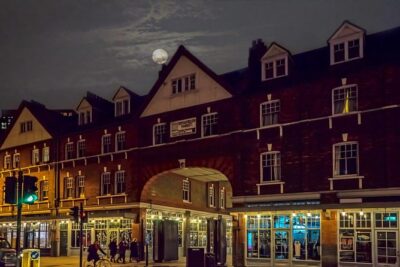

German Language : Original Jack the Ripper Tour
Read our review →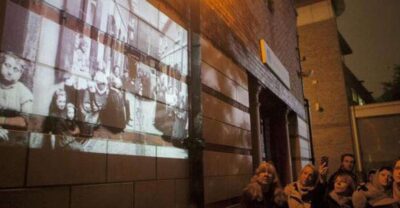
Jack the Ripper Walking Tour – Ripper Vision Tours
Read our review →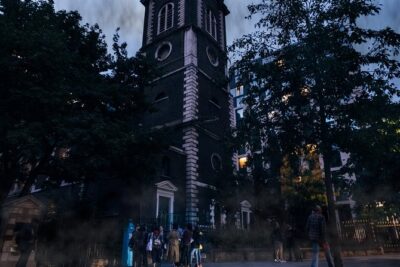
Ultimate Jack the Ripper : Guided Tour of London
Read our review →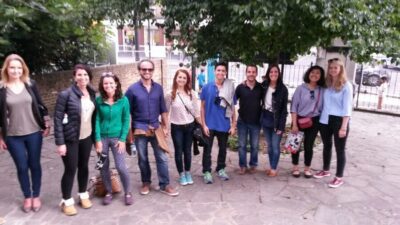
Browse the lists this tour appears in