
Reviewed · BRITISH MUSEUM TOURS
London: British Museum Guided Tour Private Group
A private British Museum tour is interesting because it cuts through the museum’s scale fast, with a licensed guide setting a clear route. I especially like how the tour anchors on big ideas, not random rooms, and I love the chance to focus on the Rosetta Stone and the museum’s most famous debates in one visit. The main thing to consider is time. At two hours, it can feel quick if you want to linger.
I like that this is a true private group format, so you can ask questions and adjust the pace. Languages are English, French, and Italian, and that matters when you want details, not just surface labels. If you’re hoping for a long, slow museum wander, you may leave wanting more rooms.
Key things to know before you go
- Two hours, private group (up to 5), so you get structure without sharing the headsets with strangers
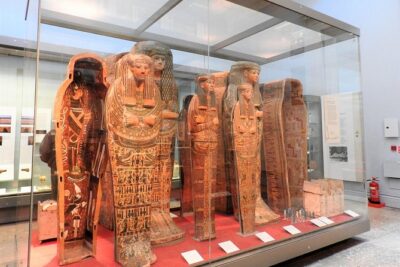
- Egypt first, including pharaoh-related highlights and the Rosetta Stone moment that explains how we read hieroglyphs
- Elgin Marbles context, including the museum’s built-in controversy around Parthenon sculpture ownership
- Ancient Greece to Rome in one flow, with art, ideas, and everyday impressions like mosaics and statues
- Sutton Hoo and a moai (Hoa Hakananai’a), which keeps the tour from feeling stuck in one region
- Comfortable-shoe friendly route, because you do need to walk and stand in a big public museum
Why a 2-hour private British Museum tour makes sense
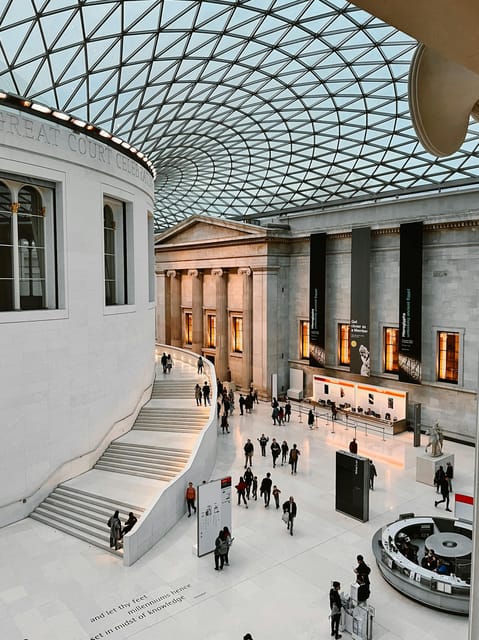
The British Museum can feel like a city inside a building. You can spend a whole day and still feel like you barely scratched the surface. This tour is built for the opposite approach. In 2 hours, you get a human-culture storyline, with stops chosen for impact and meaning.
I like that it starts with Egypt and then moves step by step through Greece and Rome. That sequence helps your brain organize what you’re seeing. Instead of thinking, I’ve seen an artifact, you start thinking, I understand why this matters, how it connects, and what people believed.
The other smart part is the private group size. Up to 5 means you’re not competing for the guide’s attention. If someone in your group is curious, you can actually ask. If someone is tired, you can keep it moving. It’s that small-group advantage, with the British Museum’s big-museum experience.
More British Museum tours:
- London: British Museum Guided Tour
★ 4.3 · 1,182 reviews - British Museum London Guided Tour Semi-Private 8ppl Max
★ 5.0 · 984 reviews - London: Tour of the British Museum
★ 4.1 · 678 reviews
Where to meet your guide inside the British Museum portals
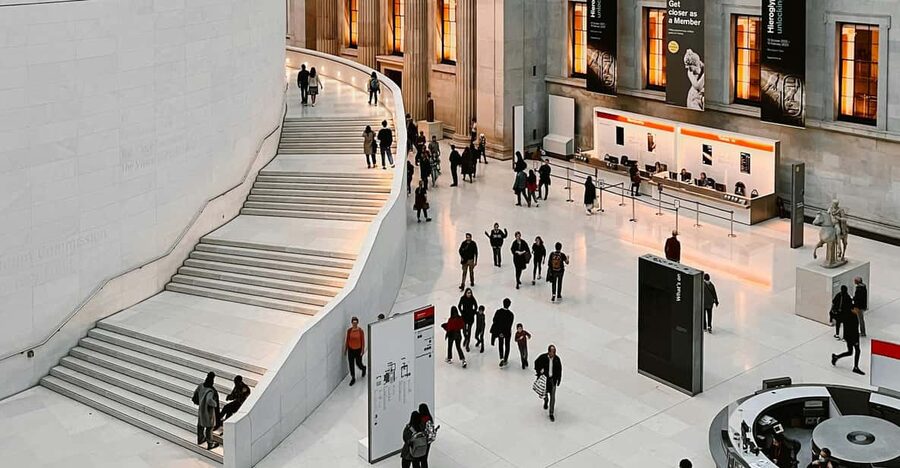
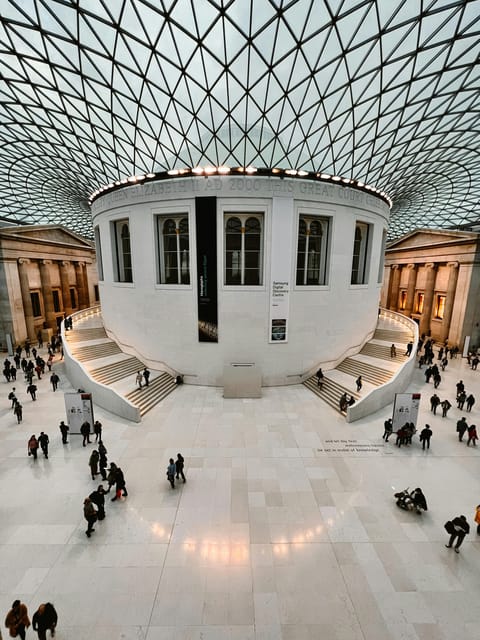
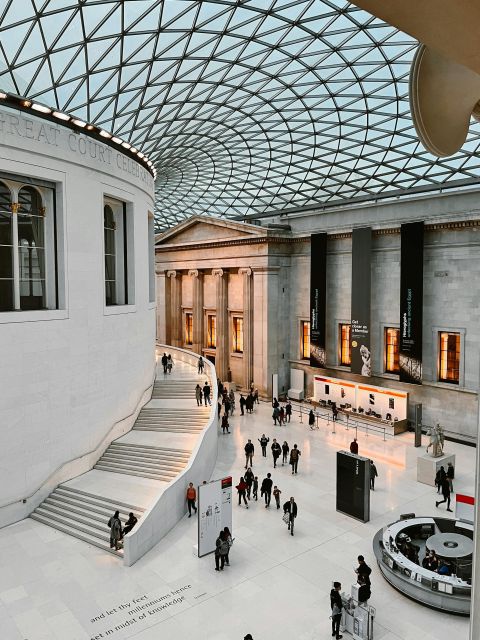
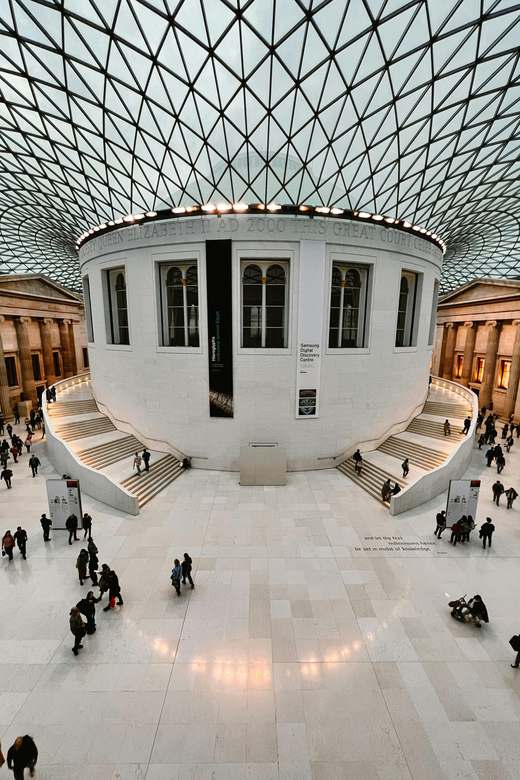
Plan your arrival with a little extra buffer. You meet in front of the British Museum portals on the stairs near the pillars after passing security check. The key detail is that it is not outside the gates.
Then tickets are sent to you about 1 hour before the tour via WhatsApp. If you do not use WhatsApp, you’ll need to contact the provider by email so they can send entry tickets another way. I recommend you double-check you can access your message that hour window, or you can end up scrambling in a place where you really want to be calm.
Also bring comfortable shoes. This is a walk, plus time spent standing to look closely at objects.
Egypt to Greece: Rosetta Stone, pharaohs, and how reading changes everything
The tour starts with ancient Egypt. That choice is more than dramatic. Egypt is one of the easiest ways to make the museum feel like a lived world instead of a storage facility of objects.
You’ll see pharaoh-related pieces and then move toward the Rosetta Stone, including what makes it so important for deciphering Egyptian hieroglyphics. Here’s the practical value for you: once you grasp why the Rosetta Stone helped people read hieroglyphs, a lot of the rest starts clicking. Symbols stop looking like decoration and start looking like communication.
After Egypt, you head into ancient Greece. This is where the tour leans into ideas and art at the same time. You’ll spend time with iconic Parthenon sculptures and related sculpture details, plus marble inscriptions tied to thinking in the Western world. Even if you know little history, you can still follow the logic: Greek sculptors and writers shaped how later societies talked about reason, beauty, and civic life.
One more layer that’s worth noticing. The tour explicitly includes the Parthenon sculpture connection that leads into the Elgin Marbles conversation. You should be ready for nuance. It’s not just about what the pieces look like. It’s also about the controversy around how they ended up here, and why that topic still matters.
Parthenon sculptures and the Elgin Marbles debate, handled in a time-friendly way
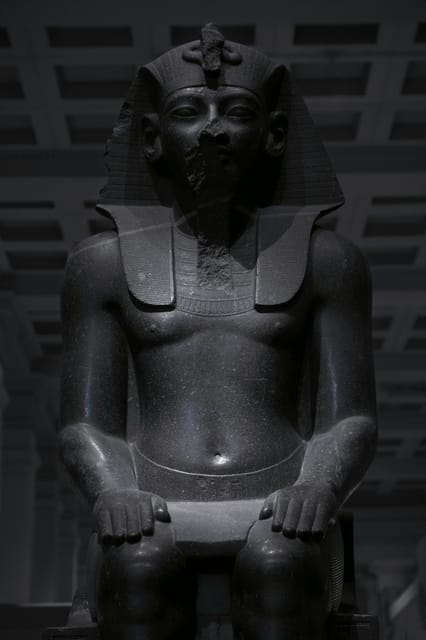
Let’s be honest. The Elgin Marbles topic can become a rabbit hole if you’re not careful. This tour keeps it focused inside the two-hour window. You get to see the sculptures, and you get context about the controversy, without turning it into a lecture that eats your whole visit.
Why that balance is useful: if you’re visiting for the first time, you want both. You want to appreciate the art, and you want to understand why people argue about it. This tour aims to give you that double take, seeing the objects and also seeing the modern questions surrounding them.
Also, you’re not just staring at statues. You’re learning to connect sculpture to the museum’s broader story of human culture across time. That makes the whole visit feel less like a checklist.
Potential drawback: because the pace is efficient, you may not get as long as you want at the most famous spots. One guide style that comes up is enthusiasm, but another comment points out that the visit can feel a bit expeditious. So if you’re the type who likes to stand quietly and study every angle, set your expectations accordingly.
More museum visits in London:
- Tower of London and Crown Jewels Exhibition Ticket
★ 4.5 · 6,677 reviews - London: Chelsea Football Club Stadium and Museum Tour
★ 4.8 · 4,576 reviews - Chelsea FC Stadium Tours and Museum
★ 5.0 · 1,908 reviews - Official tickets: Moco Modern & Contemporary Art Museum
★ 4.5 · 1,157 reviews
Ancient Rome: mosaics, statues, and the public face of power
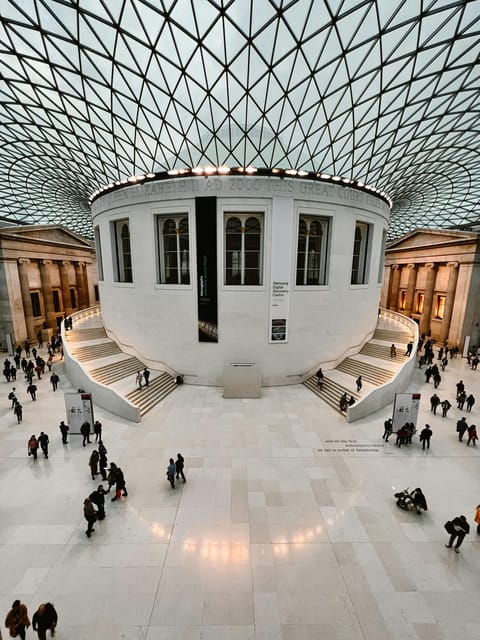
After Greece, the tour shifts into ancient Rome. Rome can feel like a different planet compared with the myths and philosophy of Greece, but the connection is clear when you watch the guide do the linking.
You’ll see relics from ancient Rome, including statues and mosaics. The emphasis here is on what Roman culture looked like in public. Rome was engineering, administration, and spectacle. Mosaics and statues help you picture that. They also make it easier to think beyond “emperors ruled” and toward the visual language of authority.
A practical benefit of this stop: Roman objects often make visitors feel something fast. Even if you do not know the specific figures, you can read the craftsmanship and symbolism. That emotional instant understanding is part of why the Rome segment works in a short, guided format.
If you like art history, you’ll enjoy the way the tour points out details you might miss if you were wandering alone. If you prefer stories over labels, you’ll still get enough narrative to feel oriented.
Sutton Hoo and a moai from Easter Island: the museum’s big worldwide jump
One of the best moves in this tour is the jump out of Europe. After Rome, you reach Sutton Hoo. It’s a set of Anglo-Saxon treasures that offers a look into early English life.
This part matters because it gives you a sense of continuity. You’re in London, you’re in England, and suddenly the museum is not only showing faraway civilizations. It’s showing origins, plus the complicated story of how early English culture formed and what people valued.
Then the tour takes you even farther, to the Hoa Hakananai’a moai from Easter Island. This is a great contrast stop. You go from burial wealth and early medieval society to a completely different worldview, expressed through carved monumental forms.
The goal is not to turn the moai into a trivia question. You’re guided toward the spiritual essence of a distant civilization, which helps you interpret why these objects were made in the first place.
Why I think you’ll like this segment: in a museum tour, it’s easy for everything to collapse into one theme, like only ancient Mediterranean cultures. Sutton Hoo and Hoa Hakananai’a break that pattern. They make the “human culture across time” idea feel real.
The final sweep: artifacts from around the globe and what you should carry out of it
To finish, you’ll move through artifacts from around the globe. This is where the tour tries to broaden the lens beyond the heavyweights of Egypt, Greece, and Rome.
Even in a short visit, this final sweep gives you something useful: a reminder that the museum’s core mission is not just collecting famous kingdoms. It’s showing how many different cultures built meaning, created art, and told stories in their own ways.
When the tour ends, you’ll have a mental map. You’ll know which parts of the museum to target on your own next trip. That’s the real value of a guided route that is well paced. It gives you a first draft of understanding, then you can refine it whenever you have more time.
Price and value: what $331 gets you for up to 5
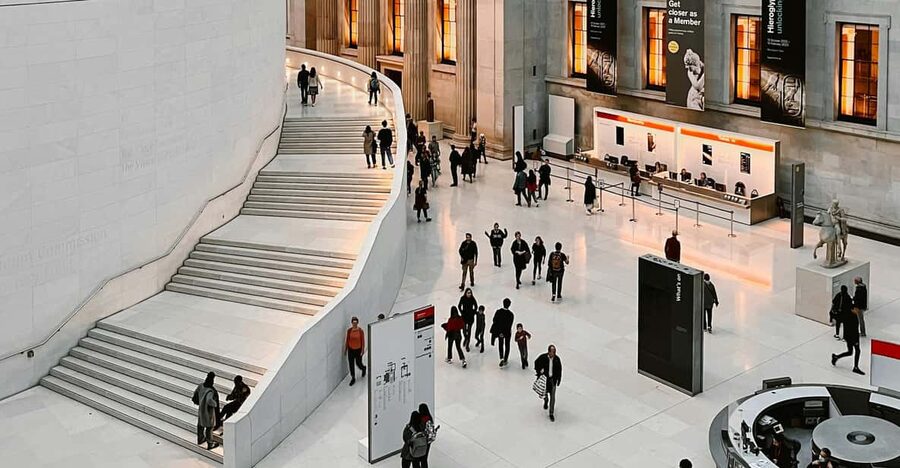
The price is $331 per group, for up to five people, and the experience is 2 hours long. On a per-person basis, a private tour like this can look expensive. But compare it to what your alternatives actually cost.
If you take individual paid tours or pay for multiple tickets in a way that still leaves you trying to organize the route yourself, the group price starts to make more sense. With up to five, you’re paying for a guide, their time, and a tailored focus on the most remarkable parts of the museum.
Here’s the value test I recommend. If you and your group want to walk in, avoid decision fatigue, and get context for major objects like the Rosetta Stone and the Parthenon-related sculptures, this format helps you use your time well. If you are the type who loves wandering with no plan and reading everything at your own pace, then the cost may not match how you travel.
What your guide experience feels like in real life
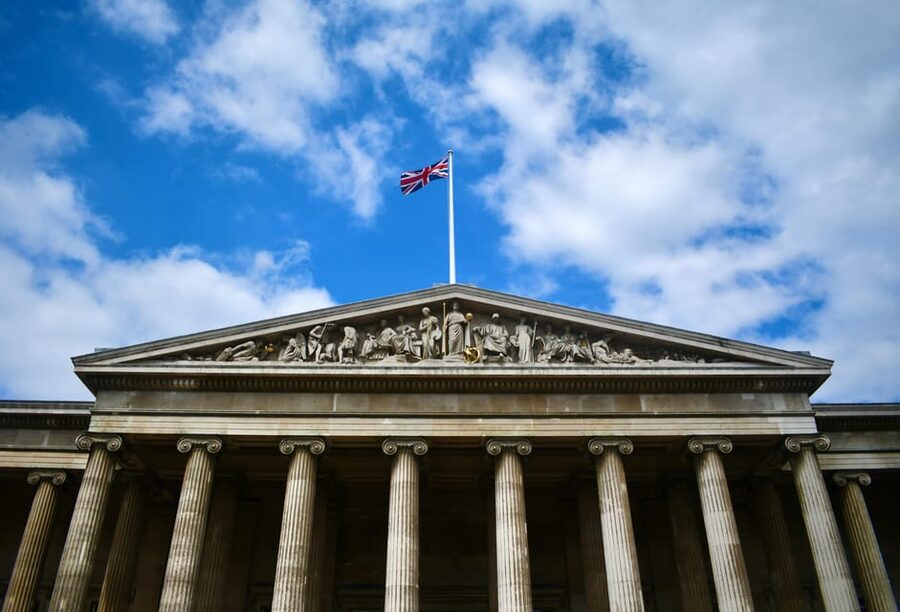
You get a live tour guide and the experience includes English, French, and Italian options. The biggest reason guided tours feel worth it at the British Museum is the way a good guide turns object labels into stories you can remember.
One guide name that stands out in the notes is Filomena. There’s a clear theme of infectious enthusiasm tied to Filomena, and that energy is exactly what helps in a museum visit. When you care about what you’re looking at, you stand longer, you notice more, and you remember more later.
So expect more than facts. You should expect someone to guide your attention. You’ll get pointed explanations that connect Egypt to Greece, Greece to Rome, then leap out to Sutton Hoo and Easter Island.
Who should book this tour
This is a strong match if you:
- Want a private group experience without sharing your attention with strangers
- Have limited time in London but still want the museum’s biggest moments explained
- Prefer a clear route and context, especially around major artifacts like the Rosetta Stone and Parthenon sculptures
- Like variety, because the itinerary moves from Egypt to Rome, then England, then Easter Island
It might not be the best match if you:
- Want a slow, do-everything museum day with lots of sitting and reading
- Have a deep focus on one era only, like only ancient Egypt, because a short tour needs to cover many cultures
- Need long stops to sketch, photograph extensively, or read every label on the spot
Should you book the London British Museum private group guided tour?
If your visit is short, yes, I’d book it. The mix of Egypt, Greece, Rome, Sutton Hoo, and the Hoa Hakananai’a moai gives you a strong overview with enough context to keep it meaningful. The private group size also makes it feel personal instead of rushed by crowd-control logic.
I’d skip it only if you know you want a long self-guided museum day and you enjoy getting lost on purpose. In that case, you can absolutely do the British Museum without a guide and still have a great time. But if you want your first pass to be smart, focused, and easier to understand after the visit, this is a practical way to make your limited time count.
FAQ
How long is the British Museum guided tour?
The tour duration is 2 hours.
What group size is this tour for?
It’s a private group for up to 5 people.
Where do I meet the guide?
Meet your guide in front of the British Museum portals on the stairs near the pillars after passing the security check. It is not outside of the gates.
How do I receive the tickets?
The tickets are provided about 1 hour before the tour via WhatsApp. If you do not have WhatsApp, contact the provider by email for entry tickets.
What languages are available for the live guide?
The live tour guide is available in English, French, and Italian.
Is the tour wheelchair accessible?
Yes, the tour is wheelchair accessible.
Can I cancel for a refund?
Yes. You can cancel up to 24 hours in advance for a full refund.
Recently reviewed around London
- London: Harry Potter Walking Tour with Platform 9 3/4★ 4.6 · 37 reviews
- London: Harry Potter Tour & The London Dungeons Tour★ 3.8 · 28 reviews
- London: Harry Potter Tour, River Cruise & The London Dungeon★ 4.4 · 8 reviews
- London: Harry Potter Walking Tour and River Thames Cruise★ 3.6 · 24 reviews
- London: Harry Potter Tour and London Bridge Tombs Experience★ 3.8 · 4 reviews
- London: Harry Potter Walking Tour and Tower Bridge Ticket★ 4.4 · 7 reviews
- London: Harry Potter Walk, Hop-on Hop-off Bus Tour & Cruise★ 4.1 · 105 reviews
- London: Harry Potter Sights and Shrek’s Adventure Combo Tour★ 4.6 · 3 reviews
British Museum Tours, compared.


British Museum London Guided Tour Semi-Private 8ppl Max
Read our review →

British Museum Audio Tour & Priority Entrance Ticket
Read our review →
The British Museum London – Exclusive Guided Museum Tour
Read our review →
Browse the lists this tour appears in