
Reviewed · BRITISH MUSEUM TOURS
London: British Museum with Expert Guide.
This tour is interesting because it puts the British Museum’s greatest hits into a single, clear story. You start with the Rosetta Stone, then the guide connects ancient Egypt, Greece, Assyria, and even medieval Scotland in one smooth route. The payoff is focus, not overwhelm.
I especially like that you get a certified, professional guide who stays on the key exhibits and keeps the pace comfortable. One thing to consider, though, is that 80 minutes is only enough for curated highlights, not a full museum visit, so you’ll want a plan for what to see afterward.
Key things to know before you go
- Start at the Rosetta Stone and learn why it matters for reading ancient Egyptian hieroglyphs
- See mummies and coffins with an explanation of beliefs about life after death and mummification practice
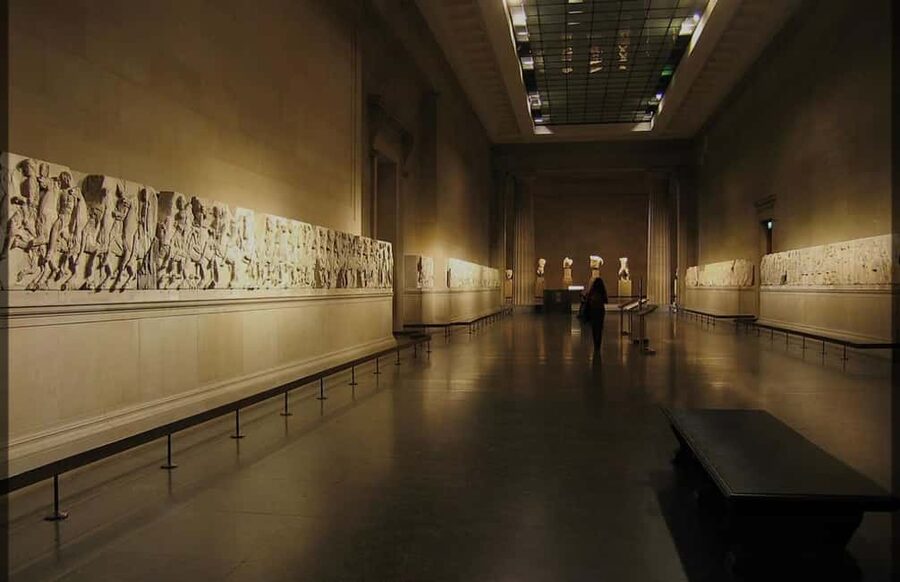
- Hold the Parthenon in your hands, at least in spirit, by focusing on the Elgin Marbles
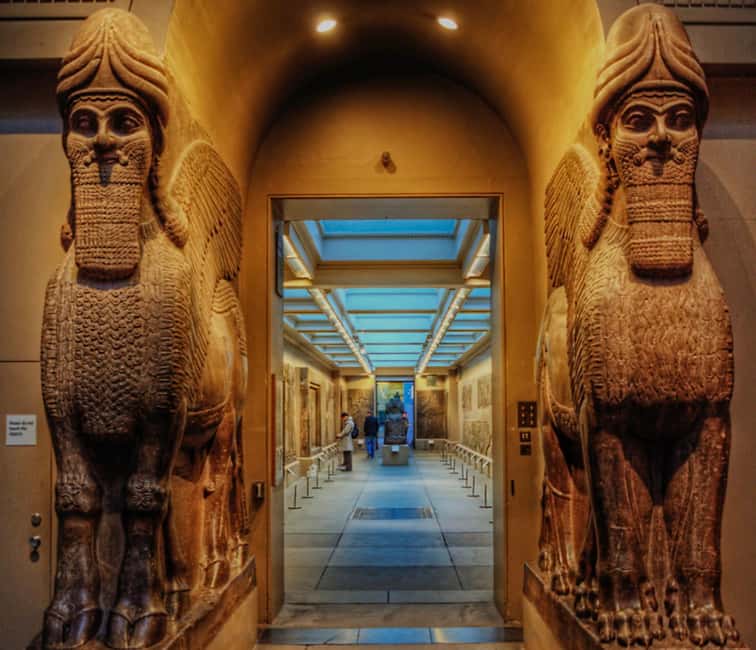
- Track the power of Assyria through the lion hunt reliefs and what they say about royalty
- Spot the Lewis Chessmen and understand their link to Viking-era life and culture
- Get expert Q and A without drowning in facts, thanks to guides who answer with confidence and humor
Why the British Museum highlights tour feels different
The British Museum can be a lot. It’s huge, full of brilliant things, and easy to drift from room to room without really seeing the connections. This guided format solves that by choosing a tight route through major civilizations and explaining what you’re looking at.
I like that the tour doesn’t just name objects. It gives you a thread to follow, starting with one artifact that changed how we read history, then moving across cultures through major visual themes. You’ll come away with clearer context, so the museum feels less like a warehouse of wonders and more like a timeline you can actually use.
More British Museum tours:
- London: British Museum Guided Tour
★ 4.3 · 1,182 reviews - British Museum London Guided Tour Semi-Private 8ppl Max
★ 5.0 · 984 reviews - London: Tour of the British Museum
★ 4.1 · 678 reviews
Meeting at the Montague Place lions, then getting smart fast
Your tour begins outside the museum at the Montague Place entrance, by the two stone lions. There are two entrances, so this meeting point matters, especially if you arrive a bit early and want to avoid wandering.
In a museum this size, a good guide does two things early: helps you orient yourself and tells you what not to waste time on. Expect the route to be efficient, because the whole tour is 80 minutes, and every minute is meant to point you toward the objects people come for.
The Rosetta Stone stop: the moment hieroglyphs start making sense
The first major anchor is the Rosetta Stone. The guide starts here because it’s the perfect gateway object. It’s famously tied to how scholars were able to figure out ancient Egyptian writing, which then reshaped understanding of Egyptian civilization.
What I like about starting with the Rosetta Stone is the way it sets your brain up for the rest. Once you know why the stone is important, the museum’s Egypt sections stop feeling random. Instead, you start noticing details as part of a bigger system, not just as “cool old stuff.”
Ancient Egypt in real-life form: mummies, coffins, and afterlife ideas
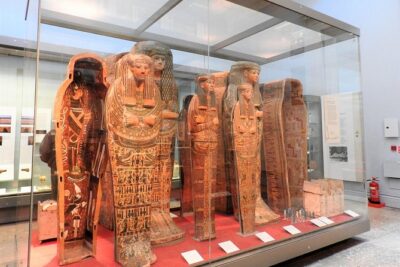
After the Rosetta Stone, the tour moves into Egypt’s beliefs about life after death. You’ll spend time viewing the museum’s collection of mummies and coffins, with attention on the rituals and techniques used for mummification.
This is one of those stops where a guide adds real value. Without context, it’s easy to see only anatomy and packaging. With the explanation, you get the cultural logic behind the practice: these objects were made for a purpose, and the beliefs around that purpose shaped everything.
More museum visits in London:
- Tower of London and Crown Jewels Exhibition Ticket
★ 4.5 · 6,677 reviews - London: Chelsea Football Club Stadium and Museum Tour
★ 4.8 · 4,576 reviews - Chelsea FC Stadium Tours and Museum
★ 5.0 · 1,908 reviews - Official tickets: Moco Modern & Contemporary Art Museum
★ 4.5 · 1,157 reviews
Elgin Marbles and the Parthenon story, seen through myth
Next comes Greece, and the big focus is the Elgin Marbles, the Parthenon sculptures. You’ll look at works dating back to the 5th century BCE, and the guide connects them to scenes from Greek mythology.
I like how this stop turns art history into storytelling. You’re not just staring at stone figures, you’re learning what the scenes are about, and why they were carved in the first place. That matters because myth is not a separate topic from culture. Myth is the language of how a society explained itself.
Assyria’s lion hunt reliefs: power you can read at a glance
Then you shift to the Assyrian Empire and the lion hunt reliefs. These intricate carvings show royalty at work, and they’re powerful even when you don’t know the background. The guide’s job is to help you see what the carvings are communicating about authority, skill, and image-making.
This part is a good reminder that civilizations don’t just leave temples and tombs. They also leave propaganda in stone. When you understand the purpose, the details become easier to track, and you feel what the artists wanted the viewer to recognize.
Lewis Chessmen: from Isle of Lewis to Viking culture
The tour also includes the Lewis Chessmen, a set of intricately carved chess pieces found on the Isle of Lewis in Scotland. The guide explains their medieval background and why they’re significant for understanding Viking culture.
This is a great stop because chess is instantly relatable. You can picture the game, even if you’re not sure how people actually played back then. That familiarity helps the object stick in your mind, and you start connecting the museum’s “far away” stories to real human habits.
What the guide (especially Strabo) does really well
The experience is led by Strabo, and the best part is how he delivers highlights with the right amount of detail. Several comments point to a rhythm that works for different ages and attention spans, including younger teens, because he keeps explanations clear and the route focused.
You’ll also benefit from the way questions are handled. Strabo is described as answering questions with ease and adding humor without turning the tour into a performance. That balance is what makes it feel like you’re learning, not just being hurried through rooms.
The 80-minute reality check, and how to plan your time after
Eighty minutes is a sweet spot for a highlights tour, but it’s still only highlights. You’ll likely see the major set pieces, then you’ll need to choose what to explore on your own.
Your tour ends back at the meeting point, and you’ll have time after to wander. If you want the best value, I suggest picking one or two galleries you care most about before you arrive, then using the guide’s route as your starting map. That way, you’re not spending your free time trying to remember where everything was.
Photography, food rules, and practical comfort tips
A few practical details help you avoid friction inside the museum. Photography is allowed, but flash photography is prohibited. Also, food and drinks aren’t allowed inside the exhibition rooms, so plan a snack break outside.
Wheelchair accessibility is a plus, but the note to take seriously is that some areas may be challenging to navigate. If you or someone in your group uses a wheelchair, it’s worth going in with flexibility and expecting that certain routes within the museum might be tighter or slower.
Price and value: is about $20.20 worth it?
At $20.20 per person, the price feels reasonable for what you’re buying: an expert guide in one of the world’s busiest museums, focused on the most in-demand objects. A museum ticket alone gets you entry, but it doesn’t guarantee you’ll understand why the Rosetta Stone matters, what the Parthenon sculptures communicate, or how Assyrian carvings project royal control.
The value is also in time. With a guided route, you spend less mental energy deciding where to go and more energy actually looking. If you’re only in London for a short window, or if you know the British Museum is too big to “figure out” quickly, this format can save you effort and improve your results.
Who this tour is best for
This tour is ideal if you want the British Museum’s core stories without hours of wandering. It’s also a strong fit for families, since the guided style is described as pitched at different ages, including teens.
You’ll get the most out of it if you’re curious about cross-cultural history, because the route intentionally jumps between Egypt, Greece, Assyria, and Scotland. If your goal is to see every gallery at a slow pace, you’ll be happier doing independent exploring after, using the guide’s highlights as a launchpad.
Should you book this British Museum with an expert guide?
I’d book it if you want a fast, well-organized way to understand the British Museum’s most famous artifacts. The combination of certified guidance, a highlight-first route, and clear explanations around objects like the Rosetta Stone, Elgin Marbles, Assyrian lion hunt reliefs, and Lewis Chessmen makes the museum feel less random.
Skip it only if you already know exactly what you want to see and you plan to spend most of your day there. In that case, you might prefer a longer independent visit. For most people, especially first-timers, this strikes a smart balance: enough context to make the museum click, with enough time left to explore your favorites.
FAQ
How long is the British Museum guided tour?
The tour lasts 80 minutes.
Where do we meet for the tour?
You meet outside the Montague Place entrance, by the two stone lions.
Is the tour offered in English?
Yes, the live tour guide is English.
Is the British Museum tour wheelchair accessible?
Wheelchair access is available, but some areas may be challenging to navigate.
Are photos allowed inside the museum?
Photography is allowed, but flash photography is prohibited.
Can I bring food and drinks into the exhibition rooms?
No, food and drinks are not allowed inside the exhibition rooms.
What are some of the main exhibits covered?
The tour focuses on highlights including the Rosetta Stone, mummies and coffins, the Elgin Marbles, the Assyrian lion hunt reliefs, and the Lewis Chessmen.
Is there free cancellation?
Yes, you can cancel up to 24 hours in advance for a full refund.
Does reserve now and pay later work for this tour?
Yes, you can reserve now and pay later, with an option to pay nothing today.
Are there different starting times?
Yes, starting times vary, so you should check availability to see what’s offered.
Recently reviewed around London
- London: Harry Potter Walking Tour with Platform 9 3/4★ 4.6 · 37 reviews
- London: Harry Potter Tour & The London Dungeons Tour★ 3.8 · 28 reviews
- London: Harry Potter Tour, River Cruise & The London Dungeon★ 4.4 · 8 reviews
- London: Harry Potter Walking Tour and River Thames Cruise★ 3.6 · 24 reviews
- London: Harry Potter Tour and London Bridge Tombs Experience★ 3.8 · 4 reviews
- London: Harry Potter Walking Tour and Tower Bridge Ticket★ 4.4 · 7 reviews
- London: Harry Potter Walk, Hop-on Hop-off Bus Tour & Cruise★ 4.1 · 105 reviews
- London: Harry Potter Sights and Shrek’s Adventure Combo Tour★ 4.6 · 3 reviews
British Museum Tours, compared.


British Museum London Guided Tour Semi-Private 8ppl Max
Read our review →

British Museum Audio Tour & Priority Entrance Ticket
Read our review →
The British Museum London – Exclusive Guided Museum Tour
Read our review →
Browse the lists this tour appears in