
Reviewed · WALKING TOURS
London: Modern Architecture & Building Guided Walking Tour
What makes this tour interesting is how it shows London’s modern skyline as a real construction story, not just pretty photos. I love that the guide, Sam, brings a construction management background and turns each stop into clear engineering talk. I also like that the route ends at the NLA with free access to scale models you can linger over after the walk.
The main drawback to plan for is walking time. This isn’t wheelchair-friendly, and you will be outside in changing weather, so comfy shoes and a weather layer are a must.
Modern Architecture on Foot: What Makes Sam’s Tour Different
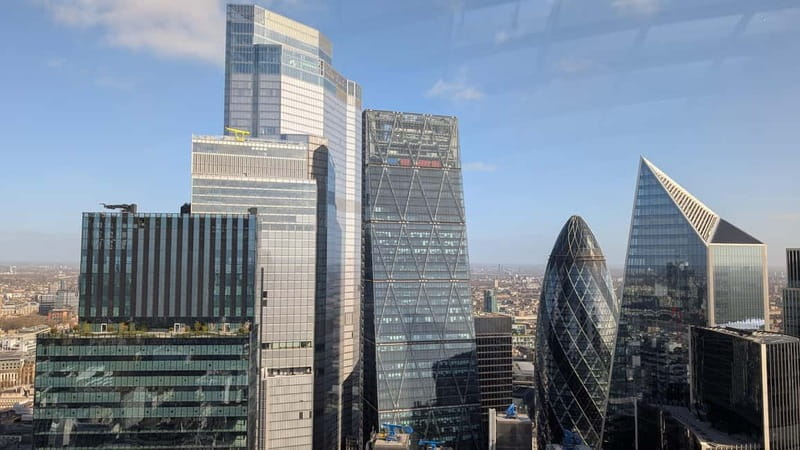
This is the kind of guided walk that helps you see the city with new eyes. London’s most famous modern buildings can feel like isolated icons from postcards, but on this route you get the bigger picture: why these structures went where they did, how they relate to the Thames and the Square Mile, and what has been built (and what is planned) around them. Sam keeps the pace relaxed, but the information stays sharp, including technical answers if you ask.
From the reviews, one pattern stands out. Even people with only a mild interest in architecture found themselves paying attention the whole way. That is because Sam explains in a way that stays practical, not overly academic. And since it is a small group walking tour, you get time for questions without feeling rushed.
Quick Practical Info: Price, Time, and Where You Start
The tour costs $52.53 per person for an approximately 2-hour walk. That is good value when you consider you are getting a guided route focused on a very specific theme: modern architecture in the City of London, plus engineering context and future development talk.
You start at Sugar Quay Jetty, near the Tower of London. The walking route runs across the northern side of the Thames and through the Square Mile financial district, then finishes at the NLA (within The London Centre). I recommend planning for a little extra time at the end, since it makes sense to spend 15 to 30 minutes looking at the scale models and reading the information there.
Accessibility note: the tour is listed as not suitable for people with mobility impairments and it is not for wheelchair users. If you need step-free routing and lots of stopping breaks, this may not be the right fit.
More walking tours in London:
- Magical London: Harry Potter Guided Walking Tour
★ 4.7 · 22,044 reviews - London: The Original Jack the Ripper Walking Tour
★ 4.7 · 7,833 reviews - Tour for Muggles The Ultimate Harry Potter Walking Tour in London
★ 5.0 · 4,684 reviews
The Route in Plain English: Thames Views to NLA Models
You are basically walking a modern-London highlight line. Early on, you get river-side orientation. Then the route tightens into the downtown cluster where glass towers and corporate head offices dominate. By the time you reach the final stop, the story has moved from individual buildings to the full skyline picture, using the NLA’s models as your “how it all fits together” moment.
Even though this is not an inside-visit tour, you still cover a lot of ground and a lot of design variety. You will see sharp skyscraper silhouettes, older-but-still-forward-looking modern-era designs, and the kind of construction decisions that affect everything from wind exposure to how the buildings connect visually to the street level.
Stop 1 and the First Big Moment: Sugar Quay Jetty and the River Setting
You begin at Sugar Quay Jetty, near the Tower of London. I like this start because it gives you context fast. The Thames is not just a backdrop here. It is part of the story, since river access, historic development patterns, and engineering constraints all shape how the City grew.
From the start, Sam’s angle is construction-focused. You will get orientation for what comes next, including how the route leads you into the densest modern skyline stretch in the City. If you are the type who likes to understand why a building sits where it sits, this early grounding helps.
Potential drawback: if you are sensitive to wind and chill, plan for it right away. River areas can feel colder, even when the rest of London seems mild.
City Hall and the Thames: Getting Oriented Before the Icons

Next up is City Hall, London, a key early stop for understanding the administrative side of the city alongside the skyline. It is a useful contrast point: modern government architecture sits in the same downtown world as the corporate towers you will see soon after.
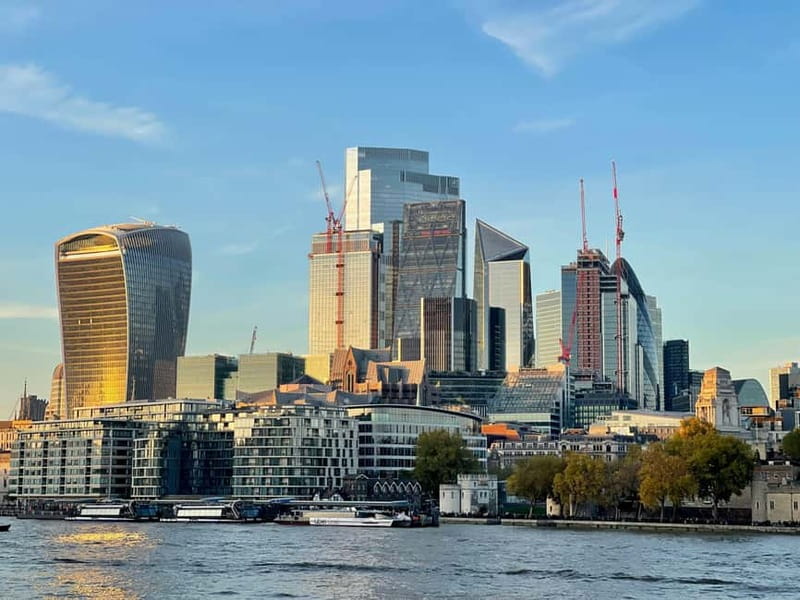
Then you move along to river Thames sightseeing. This is where you start spotting the visual relationships between landmark buildings. When you see them from the right angle, the skyline stops looking random. You can understand sightlines, height stacking, and how certain towers anchor the skyline from different viewpoints.
A few more London tours worth a look
- London: Emirates Stadium Entry Ticket and Audio Guide
★ 4.7 · 5,513 reviews - Stonehenge, Windsor Castle and Bath Full Day Guided Tour
★ 4.5 · 5,346 reviews - London Jack the Ripper Guided Tour with Ripper-Vision
★ 4.5 · 4,840 reviews - Original Harry Potter Locations Tour – Guided Tour of London
★ 5.0 · 4,117 reviews
The Shard: How a Tall Icon Changes the Whole Area
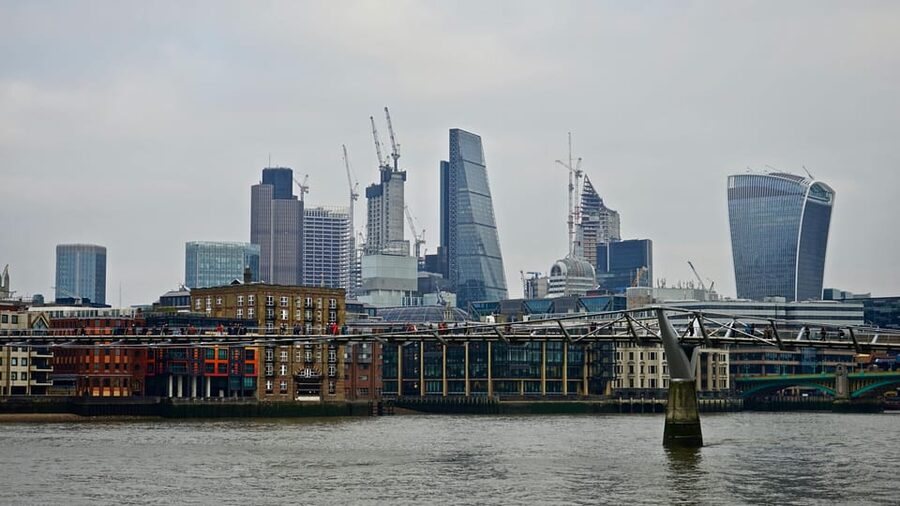
At The Shard, you finally get one of the most dramatic London silhouettes up close. The value of this stop is not just seeing the shape, it is hearing the stories and fun facts Sam connects to it, including how modern high-rises reshape surrounding space.
If you love architecture, you will likely notice details from street level that are easy to miss in photos. Up close, tall glass buildings can look more textured than you expect, and the base area starts to matter for how the building “meets” the city.
Walkie-Talkie and Lloyd’s of London: Corporate Power Meets Design

You then reach The Fenchurch Building (The Walkie-Talkie). This is the kind of structure you can’t fully understand until you see it in context with the buildings around it. Up close, the building’s form feels more intentional and more sculptural than the simple nickname suggests.
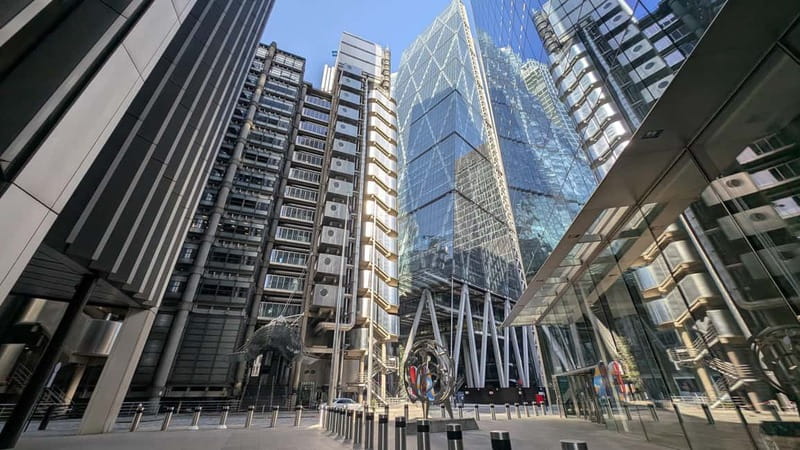
After that comes Lloyd’s of London. This stop is especially good if you like architecture that reflects its function. Even without entering, you can grasp how the building’s identity ties to its role in the city. Sam’s construction management perspective helps here, because the talk tends to connect building form to planning decisions and real-world constraints.
Two things I really like about this middle section:
- It alternates between iconic headline buildings and structures that feel grounded in office-city reality.
- Sam makes it easy to follow, so even if you are not an architecture person, you still understand why the design matters.
Leadenhall Building and 30 St Mary Axe: The Skyline Turns Technical
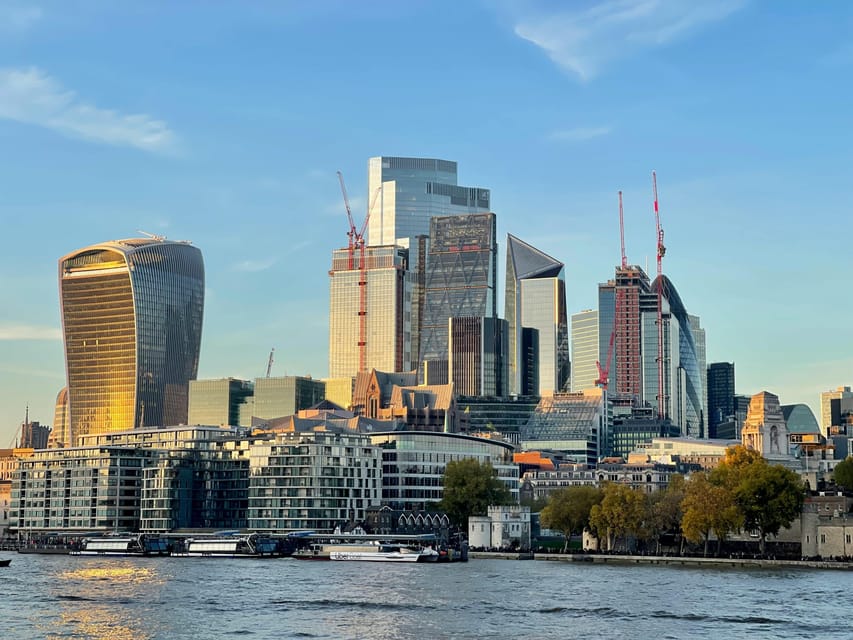
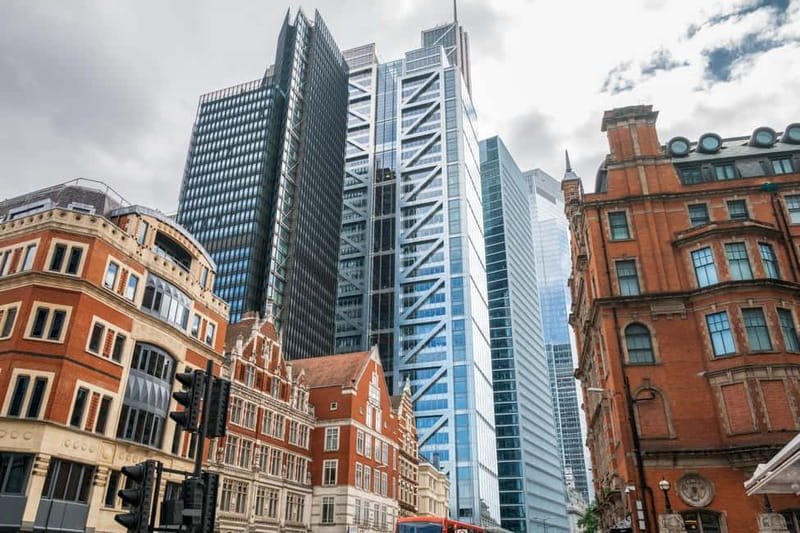
Next is The Leadenhall Building, often called the Cheese Grater. This stop is a fun one because the nickname is catchy, but the explanation is what keeps it worthwhile. From street level, you can see how this tower’s shape plays into its identity in the skyline and how modern construction results in these highly recognizable profiles.
Then you hit 30 St Mary Axe (The Gherkin). The Gherkin is one of those buildings that looks like a single idea in a photo. On the walk, it turns into a design and engineering conversation. Sam’s guidance helps you understand what makes it stand out, beyond the postcard angle.
70 St Mary Axe, Liverpool Street, and the Barbican: Modern City Layers
You continue to 70 St Mary Axe (The Can of Ham). It is a great pairing with the Gherkin because you see how London’s modern skyline includes different design approaches that still belong to the same downtown fabric. If you like comparing towers side by side, this part is satisfying.
Then there is Liverpool Street Station. The value here is perspective. Stations may not be the first thing you think of for modern architecture, but they sit at the intersection of movement, development, and city infrastructure. Sam also ties this kind of place into what lies beneath London and how construction has shaped the city over time.
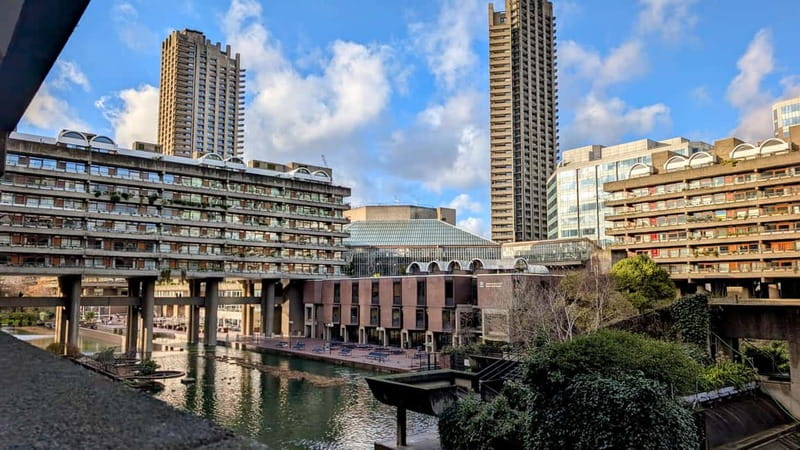
Finally, you reach Barbican. This is where you get a different mood. The Barbican offers that late-20th-century modern feel, helping you see that London’s modern architecture is not only glass skyscrapers. It is also about planning, scale, and how large projects influence public spaces.
What Lies Beneath London: Engineering Stories That Change How You Look at Streets

A standout part of the tour is the way Sam talks about engineering under your feet. You get insight into the major past and present civil engineering projects that have shaped London, plus how construction is heading in the future.
You do not need to be a technical person to enjoy this. What you get is a shift in awareness. After hearing these building and infrastructure connections, you start noticing how city design is often invisible at street level. Sidewalks and plazas look simple until you realize how much has to be managed below the surface.
This is also where the future-building angle fits. Sam points out current and future development across London, so the skyline you see is not just history. It is a moving project.
Finishing at the NLA: Free Scale Models and Skyline Context
The tour finishes at NLA – The London Centre. This is the payoff moment for anyone who likes to step back and understand the big picture.
Entry is free, and you can read lots of information on site at your own pace. The key feature here is the scaled models of London’s skyline, which help you connect the buildings you just saw in real space to how they fit together across the city.
Timing matters for this stop:
- NLA is open Tuesday to Saturday, and it closes at 17:00.
- That means you might not be able to enter on Sunday, Monday, or evening tours.
Practical tip: if your tour lands on a day when the NLA is open, give yourself that extra 15 to 30 minutes. It is the best place to absorb what you learned during the walk.
What You Get for the Money: Value That Feels Real
Let’s talk value. For $52.53, you get a guided walking route with a specialist guide, you see a heavy list of modern landmarks, and you get engineering context plus future development talk. You are not paying extra for building entrances, since none are included.
That may actually be a plus. When entries are excluded, you are not stuck waiting at ticket lines or rushing through interiors. Instead, you are using the full time to observe the exterior forms and understand how they work within the city fabric.
If your goal is to understand the City of London’s modern architecture in a focused way, this is one of the more direct options for learning fast.
Who This Tour Suits Best
This works well if you:
- Want modern architecture with explanation, not just a photo stop circuit.
- Like construction and infrastructure stories.
- Prefer learning while walking, with chances to ask questions.
Even if you do not think you care about architecture, the reviews suggest Sam’s style keeps things engaging. The tone is practical, and the pace leaves room to keep up without feeling dragged along.
It may not suit you as much if you:
- Need wheelchair access or frequent seated breaks (it is not listed as suitable for wheelchair users).
- Do not enjoy weather exposure, since the tour proceeds outside unless conditions become extreme.
Should You Book This Modern Architecture Walking Tour?
I think you should book it if you want the City of London skyline explained in a way that stays grounded and useful. The combination of iconic stops like The Shard, Walkie Talkie, and Gherkin, plus the engineering undercurrent and the NLA scale models makes the experience feel more complete than a simple landmark walk.
Skip it if walking is a challenge for you, or if you are only interested in inside visits. This is an outside architecture and city-planning story. Done right, it gives you a fresh way to look at London’s modern buildings long after you leave the route.
FAQ
How long is the London modern architecture walking tour?
The tour lasts about 2 hours. It’s smart to allow an additional 15 to 30 minutes for time at the NLA at the end.
Where does the tour start?
You meet at Sugar Quay Jetty, near the Tower of London.
Where does the tour end?
The tour ends at NLA – The London Centre.
Which modern buildings will I see on the walk?
The tour includes stops to see buildings such as City Hall, The Shard, The Walkie-Talkie, Lloyd’s of London, The Leadenhall Building (Cheese Grater), 30 St Mary Axe (The Gherkin), 70 St Mary Axe (The Can of Ham), Liverpool Street Station, and Barbican, plus more.
Are building interiors included?
No. Entry into any of the buildings seen on the tour is not included.
Can I enter the NLA when the tour finishes there?
NLA is open Tuesday to Saturday until 17:00. That means Sunday, Monday, and evening tours unfortunately will not be able to enter.
Is the tour suitable for wheelchair users?
No. The tour is not suitable for people with mobility impairments and it is not suitable for wheelchair users.
What language is the tour guide?
The live tour guide provides the tour in English.
What should I bring with me?
Bring comfortable shoes, a camera, water, and weather-appropriate clothing.
What does it cost?
The price is $52.53 per person.
Recently reviewed around London
- London: Harry Potter Walking Tour with Platform 9 3/4★ 4.6 · 37 reviews
- London: Harry Potter Tour, River Cruise & The London Dungeon★ 4.4 · 8 reviews
- London: Harry Potter Walking Tour and River Thames Cruise★ 3.6 · 24 reviews
- London: Harry Potter Tour & The London Dungeons Tour★ 3.8 · 28 reviews
- London: Harry Potter Tour and London Bridge Tombs Experience★ 3.8 · 4 reviews
- London: Harry Potter Walking Tour and Tower Bridge Ticket★ 4.4 · 7 reviews
- London: Harry Potter Walk, Hop-on Hop-off Bus Tour & Cruise★ 4.1 · 105 reviews
- London: Harry Potter Sights and Shrek’s Adventure Combo Tour★ 4.6 · 3 reviews
Walking Tours, compared.

Magical London: Harry Potter Guided Walking Tour
Read our review →

Oxford University Walking Tour With University Alumni Guide
Read our review →
Tour for Muggles The Ultimate Harry Potter Walking Tour in London
Read our review →
Oxford: University and City Walking Tour with Alumni Guide
Read our review →
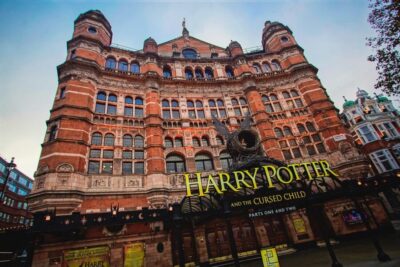
Harry Potter Movies Walking Tour (Kids Go Free)
Read our review →
Cambridge University Walking Tour by Alumni™ Kings College Option
Read our review →Browse the lists this tour appears in