
Reviewed · HISTORICAL TOURS
London: Natural History Museum Entry Ticket and Guided Tour
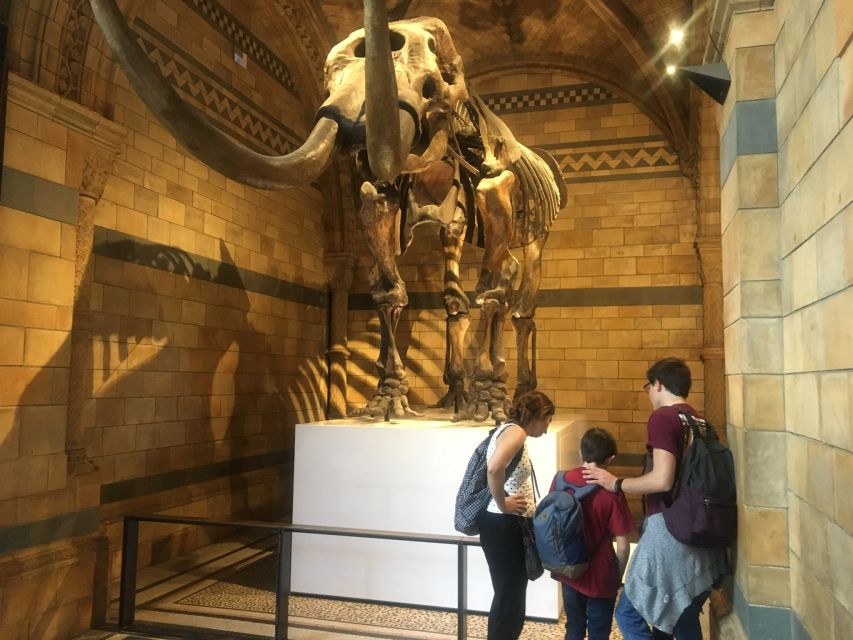
If you like your museum trips with a clear route and a few wow moments right away, this Natural History Museum guided tour in South Kensington is a smart way to spend an hour. You get the kind of highlights most people chase all day, but you do it with a guide who helps you connect what you’re seeing to the bigger stories of Earth and life.
I like that the tour hits the museum’s big icons, like the Hintze Hall dinosaur gallery and the 25 meter blue whale skeleton, without turning into a blur. I also like the built-in value of a guide who can answer questions on the spot, especially if you get Paul, who’s repeatedly praised for friendly, high-detail explanations. The one possible drawback is time: in just 1 hour, you’ll see the essentials, not everything. If you want a slow, full museum wander, this won’t replace a longer self-guided visit.
Key Stops You Get in This 1 Hour Museum Plan
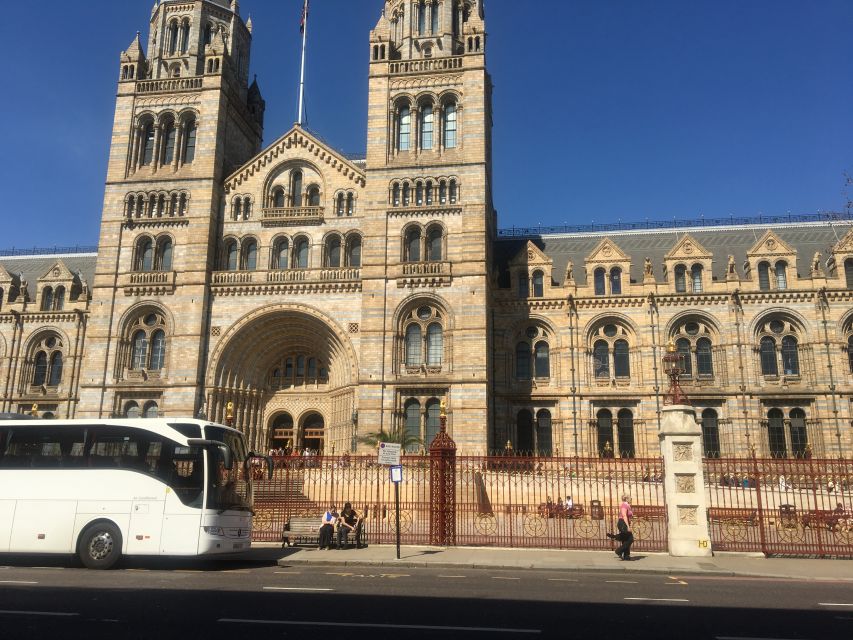
- Express security check so you spend less time waiting and more time inside
- Hintze Hall icons including the huge blue whale skeleton and famous dinosaur displays
- Central Hall moments like the Diplodocus skeleton that sets the tone fast
- Earth science galleries focused on volcanoes, earthquakes, and how the planet changes
- Evolution and specimens that help you understand diversity of life and the details behind displays
- Wildlife Garden for a calmer break with birds, bees, and other animals
Why This Museum Tour Feels Efficient (Not Rushed)
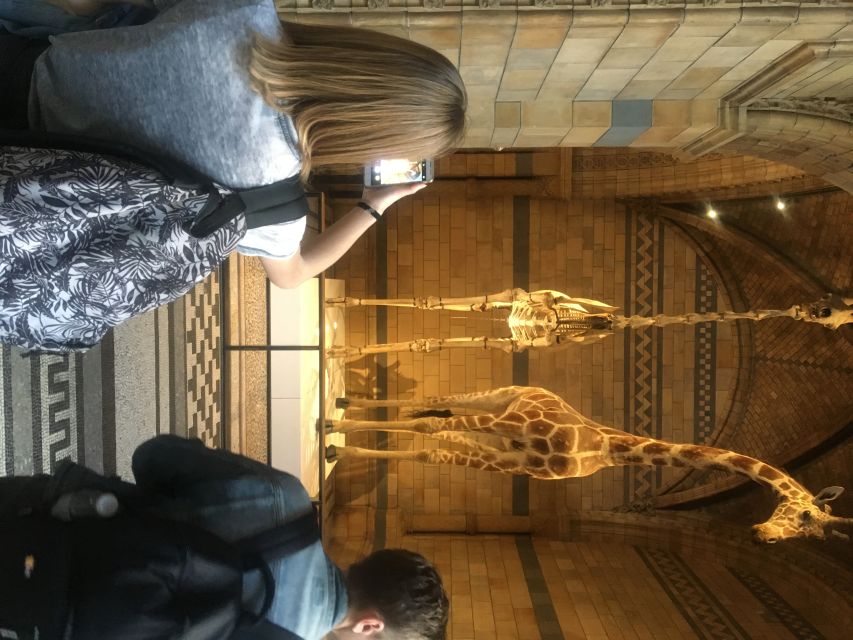
The Natural History Museum is the sort of place where it’s easy to get turned around. Halls are gorgeous, crowds move in waves, and suddenly an hour can disappear with you still staring at the same area. A guided hit list solves that. The guide leads you through the most important rooms and makes sure you land at the museum’s headline objects, not just the nearest ones.
You’ll also feel a big difference from a solo walk because you’re not just looking at labels. A guide’s job is to give you context fast. That means when you see something like a whale skeleton or a giant dinosaur frame, you understand what you’re looking at and why it matters to Earth’s story.
One more practical win: you have headsets if needed. That matters in a museum where people naturally cluster, traffic noise exists, and a quiet conversation can be hard when you’re standing under a ceiling full of history.
More museum visits in London:
- Tower of London and Crown Jewels Exhibition Ticket
★ 4.5 · 6,677 reviews - London: Chelsea Football Club Stadium and Museum Tour
★ 4.8 · 4,576 reviews - Chelsea FC Stadium Tours and Museum
★ 5.0 · 1,908 reviews
The Showpiece Route Through Hintze Hall and the Dinosaur Drama
Hintze Hall is where the museum’s scale really hits you. If you’ve seen photos, you’ll still be surprised in person, because skeletons and mounts look even bigger when you’re physically under them. This tour sends you straight to this area for one of the strongest payoff moments.
You’ll see the museum’s blue whale skeleton first in your mental lineup. The tour information puts it at 82 feet long (25 meters). That’s not just a number. It’s the kind of object that makes you pause, look up, and realize how much effort it takes to preserve something like that in a public gallery.
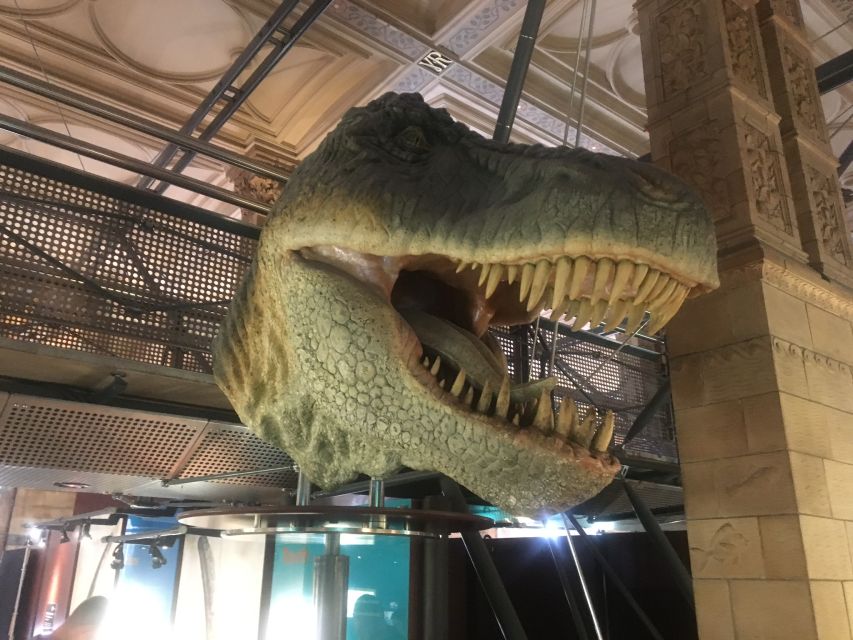
Then come the dinosaur highlights. The tour focuses on the famous massive dinosaur skeletons in Hintze Hall, which is a big reason this one-hour plan works. Even if dinosaurs aren’t your main obsession, it’s a perfect orientation. Once you’ve seen the hall’s “big levers,” the rest of the museum feels easier to read.
Practical tip: don’t try to photograph everything at once. Take one quick photo, then let your eyes do the rest. The guide will point out details and angles that you might miss if you’re only chasing images.
Central Hall Diplodocus, and How to “Read” a Skeleton
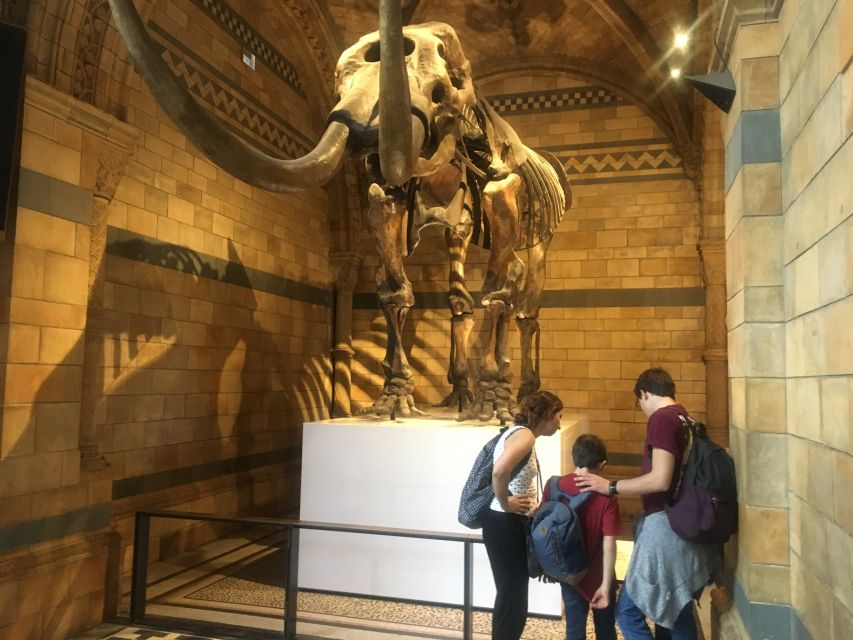
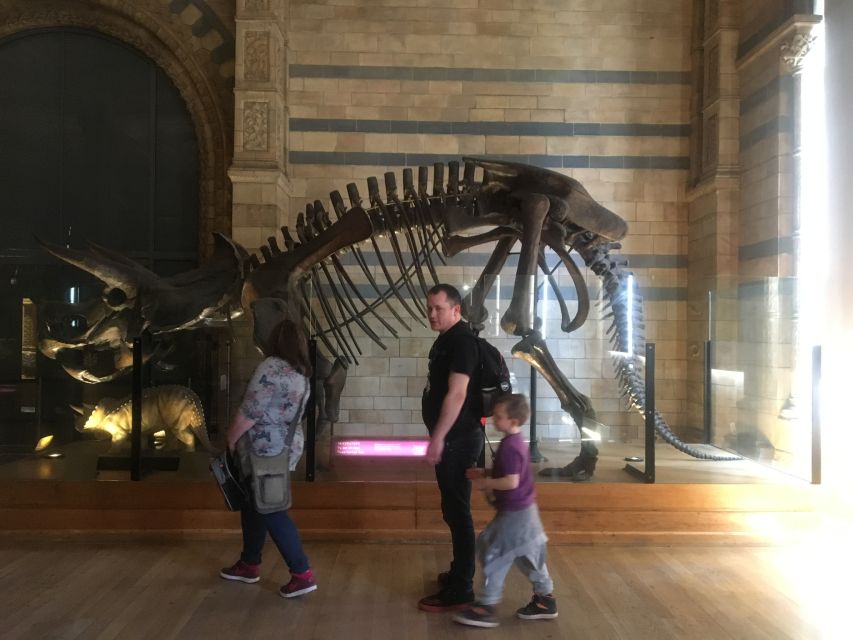
Right after you set up your wow-level expectations in Hintze Hall, you get one of the classic Central Hall moments: the Diplodocus skeleton. It’s the kind of exhibit that can feel like a single object until you start noticing proportions and structure.
A good dinosaur skeleton is basically a 3D diagram of biology. Here’s what you’re helped to understand in a short tour: how the bones connect, how posture changes the way you perceive scale, and why the museum treats these mounts as scientific displays rather than just decoration.
This part of the visit also does something smart for your longer-term museum strategy. Once you’ve seen the guide’s favorite framing points, you’re more likely to know what to revisit after the tour ends. That’s a real value add for people who only have one trip in London but still want a second round for fun.
Volcanoes and Earthquakes Gallery, Earth as an Active System
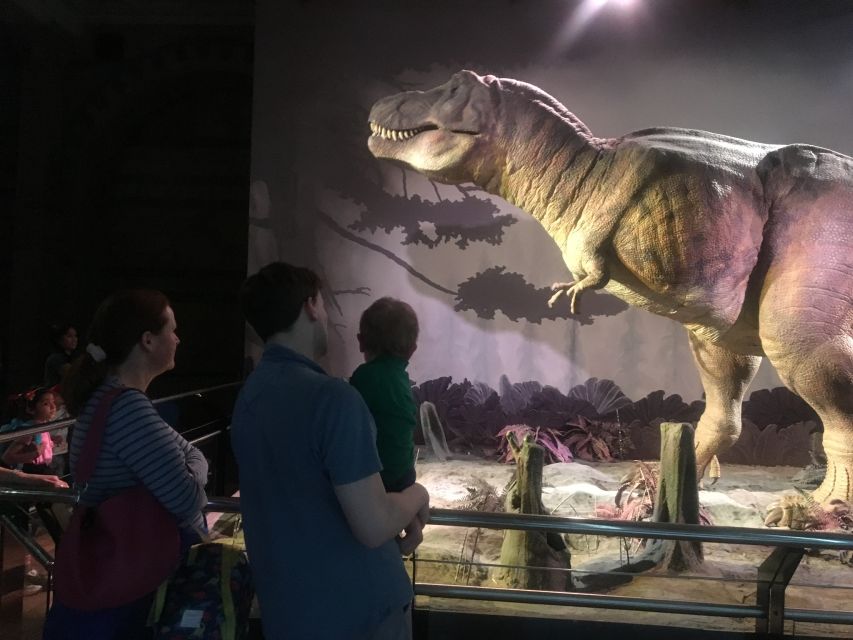
Not every visitor expects the Natural History Museum to feel dynamic, but it does, especially once you hit the Earth science galleries. Your guide walks you through the Volcanoes and Earthquakes Gallery, where the stories are about change over time.
In a self-guided museum visit, it’s easy to treat exhibits like static facts. With the guided approach, you get explanations that turn those facts into a sequence. You’ll learn how the museum frames Earth formation and evolution, and you’ll start to connect geological forces to the physical evidence in front of you.
Even if you’re not a geology person, you’ll likely enjoy this section because it gives you a way to look at the planet beyond scenery. Earth becomes something with pressure, movement, and history you can actually see.
More history tours in London:
- London Small Group Tour of Historical Pubs
★ 5.0 · 10,422 reviews - Soho Music & Historic Pubs Tour
★ 5.0 · 1,993 reviews - London: Historic Pubs of Central London Walking Tour
★ 4.9 · 1,065 reviews - London: Soho Music and Historic Pubs Walking Tour
★ 4.9 · 836 reviews
Evolution and Specimens, from Life Diversity to Minerals and Gems
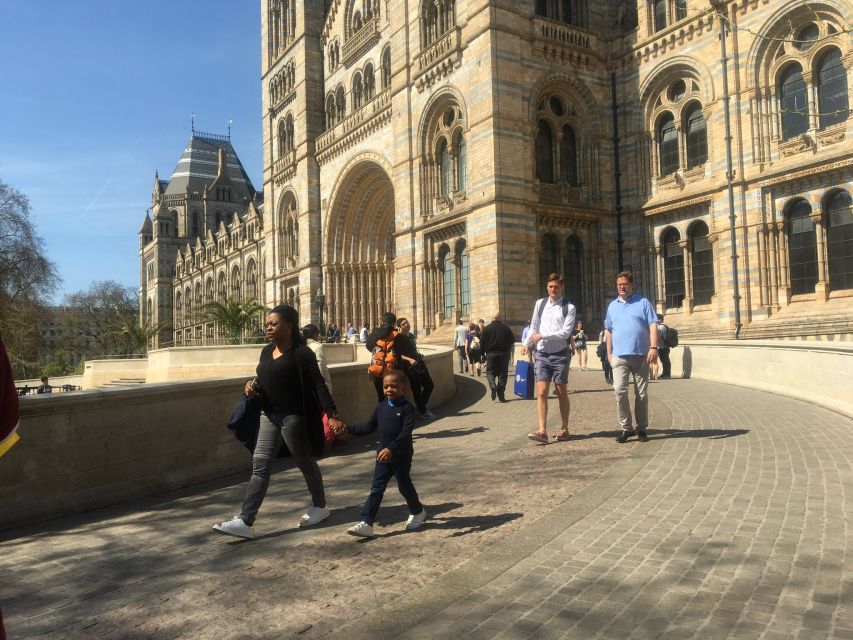
After the Earth science focus, the tour shifts into the museum’s theme of life and how it diversified. The Evolution gallery is where you’ll learn about diversity of life on Earth, and the guide helps translate what you see into something meaningful.
You also get time for the intricately detailed minerals and gems display. This is one of those stops that can be surprisingly satisfying. Mineral displays aren’t just pretty. They’re evidence of formation conditions, chemistry, and time. When the guide explains what to notice, you start seeing patterns instead of only sparkle.
For many people, this is the section that makes the whole museum feel “connected.” Dinosaurs lead into Earth science, Earth science leads into evolution, and evolution leads into what life looks like when you consider adaptation and variation.
Wildlife Garden Break, a Calm Pocket for Real Animals
A museum tour can feel like one long indoor march. The Wildlife Garden helps break that mood. It’s described as a haven for birds, bees, and other animals, and that matters because it changes the way you experience the museum.
Instead of only looking at specimens behind glass, you get a chance to observe how wildlife relates to the natural world around you. Even when the animals are smaller and harder to spot, the mood shifts. You tend to slow down, scan, and appreciate that conservation and study connect both indoors and out.
This garden stop is especially good if you’re traveling with kids, because it gives them a different kind of “hunt.” Just be ready that you might see some animals more easily than others depending on the time of year and day.
Your Guide Matters, Especially When You Want to Ask Questions
Most one-hour tours are fixed in what they can show. What changes the value is the guide’s delivery. In this case, the name that keeps showing up is Paul, and the praise is consistent: clear communication, kindness, and strong answers to questions.
That matters because the Natural History Museum can be overwhelming. If you’re the type who likes to ask why, how, or what this specimen tells scientists, a guide who can answer is a major upgrade. Even when you only have one hour, you can leave feeling like you learned how to look.
Also, if your group is small, you may get more personal attention. One of the perks of a focused tour is that the guide can adjust pace for the room flow while still keeping you on the main route. I’d treat this as a practical, people-first service, not just a scripted walk.
Price and Value: Is $76 Worth It?
Let’s talk money plainly. At $76 per person for a 1 hour guided visit, you’re paying for three things: a guide, a reserved ticket, and skip-the-line express security.
That’s not just convenience for convenience’s sake. Security lines can steal the best part of a short London plan. When you use express entry, you’re buying back time you can spend inside the galleries where the experience actually happens.
You’re also buying context. If you walk in on your own, you can read labels, sure. But labels don’t usually tell you what to prioritize if you only have an hour. A guide does. When you come away with a sense of what to revisit later, the guided component starts to feel like a smart investment, not an extra expense.
A real caution on value: if you’re the type who loves museums by wandering room to room without a strict plan, you may feel limited by the time window. For that style of traveler, a longer self-guided ticket might be better. But if you want an efficient, high-impact route with human guidance, this price makes more sense.
Where to Meet, and How to Avoid the First-Minute Stress
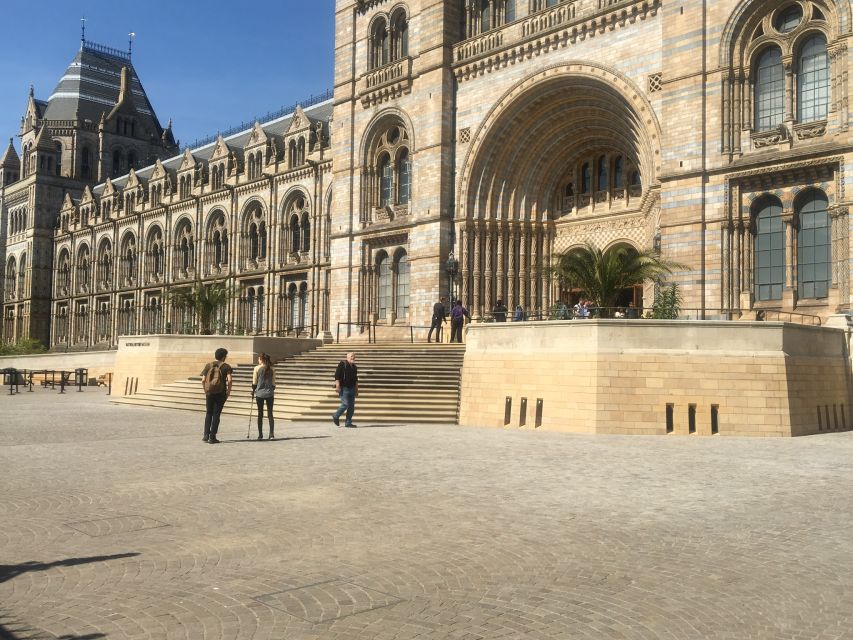
Meeting point details matter in London, and this one is specific. You meet at Metro South Kensington, take the exit for the Natural History Museum Ismaili Centre, then meet your tour guide at the metal plate labeled The Royal Borough of Kensington and Chelsea, on Exhibition Road SW7.
The biggest tip here is simple: give yourself a buffer. Even if you know how to get to South Kensington, the last steps can be the tricky ones when streets and entrances look similar.
If you’re early, don’t panic. Stand near the named metal plate and wait. If you’re unsure, ask staff where the Exhibition Road SW7 entrance area is, then match it to the meeting label.
Timing and What the 1 Hour Actually Does
One hour is short, and the tour is clear about what it prioritizes: headline halls, key galleries, and a quick nature break. You should treat it as a curated first pass.
That’s why people who like to return later for a deeper look often find this format helpful. You leave with a mental map. You’ll know which rooms felt most interesting and which exhibits you want to spend extra time on when the crowds shift.
If you have very young kids, consider your expectations carefully. One of the helpful pieces of guidance you can take from the overall experience is that this type of guided, focused tour tends to work best when kids can handle an explanation-heavy route. Toddlers who need constant movement may struggle more than children who can wait through a short talk.
Who Should Book This Tour
This guided hour is a strong fit if you:
- Want the museum’s biggest hits in one go, especially dinosaurs and marine life
- Like your sightseeing organized, with a guide who helps you understand what you’re seeing
- Plan to do a return visit or you hate the feeling of missing the obvious stuff
- Travel with kids around elementary age who can follow a guided storyline
- Appreciate services that help with noise, pacing, and clarity, like headsets
It may be less ideal if you:
- Want to linger in one gallery for a long time
- Prefer museum time as free-form wandering, not a guided route
- Are traveling with very small children who struggle to sit through a structured explanation
Should You Book This Natural History Museum Tour?
I’d book it if your time in London is tight and you want the most iconic Natural History Museum moments in a single, focused hour. The value comes from express security, a guide who can answer questions well, and the exact set of stops that hit dinosaurs, Earth science, evolution, and the Wildlife Garden.
Skip the tour only if you already know the museum well, or if your travel style is slow wandering with lots of repeats in the same room. If that’s you, the guided hour could feel like you’re being rushed.
If you’re unsure, here’s the easy decision rule: if you want to walk into one of London’s best museums and feel oriented fast, this is a smart way to do it.
FAQ
How long is the Natural History Museum guided tour?
The tour lasts 1 hour.
What’s included in the ticket price?
Included are a guide, a reservation ticket, and headsets to hear the tour guide if necessary.
Do I need to buy a separate ticket to enter the museum?
The reservation ticket is included as part of this activity, so you are covered for museum entry via the booked reservation.
What should I see during the tour?
You’ll visit major highlights such as the dinosaur skeletons in Hintze Hall, the 82 feet (25 meters) blue whale skeleton, the Volcanoes and Earthquakes Gallery, the Evolution gallery, and the Wildlife Garden.
Is the tour offered in English?
Yes, the live tour guide is English.
Where do I meet the tour guide?
Meet at Metro South Kensington and take the exit for Natural History Museum Ismaili Centre. Meet the guide at the metal plate labeled The Royal Borough of Kensington and Chelsea on Exhibition Road SW7.
Is the tour wheelchair accessible?
Yes, the tour is wheelchair accessible.
Recently reviewed around London
- Bridgerton Tour in London★ 5.0 · 9 reviews
- Tour in Italian: Londra in un Giorno★ 4.9 · 20 reviews
- London in Spanish Privado: Lo Mejor de Londres en un día!★ 4.8 · 12 reviews
- Westminster and National Gallery 3.5-Hour Tour in Italian★ 4.9 · 28 reviews
- Top London Sights Tour – Christmas Day Special!★ 5.0 · 12 reviews
- Tour a Piedi di Harry Potter a Londra★ 5.0 · 20 reviews
- London: Royal Hampton Court Guided Tour with Afternoon Tea★ 5.0 · 67 reviews
- London: Full Day Tower, St. Paul’s, Cruise & Eye Experience★ 4.6 · 168 reviews
Historical Tours, compared.

Royal Historic Pubs Walking Guided Tour in London
Read our review →
Private Group: Historical Pub Walking Tour of London
Read our review →

Browse the lists this tour appears in