
Reviewed · HISTORICAL TOURS
London: Natural History Museum Guided Tour
If you like science that feels like a time machine, this guided tour hits the sweet spot. You get to move through the Natural History Museum in London with a live guide, stopping for big, memorable highlights in a collection that holds around 80 million specimens. It is a smart way to see more than the first couple of rooms and not end up wandering with a program guide in your hand.
I especially love how the tour brings fossils to life, with stops like Sophie the Stegosaurus and the rare Archaeopteryx. I also like the museum’s mix of Earth history and space ideas, including a cross-section of a Giant Sequoia and rock examples from Moon and Mars. The main drawback to think about is that it is a highlights route, so if you already know a lot about dinosaurs, volcanoes, gems, and Darwin, you may want a longer, deeper tour.
Key Highlights Worth Prioritizing
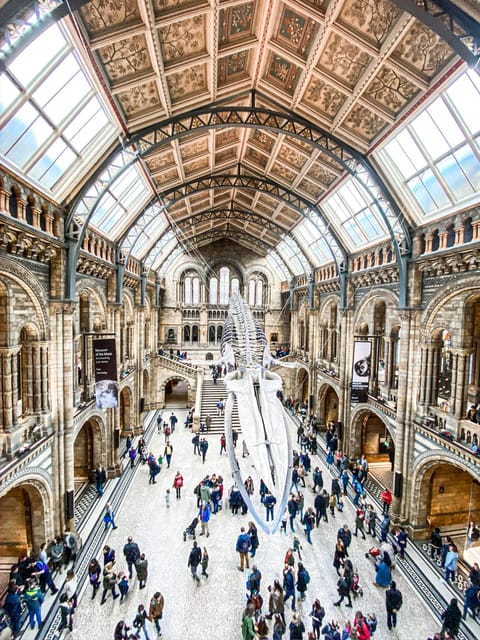
- Sophie the Stegosaurus: the museum’s famous, nearly complete stegosaurus skeleton is the first big wow.
- Archaeopteryx: you will see the much-discussed fossil that links birds and dinosaurs in a single, tangible moment.
- Giant Sequoia cross-section: a 1300-year-old tree cut in the 19th century turns “time” into something you can stand in front of.
- Pompeii Vesuvius casts: plaster casts make an eruption feel real, not abstract.
- Darwin’s On the Origin of Species (first edition): you get a direct connection to how scientific ideas spread and changed minds.
- Guides who keep it moving: guides like Sasha and Wesley can make the group feel involved, not lectured at.
A Smart Way to See London’s Natural History Museum Without Getting Lost
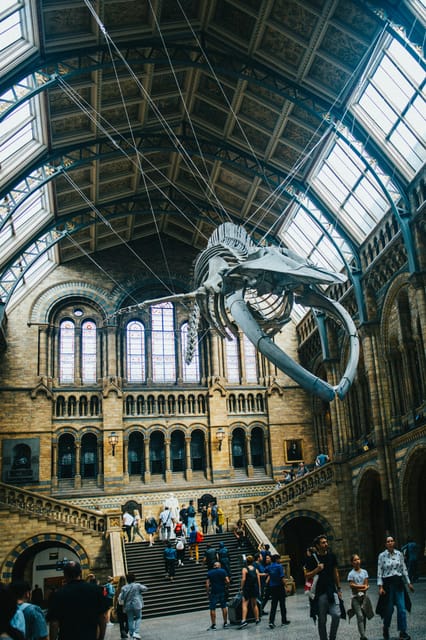
South Kensington is packed with museums, but the Natural History Museum is the one that can swallow an afternoon. This tour helps you beat that problem. In 2.5 hours, you get a 2-hour guided route through the museum’s main highlights, with access to what you actually came to see.
You start outside the museum at the meeting point: a red telephone box opposite the Exhibition Road entrance. That matters more than you might think. Big museums have multiple entrances and lots of foot traffic, and the fastest way to avoid stress is to be at the exact spot when your tour begins.
This is also a practical pick if you have limited time. Instead of trying to plan a self-guided route across hundreds of rooms, your guide points you at the key objects and gives the context you might miss on your own. You can still explore afterward, but you’ll get your bearings fast.
More museum visits in London:
- Tower of London and Crown Jewels Exhibition Ticket
★ 4.5 · 6,677 reviews - London: Chelsea Football Club Stadium and Museum Tour
★ 4.8 · 4,576 reviews - Chelsea FC Stadium Tours and Museum
★ 5.0 · 1,908 reviews
The Security Shortcut That Saves Real Time
You get express security as part of the tour, which is a big deal at a popular London museum. Even when you are traveling light, security lines can eat into your sightseeing time. Here, the goal is simple: keep the day moving so you spend more time looking and less time waiting.
One more small note that affects planning: flash photography is not allowed. That is normal for museums, but it is worth remembering if you are used to taking “quick snaps” for your own timeline. If you want great photos, rely on available light and steady shots without flash.
Also, this experience is listed as not suitable for wheelchair users. If mobility is part of your travel needs, you should look for an alternative that explicitly supports wheelchair access.
Sophie the Stegosaurus and the Fossil Start That Hooks Everyone
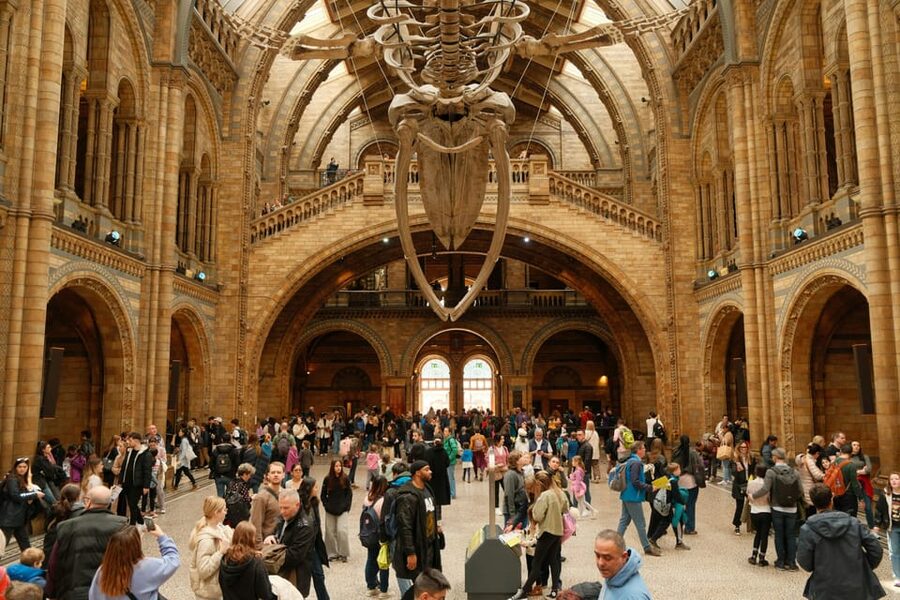
The tour’s fossil lineup works because it begins with something instantly understandable: Sophie the Stegosaurus. Standing near a nearly complete stegosaurus skeleton is the kind of moment that makes even casual museum-goers stop talking. You can see the scale, the arrangement, and the sheer physicality of an animal that vanished long before humans existed.
What I like about this kind of guided start is that your guide can set up what you are looking at before you drift into the details. Without that help, you might notice the bones and move on. With it, you start noticing how fossils are studied, how scientists reconstruct animals from fragments, and why some skeletons become famous in the first place.
The route also includes time for other standout displays like the Dodo. That adds variety without turning the tour into a random “best of” shuffle. You get the feeling of a museum that can talk about extinct life with both drama and evidence.
Giant Sequoia Cross-Section: The 1300-Year Time Scale Moment
One of the most memorable stops is the cross-section of a Giant Sequoia, described as 1300 years old at the time it was felled in the 19th century. This is where the tour gets clever. It makes time visible.
Instead of only learning about years from a label, you stand in front of material that literally holds the marks of growth across centuries. Your guide can help you connect the idea of tree rings to climate, seasons, and survival. It is a quick lesson, but it changes how you look at natural objects in the rest of your day.
The good news is that this stop also works if you are traveling with kids or relatives who do not automatically get excited about deep time. The object is big, graphic, and easy to grasp. Even if you are not a science person, you can still appreciate the scale.
More history tours in London:
- London Small Group Tour of Historical Pubs
★ 5.0 · 10,422 reviews - Soho Music & Historic Pubs Tour
★ 5.0 · 1,993 reviews - London: Historic Pubs of Central London Walking Tour
★ 4.9 · 1,065 reviews - London: Soho Music and Historic Pubs Walking Tour
★ 4.9 · 836 reviews
Pompeii Plaster Casts and How Vesuvius Makes History Feel Immediate
Not every museum tour can handle heavy topics without becoming gloomy. This one uses the plaster casts of victims of the eruption of Mount Vesuvius in Pompeii to make the past more human.
You are not just seeing “ancient tragedy.” You are seeing the evidence left behind and the way casts can preserve form. That gives your brain something concrete to hold onto. It turns an eruption from a vague event into something with bodies, shapes, and a place in time.
If your worry is that volcano and earthquake talk will sound too basic, this is one area where I think a good guide can make a difference. A strong guide explains the science in a way that feels grounded, then ties it back to what you are actually seeing in front of you. If your guide is more of a read-the-label style, the emotional impact may still land, but you might miss the deeper context.
Darwin’s First Edition Plus the Bird-Dinosaur Bridge
A big strength of this tour is that it hits science milestones, not only specimens. You will get to see the first edition of Darwin’s On the Origin of Species, a foundational text in how people began thinking about evolution in a structured way.
Then the tour makes a key jump from ideas to fossils with Archaeopteryx, often discussed as the so-called “missing link” between dinosaurs and birds. The way you experience this stop depends heavily on your guide. A great guide can keep it clear: not as a single magic answer, but as evidence that reshapes how we connect groups.
This is also where you can tell the difference between a highlight-only tour and a guided experience that actually teaches. The best moments are when your guide points out features you might overlook and then connects them to the bigger story. Guides such as Wesley were praised for being engaging and keeping things from feeling like a lecture, and that kind of delivery can matter a lot when you are moving quickly through a museum.
If you already know a lot about Darwin and evolutionary debates, you may find the tour feels lighter than a dedicated lecture. Still, seeing Darwin’s first edition and then immediately walking to a key fossil is a strong one-two punch.
Gemstones, Earths Vault, and Rock From the Moon and Mars
The tour does something smart by not locking you into only one theme. After the natural world and fossils, you get to see finest gemstones from the Earth’s vault plus rock samples from the Moon and Mars.
That combination can be surprisingly satisfying. It reminds you that science is one system. Earth geology connects to impact events, minerals connect to formation processes, and space rock connects to where material comes from and how planets differ.
In a guided setting, this kind of stop becomes more than “pretty cases.” Your guide can help you understand why gemstones are studied, what makes certain specimens valuable, and how the museum’s display choices communicate the story of the planet.
If you are the type who likes asking questions, this is a great place to do it. A good question to ask is what feature in a display tells you the most about origin or formation. Even if you get only a short answer, it gives you a way to look at the exhibit after the tour ends.
Timing, Group Size, and the Private Tour Feel
This option is listed as private or small groups available, and that can seriously change your experience. With fewer people, your guide can control pace better and spend a bit more time at the stops that catch your attention.
The tour is listed as English, and you should plan to follow along at a comfortable walking pace. In a museum this size, it is normal to move between areas, stop for the main objects, then move again. The value is that you are not guessing what is worth your time.
One caution based on real-world operations: there was an issue in at least one account where a guide was not present. That can happen with any tour business on any given day. The best practical move is to check your confirmation details the day before and arrive a few minutes early at the red telephone box meeting point so you are ready if anything needs to be corrected quickly.
Price and Value: When $93 Makes Sense and When It Might Not
At $93 per person for about 2.5 hours, this tour is not a bargain. It is a mid-priced museum experience, and you are paying for three things: a live guide, an organized highlights route, and skip-the-line express security.
So when does it feel worth it?
- If you want a curated path through major highlights without spending time planning.
- If you like having someone translate labels into real explanations.
- If you are visiting for the first time and want a “greatest hits” set of objects that still feels coherent.
When might it disappoint you?
- If you already have strong basic knowledge and you want deep, technical explanations at every stop.
- If you are expecting a lot of hidden-room exploration rather than main exhibits.
A balanced way to think of it: this tour is best as your efficient starting point. It helps you see the stars. Then, if you want more, you can go back on your own for extra rooms with your new context.
Who Should Book This Natural History Museum Guided Tour
This tour is a strong fit if you want:
- a high-impact highlights route in a short time
- fossil, evolution, and Earth science in one flow
- a guide who keeps the group engaged, as seen with guides like Sasha (praised for engaging a family group)
It is also a good option for mixed groups where not everyone has the same interest level. You get dinosaurs, trees, volcano evidence, Darwin, and even space rock. That variety makes it harder for one person to check out.
If you are traveling with wheelchair users, skip this specific format since it is listed as not suitable. And if your party includes people who hate crowds and prefer total independence, you might prefer a self-guided plan with fewer people bottlenecks.
Should You Book This Tour?
Yes, consider booking it if you want an efficient way to see multiple museum headline objects with context, and you value a guide who can keep the pace lively. The combination of Sophie the Stegosaurus, the Giant Sequoia cross-section, Pompeii casts, Darwin’s first edition, and Archaeopteryx is a very strong lineup for a short visit.
Skip it or manage expectations if you are already very deep into the subject and you expect long, expert-level explanations at every stop. In that case, you may prefer a longer tour, a museum talk, or a self-guided route with your own research.
FAQ
How long is the London Natural History Museum guided tour?
The duration is listed as 2.5 hours, and the tour portion is described as 2 hours.
Where do we meet for the tour?
Meet outside the red telephone box opposite the Exhibition Road entrance to the Natural History Museum.
What major highlights will we see?
You should expect stops at Sophie the Stegosaurus, Dodo, a Giant Sequoia cross-section (1300-year-old), plaster casts from Pompeii related to Mount Vesuvius, Darwin’s On the Origin of Species first edition, and Archaeopteryx, plus displays including gemstones and rock from the Moon and Mars.
Is there express security included?
Yes. You get to skip the line through express security check.
Can I use flash photography?
No. Flash photography is not allowed.
Is the tour wheelchair accessible?
The tour is listed as not suitable for wheelchair users.
What group size options are available?
The tour is available as private or small groups.
Can I cancel and can I book without paying right away?
Yes. It includes free cancellation up to 24 hours in advance for a full refund, and it also offers a reserve now & pay later option.
Recently reviewed around London
- Bridgerton Tour in London★ 5.0 · 9 reviews
- Tour in Italian: Londra in un Giorno★ 4.9 · 20 reviews
- London in Spanish Privado: Lo Mejor de Londres en un día!★ 4.8 · 12 reviews
- Westminster and National Gallery 3.5-Hour Tour in Italian★ 4.9 · 28 reviews
- Top London Sights Tour – Christmas Day Special!★ 5.0 · 12 reviews
- Tour a Piedi di Harry Potter a Londra★ 5.0 · 20 reviews
- London: Royal Hampton Court Guided Tour with Afternoon Tea★ 5.0 · 67 reviews
- London: Full Day Tower, St. Paul’s, Cruise & Eye Experience★ 4.6 · 168 reviews
Historical Tours, compared.

Royal Historic Pubs Walking Guided Tour in London
Read our review →
Private Group: Historical Pub Walking Tour of London
Read our review →

Browse the lists this tour appears in