
Reviewed · GREENWICH TOURS
Royal Observatory Greenwich & Prime Meridian Entrance Ticket
Royal Observatory Greenwich is interesting because it turns an abstract idea, time, into something you can stand on. You’re visiting the home of British astronomy, then walking right up to 0 degrees longitude in Greenwich Park. Two big reasons to go are the chance to stand astride the Meridian Line and the payoff view from the hilltop over the Thames and the city.
I also really like how the site connects the science to real people and real navigation problems, from royal astronomers mapping the stars to marine timekeeping. The main drawback to plan around is the steep hill from the Greenwich Park area up to the Observatory, which can be tough if you have mobility limits.
Key highlights to look for
- Stand on the Prime Meridian (0 degrees), with one foot in the eastern hemisphere and one in the west
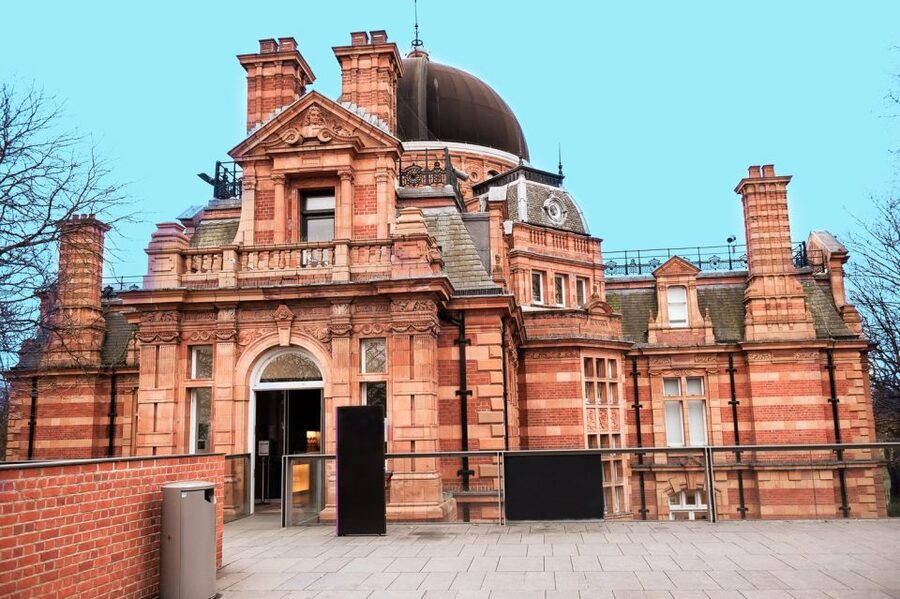
- Flamsteed House and the Octagon Room, designed by Sir Christopher Wren
- Follow the story of time, including Harrison, Newton, Halley, Bradley, and Airy
- Touch a meteorite connected to deep space and deep time
- Planetarium options at the Peter Harrison Planetarium, not included with this ticket
- One of the best-loved views of London from Greenwich Park
Entering Royal Observatory Greenwich, then going self-guided
Your ticket is for Royal Observatory Greenwich, with entry to the Prime Meridian area. It’s a self-guided visit, so you won’t be herded into a fixed script. Instead, you can move through at a pace that fits your curiosity, whether you want quick hits or a slower read of the exhibits.
The experience is built around a simple idea: time is measurable, and measuring it changed how people navigated the world. The Royal Observatory sits in Greenwich Park, and once you reach the top, the whole setting makes sense. You’re not just learning facts in a room, you’re on the grounds where those facts mattered for clocks, maps, and safe voyages.
You’ll also get a multilingual downloadable guide and an audio guide in Spanish, Chinese, English, French, German, Italian, Korean, and Portuguese. That matters here because the Observatory’s story is both technical and human. The guide helps you connect the dots without needing a live lecturer.
More Greenwich tours:
- Westminster to Greenwich Sightseeing Thames Cruise in London
★ 4.5 · 2,969 reviews - Leeds Castle, Canterbury, Dover & Greenwich Boat ride
★ 4.5 · 604 reviews - ‘Cutty Sark’ Entrance Ticket
★ 4.5 · 373 reviews
From Greenwich Park gates to the Observatory hilltop
This is the kind of attraction where the walk is part of the deal. Most of the value comes after you climb up, because that’s when the Meridian Line moment and the viewpoint really land.
The downside is that the route up is steep, and at least some visitors find it challenging, especially if you’re relying on limited mobility. If you’re deciding when to go, think about comfort first. Wear shoes with grip, bring water in warmer months, and plan your visit when your legs feel fresh.
Once you arrive, the Observatory sits like a calm crown at the top. You’re in a place that feels slightly removed from the rush below, and that helps the exhibits click. You can enjoy the science without feeling like you’re escaping a crowded theme park.
Flamsteed House and the Octagon Room, Sir Christopher Wren’s centerpiece
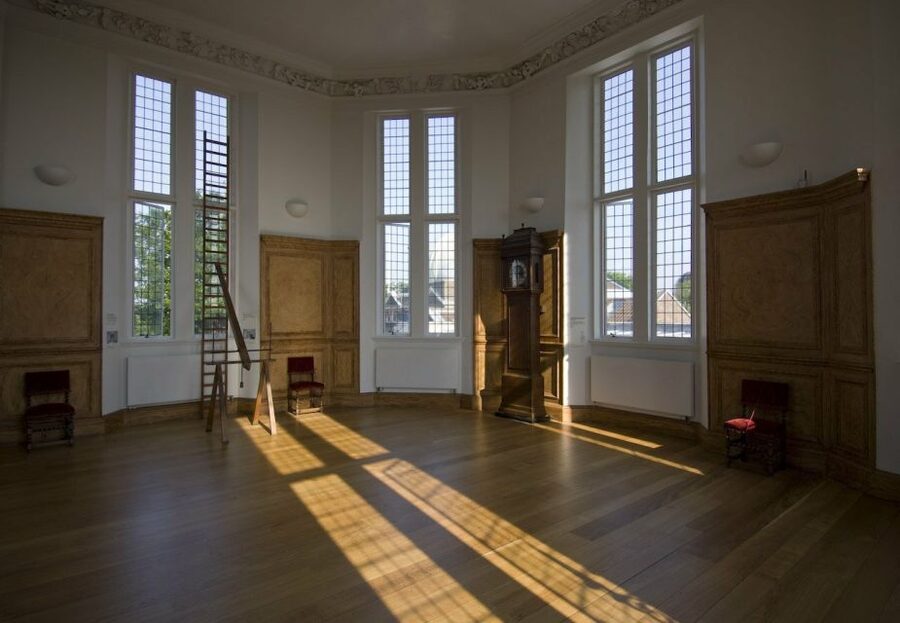
Inside the Royal Observatory, you’ll spend time in the historic heart of the site, including Flamsteed House. The Octagon Room is the centerpiece, and it’s designed by Sir Christopher Wren. This matters because it’s not just a pretty room. It’s part of how the Observatory functioned, built to support serious work in astronomy at the time.
In a place like this, rooms are part of the storytelling. The architecture helps you understand why the site earned its reputation. It’s easier to imagine scientists working through star observations when you can stand in the spaces they used, rather than seeing only modern interpretive panels.
Look for how the exhibits connect the Observatory to star mapping and navigation. The Royal Observatory was established in the 17th century, and the big idea was precision. When you can accurately map stars, you can help guide ships. That connection between astronomy and real-world travel is one of the reasons this visit feels more grounded than many museum stops.
Walking the history of timekeeping, from royal astronomers to Harrison
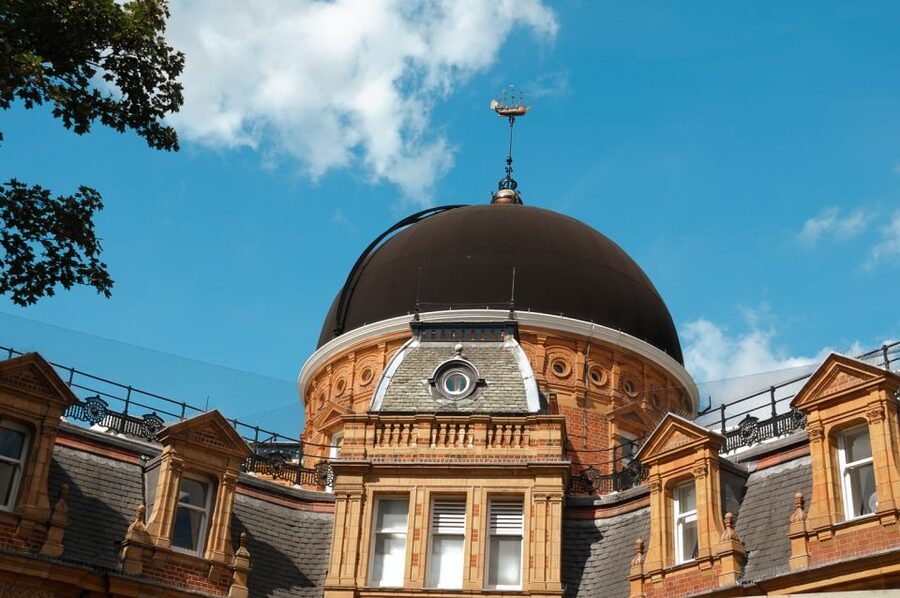
The Observatory is famous for its scientific network, and the ticket experience includes learning about major figures associated with the Royal Observatory. The names you’ll see highlighted include Harrison, Newton, Halley, Bradley, and Airy.
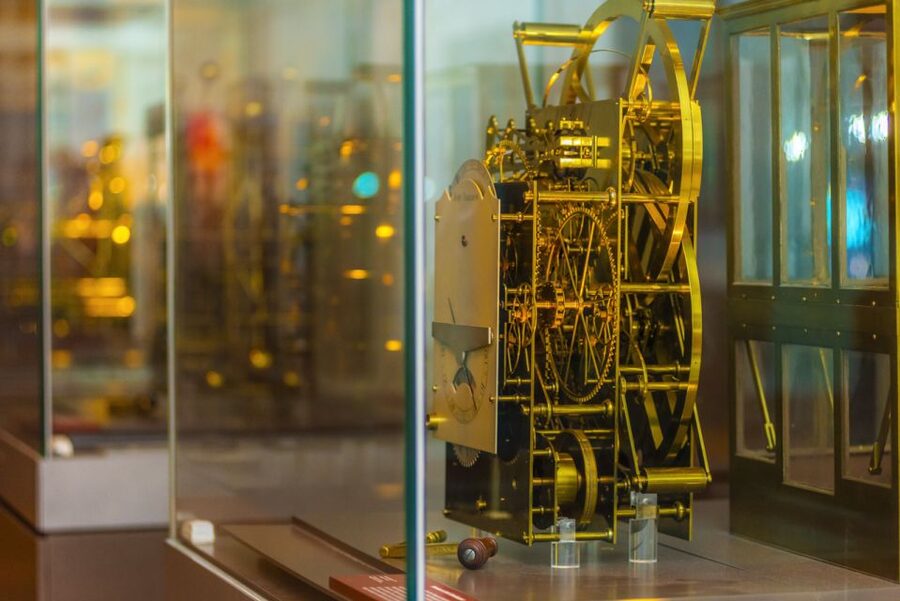
Here’s why that lineup is worth your attention. These weren’t random celebrities of science. They represent the shift from observing the sky to using that knowledge to solve problems like accurate time at sea. The Mercury of this museum is not just astronomy, it’s measurement.
As you move through the exhibits, you’ll pick up how the Observatory helped precisely map the stars for navigation. You’ll also learn how the Greenwich Meridian was chosen as the Prime Meridian of the world in 1884, locking Greenwich into the global story of time and longitude.
If you’re the type who likes cause and effect, this is a great place to spot it. You watch how the need for navigation pushes technology forward. You see how mapping the sky becomes a practical tool, not only an art of looking up.
More royal London tours:
- Buckingham Palace: The Royal Mews Entrance Ticket
★ 4.3 · 1,759 reviews - London: 1-Hour Guided Tour of the Royal Albert Hall
★ 4.8 · 1,133 reviews - London: Buckingham Palace Entry Ticket & Royal Walking Tour
★ 4.5 · 1,010 reviews - The Kensington Palace Gardens Royal High Tea
★ 4.5 · 934 reviews
Standing astride the Meridian Line at 0 degrees longitude
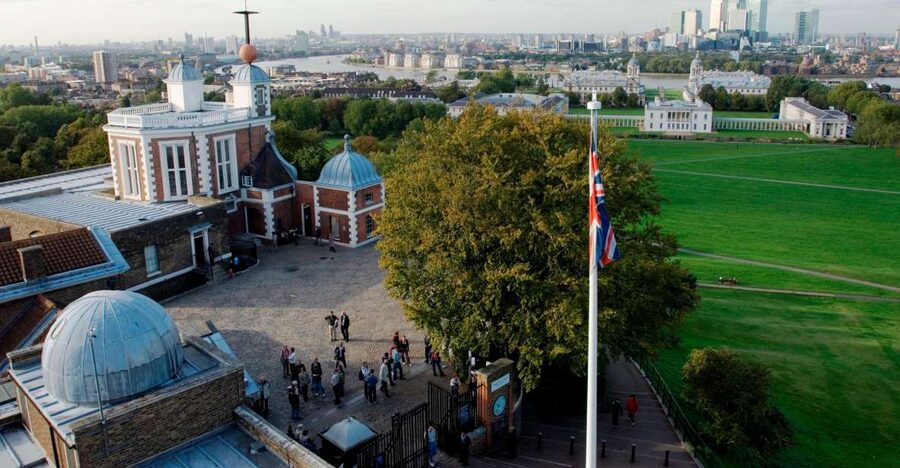
The moment you’re really here for is the Meridian Line itself. You’ll be able to stand astride the Meridian Line, with one foot in the eastern hemisphere and one in the western hemisphere.
This is one of those experiences where the body understanding is faster than the brain understanding. You can read about it, but standing there makes it feel real. It’s also a simple way to get your bearings with geography. Prime meridians sound abstract until you physically straddle them.
As you stand on that line, take a minute to look around. The site setting helps you understand what “place” means in timekeeping. Greenwich isn’t only a coordinate, it’s a decision made to standardize how the world measures and communicates time.
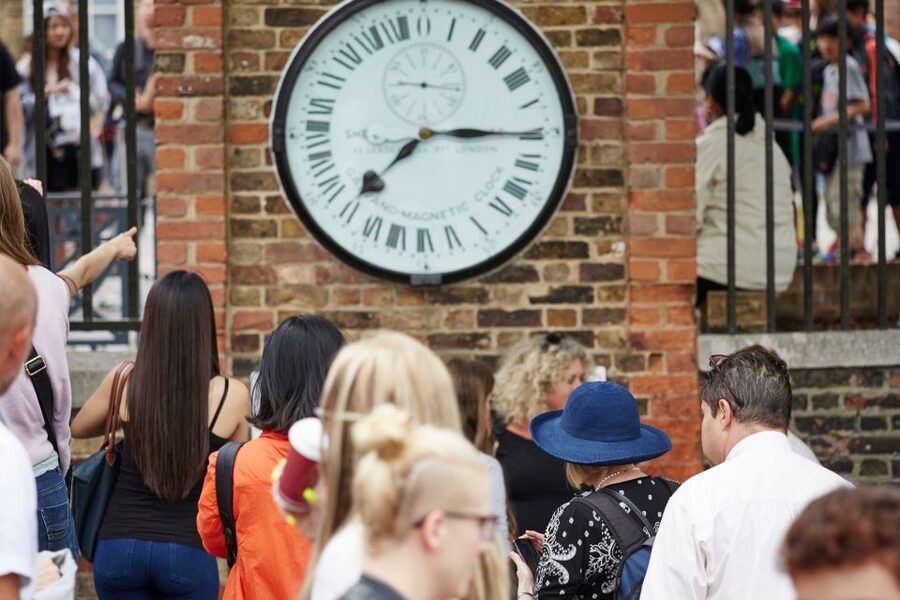
If you like small rituals, plan your visit so you can catch the daily timing moment when the signal drops at 13:00. You’ll see it described as a fun add-on for people who want to experience the Observatory’s time culture in action.
The modern Astronomy Centre, meteorite contact, and space exhibits
In addition to the historic rooms, the ticket experience includes time to explore the modern Astronomy Centre. One of the standout add-ons here is the ability to touch a 4.5 billion-year-old meteorite from outer space.
That’s the kind of “wait, seriously?” detail that keeps kids engaged and adults curious. It also makes the science feel less like a lecture and more like a hands-on connection to the physical universe. Even if you focus mainly on the Meridian, spending time here can broaden the visit from time and geography into big-picture space.
You may also encounter space-themed exhibits that explain discoveries and observational ideas. The Observatory’s strength is the bridge between practical navigation and the wider wonders of astronomy. If you come expecting only star charts and clocks, give yourself time to see the space side too.
Planetarium shows at the Peter Harrison Planetarium, what’s included and what isn’t
You should know that planetarium shows are not included with this ticket. That doesn’t mean you can’t add one, it means your ticket doesn’t automatically cover a show.
Why does this matter? Because planetarium programming can change, and you might waste time if you build your plan around a show that needs separate tickets. If you want a planetarium experience, treat it like an optional extra you decide after you’ve toured the Meridian and the historic rooms.
Still, it’s worth noting the presence of the Peter Harrison Planetarium as part of the overall day. The Observatory is set up so you can move from history into more immersive space interpretation, and that can be a nice arc if you’re visiting with family or you learn well through visuals.
London views from Greenwich Park, plus the best way to time your visit
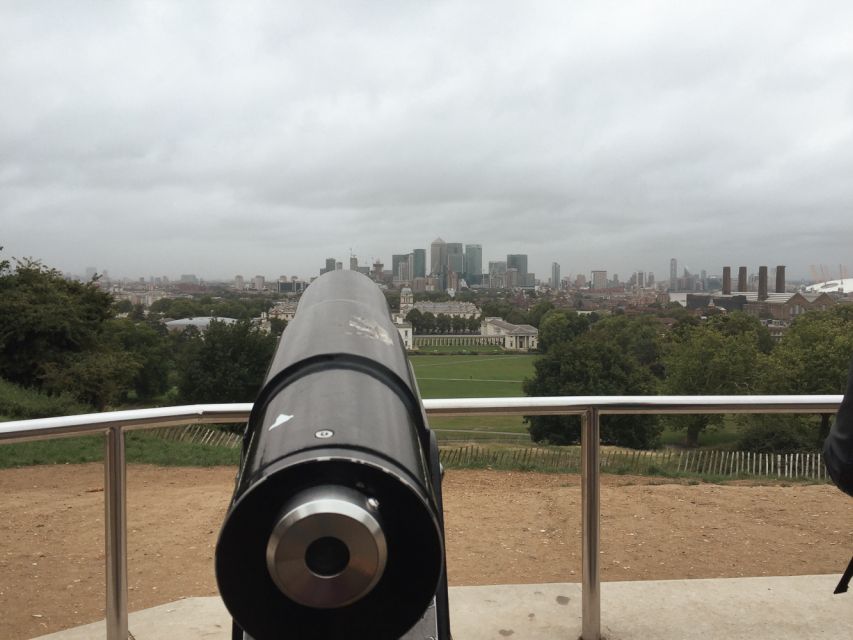
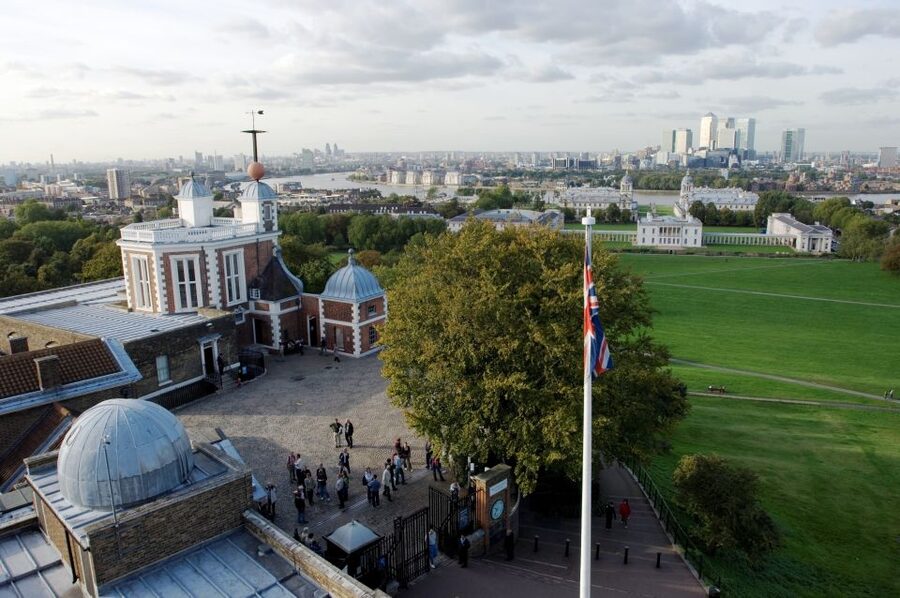
The view is one of the big reasons this stop earns so much love. From the top at Greenwich Park, you’ll be able to gaze across the City of London, the River Thames, and the broader Greenwich area. This is not a tiny postcard moment, it’s a true “big sky, big city” perspective.
This viewpoint also helps you anchor the Meridian Line in context. When you can see the city below, the coordinate starts to feel like it belongs to the real map, not just to a museum floor.
A practical move: give yourself a little buffer for the view. It’s easy to rush because the Meridian moment is so iconic. Then you step aside, look out, and realize you missed the best part of the setting.
If you’re planning a fuller Greenwich day, the Royal Observatory sits close to other Greenwich attractions, so pairing it with nearby sights can make sense. You’ll likely leave with a stronger sense of why this neighborhood is tied to navigation and the global map.
Ticket value at about $32.33, and what you truly get
At $32.33 per person, you’re paying for more than a single photo op on a line. You get entry to a historic scientific site, access to the Prime Meridian area, and time in both the Flamsteed House interiors and the modern Astronomy Centre.
You’re also getting built-in learning support through the downloadable multilingual guide and audio options in multiple languages. That lowers the friction of self-guided visiting, especially if you want to understand the “why” behind the Meridian choice and the role of star mapping for navigation.
Is it worth it? For me, it’s a strong value if you like science that connects to everyday consequences, or if you want an experience that mixes geography, time, and hands-on wonder. It’s less of a slam dunk if you only want quick entertainment and don’t care about the story of measurement and navigation.
The fact that it’s self-guided also boosts value. You decide how much time to spend in the Octagon Room, how long to linger on the Meridian Line, and whether to allocate time for the meteorite touch and the space exhibits.
Who this ticket suits best
This is a great fit for:
- People who like science with a real-world payoff, especially timekeeping and navigation
- Families with kids who enjoy hands-on moments like the meteorite contact
- Travelers who want a landmark that’s easy to understand, stand on, and remember
- Anyone who likes a calm museum pace instead of a crowded, tightly timed tour
It’s also a good choice if you want a “one-day anchor” in Greenwich. The Observatory gives you a clear story arc, historic astronomy up top, modern space ideas inside, then the view over London outside.
Should you book the Royal Observatory Greenwich & Prime Meridian ticket?
Yes, if you want a landmark that mixes a simple iconic moment with serious context. Standing on the Meridian Line and learning why Greenwich mattered for the world’s time standard is the kind of experience that stays with you.
I’d especially recommend booking if:
- You enjoy learning about how measurement improved navigation and made travel safer
- You want both historic rooms like the Octagon Room and a modern science side
- You like experiences that connect a coordinate to the lived reality of places and people
Skip it only if steep walking up Greenwich Park would make the visit uncomfortable, or if you’re not interested in the science-and-time angle at all.
FAQ
Is this Royal Observatory Greenwich ticket self-guided?
Yes. This is described as a self-guided visit, and the entry ticket covers the Royal Observatory Greenwich and the Prime Meridian.
What is included with the ticket?
The ticket includes entry to the Royal Observatory Greenwich and the Prime Meridian, plus a multilingual downloadable guide. An audio guide is also included with multiple language options.
Are planetarium shows included in this ticket?
No. Planetarium shows are not included.
How long is the ticket valid?
It’s valid for 1 day, and you can check availability to see starting times.
Where does the visit start and end?
It starts at Royal Observatory Greenwich and ends back at the meeting point.
Is the site wheelchair accessible?
Yes, it is wheelchair accessible.
Recently reviewed around London
- London: Harry Potter Walking Tour with Platform 9 3/4★ 4.6 · 37 reviews
- London: Harry Potter Tour & The London Dungeons Tour★ 3.8 · 28 reviews
- London: Harry Potter Tour, River Cruise & The London Dungeon★ 4.4 · 8 reviews
- London: Harry Potter Walking Tour and River Thames Cruise★ 3.6 · 24 reviews
- London: Harry Potter Tour and London Bridge Tombs Experience★ 3.8 · 4 reviews
- London: Harry Potter Walking Tour and Tower Bridge Ticket★ 4.4 · 7 reviews
- London: Harry Potter Walk, Hop-on Hop-off Bus Tour & Cruise★ 4.1 · 105 reviews
- London: Harry Potter Sights and Shrek’s Adventure Combo Tour★ 4.6 · 3 reviews
Greenwich Tours, compared.

Westminster to Greenwich Sightseeing Thames Cruise in London
Read our review →
Leeds Castle, Canterbury, Dover & Greenwich Boat ride
Read our review →

Leeds Castle, Canterbury, Dover & Greenwich Cruise from London
Read our review →
Royal Observatory Greenwich & Prime Meridian Entry Ticket London
Read our review →


Leeds Castle, Canterbury, Dover, Greenwich & Free Snack Pack
Read our review →Browse the lists this tour appears in