
Reviewed · LONDON
Southwark to Shoreditch Shakespeare Promenade
Southwark to Shoreditch Shakespeare Promenade is interesting because it turns London into a moving stage set. You start by the water, see the Globe from the outside, then follow a story that rewinds Shakespeare’s theatre life back toward its early roots in Shoreditch.
I love two things most about it: the actor guide storytelling with Shakespeare quotes and short performances at key stops, and the fact that you mix big-name landmarks with smaller, more characterful streets and squares. One thing to consider is that this is a real walking tour. It is not suitable for wheelchair users or people with mobility, visual, or hearing impairments, and it is aimed at age 16+.
Key things to know before you go
- Small groups (up to six) keep the pace human and the guide’s attention on your group
- Globe theatre sightseeing is exterior only, so you get the view without a ticketed visit
- A 20-minute break at the Barbican gives you a breather, plus a totally different architectural mood
- The route plays like a timeline backward, starting at the Globe and working toward the early playhouse sites in Shoreditch
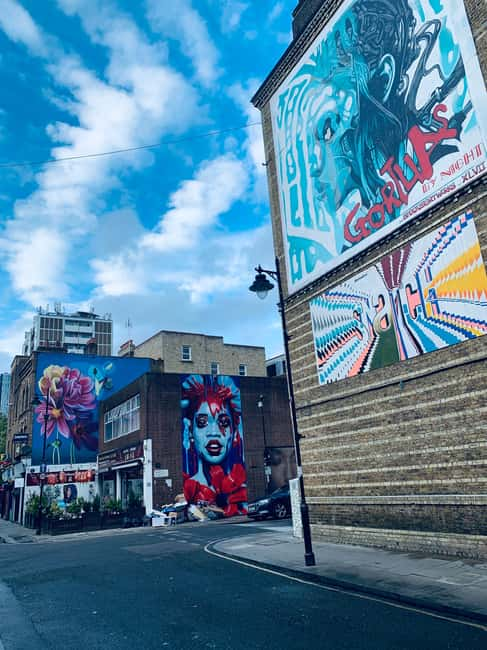
- Shoreditch street art is part of the finale, not just an extra photo stop
A Thames promenade that feels like a Shakespeare scene change
This tour is made for people who like theatre but also like walking. You are moving through real neighborhoods as the guide links them to the Elizabethan and Shakespearian Renaissance theatre story. It is not a sit-down lecture. It’s more like being handed scenes in order, then watching London set them up around you.
The starting point is Mansion House Station, guide waiting at Exit 1 on Garlick Hill. From there, you head down toward the river, and the first stretch gives you that classic London rhythm, water, bridges, and skyline.
If you enjoy the way actors use voice and timing to make text land, you’ll get a lot out of this one. The guide works in performance and quotes at specific points, so you’re not just seeing places, you’re hearing them framed as part of the playhouse world.
Other London bookings people compare this one against:
- From London: Harry Potter Warner Bros Studio Tour
★ 4.7 · 26,588 reviews - Magical London: Harry Potter Guided Walking Tour
★ 4.7 · 22,044 reviews - London: Madame Tussauds London
★ 4.6 · 20,915 reviews
The meeting at Mansion House, then straight to the river
You meet at Garlick Hill at Mansion House Station (Exit 1), and you’ll stay in a small cluster as you walk off together. The route starts by orienting you to the “working London” geography that shaped how Shakespeare’s era audiences moved and gathered.
From there, it’s a short walk toward the Thames. This matters because the river is doing more than looking pretty. It’s a map of connections, trade, and city life, which is the backdrop the guide uses for storytelling.
Then you angle toward Southwark Bridge, where the views start opening up. Southwark is where the theatre story makes sense fast, because this area sits across from the famous playhouse you’ll see next.
Southwark Bridge to the Globe theatre viewpoint, plus the story’s anchor
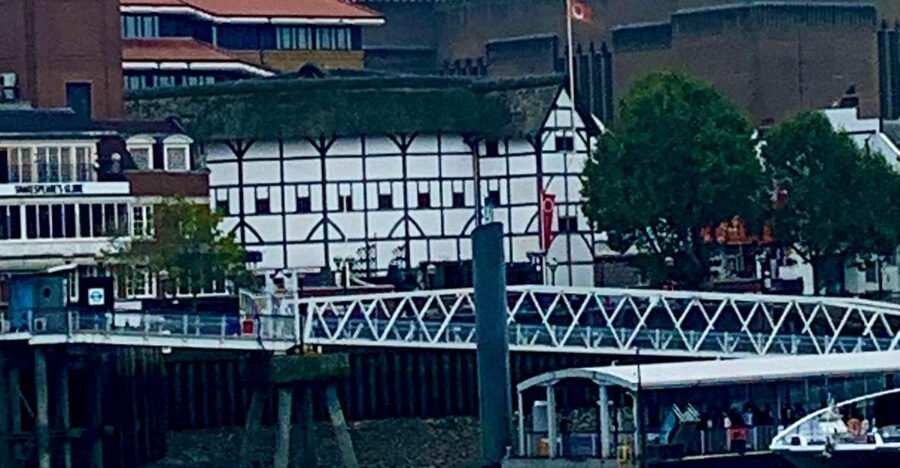
Next comes a key visual moment: Shakespeare’s Globe theatre. You spend time sightseeing there, but a Globe theatre visit is not included, so plan on an exterior look rather than going inside.
Even without an entrance ticket, this stop is still valuable. Seeing the Globe in its setting helps the guide’s timeline click into place. It gives you a physical anchor for everything that follows, and it’s a strong spot for getting photos with the river and skyline in the background.
Immediately after the Globe, the tour moves forward and back in time through geography. It’s a clever approach because you’re not stuck in one “historical bubble.” You’re seeing how the city’s layout supports the playhouse story.
Millennium Bridge, Blackfriars, and St Paul’s: the city gets louder
After the Globe, you cross over to the Millennium Bridge. This is a modern crossing that adds a contrast beat. You’re still following the theatre narrative, but now you’re also watching how newer London sits over older layers of the city.
Then you pass through stops tied to the theatre world’s wider London context, including Blackfriars. The guide uses these transitions to keep the narrative moving without turning it into a checklist of facts.
A bigger landmark follows: St Paul’s Cathedral. You’re given a short sightseeing window, long enough to take in scale and surroundings. For many people, St Paul’s is the moment you feel the whole walk is not only about Shakespeare, it’s also about understanding London as a stage. The guide’s quote and performance bits here help connect the cathedral-sized view to the play-sized world of actors and audiences.
A different sort of day out in London:
- Stonehenge, Windsor Castle, and Bath from London
★ 4.5 · 18,662 reviews - London: Warner Bros. Studio Tour with Transfers
★ 4.7 · 17,586 reviews - London: Tower Bridge Entry Ticket
★ 4.7 · 15,560 reviews - London Big Bus Hop-On Hop-Off Tour with Optional River Cruise
★ 3.5 · 10,803 reviews
Guildhall and London Wall: old boundaries, new perspective
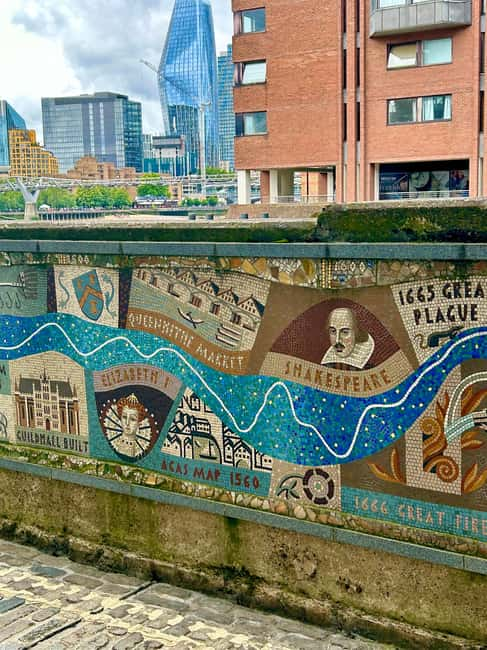
From St Paul’s you move toward Guildhall, London, with another sightseeing pause. Guildhall brings a civic, official feel to the route, which helps the guide widen the story beyond just playhouses. It reminds you the theatre ecosystem lived inside a functioning city, not outside of it.
Then you head to London Wall, where the focus shifts again to the city’s longer structure. Even if you are not hunting for exact details on the wall itself, the stop gives the tour a sense of “how long London has been layered.” The guide uses these in-between moments to keep your brain connected to the theme, not just the route.
These stops also help pace the walk. Short sightseeing breaks mean you’re not always in motion, and your legs get just enough recovery so the rest of the walk stays enjoyable.
The Barbican break: brutalist architecture meets theatre energy
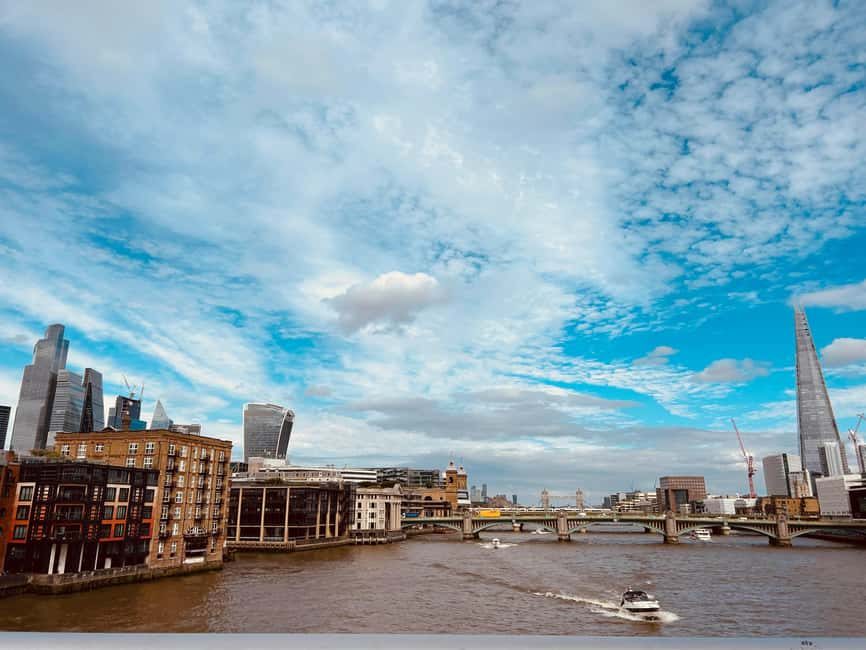
You’ll get a 20-minute rest and refreshment break at the Barbican Arts Centre. That timing is great because it lands after a run of major viewpoints. It lets you reset before the final section turns toward Shoreditch.
The Barbican stop is also more interesting than a generic coffee break. It’s the home of the Royal Shakespeare Company, so the pause still fits the theme, even though you’re off your feet for a bit. Some guides thread the Barbican setting into the story as you pass through the estate on the way in and out, and that contrast really works, especially if you like seeing how theatre culture adapts through different city eras.
Because food and drink are not included, use the break to grab water, a snack, or a drink if you want. The biggest tip here is simple: take the full 20 minutes. You’ll feel it later when the Shoreditch leg starts.
Bunhill Fields to Shoreditch: street art and the early playhouse finish
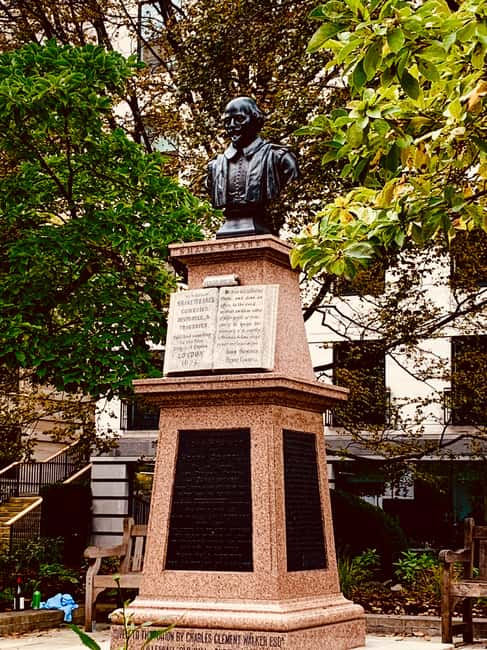
Once the break ends, the walk heads toward Bunhill Fields. It’s another short, moving transition that keeps you on schedule without skipping the feeling that the city changes as you go.
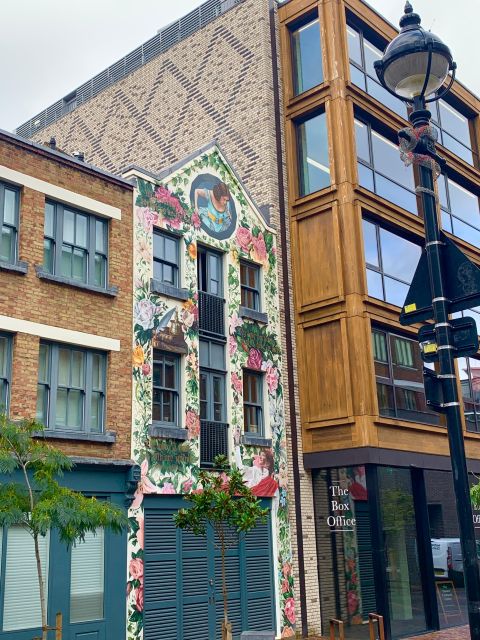
Then comes the finale: Shoreditch. This is where the tour leans into modern London. You get to enjoy street art and the creative energy of the neighborhood, and it works as a contrast to the more formal landmarks earlier in the route.
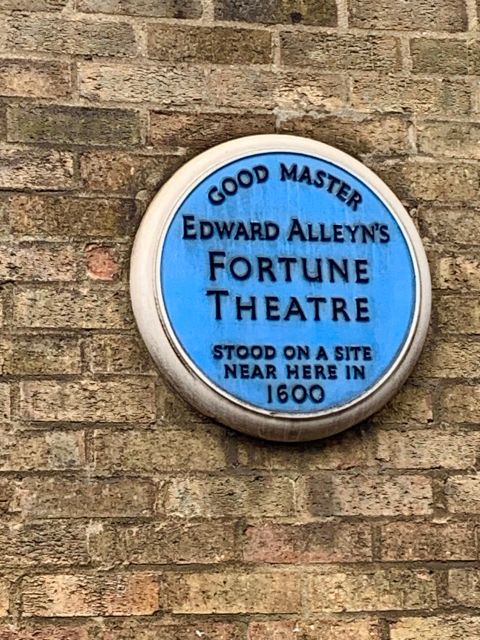
The tour finishes at New Inn Yard. This is where you get the payoff for the “timeline backward” approach, because you’re in the area connected with the foundational sites of the first two playhouses, The Curtain and The Theatre.
That ending is satisfying for two reasons. First, you end in a place where you can picture the early theatre world taking shape. Second, you end in a neighborhood that feels alive right now, so the story doesn’t stop in the past.
Actor guide performance: why it makes the walk worth it
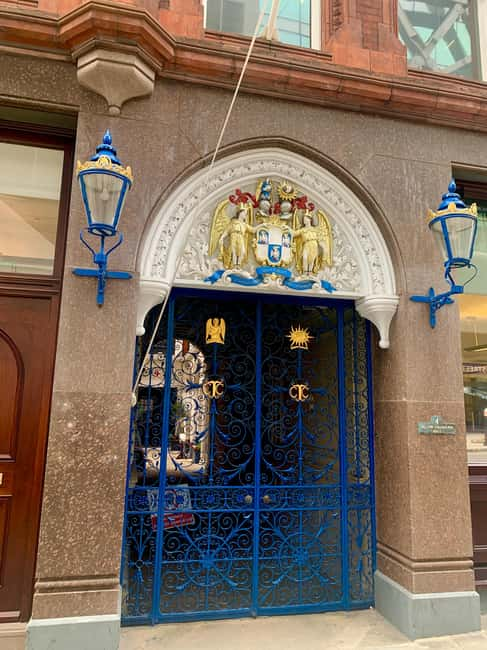
The guide is an experienced actor tour guide, and the performance style is the heart of the experience. You’re not only collecting sights. You’re also hearing Shakespeare quotes and short speeches at key points, mixed with comedy and tragedy, plus factual and fictional framing.
Small group size makes this easier. When there are only a few people, the guide can keep volume, pace, and attention aligned. That matters because Shakespeare works best when you hear it like a person telling a story, not when it’s background noise.
In particular, many groups get an extra layer of energy from guides who are trained performers. One guide name that shows up in the experience feedback is Dee, described as a professional actor who brings the scenes to life and helps the route feel like it has momentum, including the sneaky side streets and the shift in vibe around the Barbican.
Also, you do not need to be a hardcore theatre person to enjoy this. The guide’s job is to connect the locations to the theatre story in a way that feels clear even if Shakespeare isn’t your daily reading.
Price and value: $21.55 for a story-led London walk
At $21.55 per person, this is priced like a walking tour with serious extras. You’re paying for an actor guide, guided storytelling, and entry to a themed route that strings together major landmarks with theatre-linked stops.
What you should factor into your value equation:
- Included: actor guide, storytelling and performance, river views, and key historical sights
- Not included: food and drink, and a visit to the Globe theatre inside
So the price is strong if you want a theatrical walk and you’re happy with exterior sightseeing of the Globe. It is a weaker fit if you want to go inside the Globe or plan to treat the day like a paid attraction with ticketed entry everywhere.
The good news is the tour structure gives you what you need without adding too many extra purchases. You bring water, you take the break at the Barbican, and you keep moving.
Who should book, and who should skip
This tour is a great match for:
- Theatre buffs who want Shakespeare’s London framed through playhouse origins and audiences
- Literature lovers who like quotes and short performed moments, not just photos
- First-time London visitors who want an easy way to understand the city’s geography, from river to old civic sites to creative modern streets
- Anyone who enjoys small groups, because up to six people means less crowd pressure and more guide interaction
It may not be for you if:
- You need wheelchair access or specific accommodations, because it is not suitable for wheelchair users and it is listed as not suitable for people with certain mobility, visual, or hearing impairments
- You want an indoor, ticketed theatre program, because the Globe visit is not included
- You dislike walking. The walking portion is about two hours, and the overall tour includes time for a break, so comfort matters
What to bring for a smooth 2-hour Thames day
This is a practical advice day. Bring:
- Comfortable clothes for walking
- Water
- Rain gear, since you spend time near the river and on bridges
- Weather-appropriate layers, because London weather loves surprises
Wear shoes you can trust on city sidewalks and any uneven patches. You are moving through multiple neighborhoods, so the “one shoe type for everything” strategy usually works poorly.
Should you book the Southwark to Shoreditch Shakespeare Promenade?
I’d book this if you want a London walk that acts like a guided script. The actor-led performance, the Globe theatre viewpoint, and the Shoreditch street art ending give you a day that feels like story plus place, not just sightseeing.
Skip it if you want only classic museum-style stops, or if you’re hoping for a ticketed interior visit at the Globe. Also be honest about walking ability. This is a true on-your-feet tour, and it is designed for age 16+.
One final note: it has a strong track record, with a 4.9 out of 5 rating across 11 experiences. For a small-group, performance-led promenade at this price point, that’s a decent signal that the storytelling lands for most people.
FAQ
Where is the meeting point?
You meet at Mansion House Station, Exit 1 on Garlick Hill, where the guide will be waiting.
Where does the tour end?
The tour ends in Shoreditch at New Inn Yard.
How long is the tour?
The tour takes about 2 hours, plus a 20-minute break. Walking time can vary based on pace.
Is the Shakespeare’s Globe Theatre visit included?
No. The tour includes Globe theatre sightseeing, but a visit to the Globe Theatre is not included.
What’s included in the ticket price?
The tour includes an experienced actor guide, storytelling and performance, river views, and key historical sights.
What is not included?
Food and drink are not included, and the Globe theatre visit is also not included.
How big are the groups?
Groups are small, limited to up to 6 participants.
What age is this tour suitable for?
It is not suitable for children under 16. The age suitability listed is 16+.
Is the tour suitable for people using wheelchairs or with mobility impairments?
No. It is listed as not suitable for wheelchair users and for people with mobility impairments.
Can I cancel for a full refund?
Yes. There is free cancellation up to 24 hours in advance for a full refund.
Recently reviewed around London
- Bridgerton Tour in London★ 5.0 · 9 reviews
- Tour in Italian: Londra in un Giorno★ 4.9 · 20 reviews
- London in Spanish Privado: Lo Mejor de Londres en un día!★ 4.8 · 12 reviews
- Westminster and National Gallery 3.5-Hour Tour in Italian★ 4.9 · 28 reviews
- Top London Sights Tour – Christmas Day Special!★ 5.0 · 12 reviews
- Tour a Piedi di Harry Potter a Londra★ 5.0 · 20 reviews
- London: Full Day Tower, St. Paul’s, Cruise & Eye Experience★ 4.6 · 168 reviews
- The Royal Express, 2.5 hour tour★ 5.0 · 6 reviews