

Reviewed · STRATFORD-UPON-AVON TOURS
The WalkTalkShow.co.uk – Guided Tour of Stratford upon Avon
Stratford-upon-Avon works best on foot, and this small-group walk turns the town into a guided story you can actually see. I like how the route mixes famous Shakespeare sites with lesser-seen civic corners like Market Cross and the Guild Chapel. I also really enjoy that the tour is led with personality, for example when Marcus is on, the town feels less like a museum and more like a real place lived in. One thing to weigh: it is a short walking loop, about 1.4 km, so you will not cover every major attraction such as Hall Croft.
For context, you start at the Royal Shakespeare Theatre and finish back there, so you end with an easy plan for what to do next. Most stops are free to view, but two key sites have admission not included, so you may want to decide in advance whether you want to pay for extra interiors. If you are visiting on a day when the weather is poor, plan for the tour to be rescheduled or refunded.
WalkTalkShow Stratford-upon-Avon, what it gets right in 90 minutes
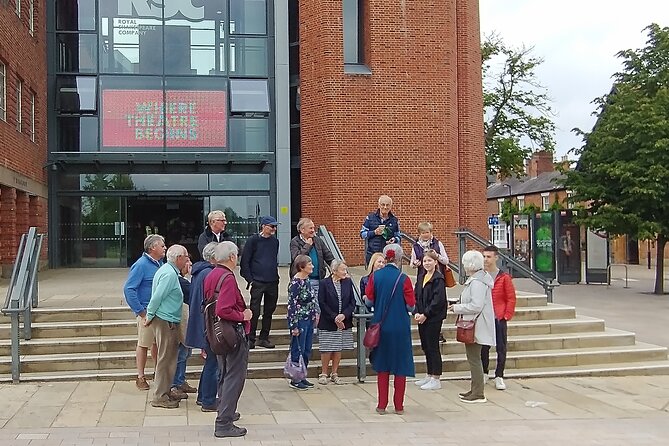
This is a focused introduction to Stratford’s shape and its power centers, built around Shakespeare and the people tied to him. The pacing is designed to keep you moving, with short stops that still give the guide time to explain why each place matters. The guides tend to be highly involved, with several different names showing up in the experience, including Dwayne, Glinda, Kate, Krista, and Marcus.
Because the tour is only about an hour and a half, it is a smart buy if you want orientation fast. You will leave knowing what to prioritize later, especially if you plan to see a play, pop into museums on your own, or plan a pub visit with confidence.
The group size is capped at 24, which keeps the walk friendly and lets you ask questions without feeling lost in a crowd. You also get a mobile ticket, which is handy when you are bouncing between stops.
The Royal Shakespeare Theatre meet-up, plus how the walk stays easy to follow
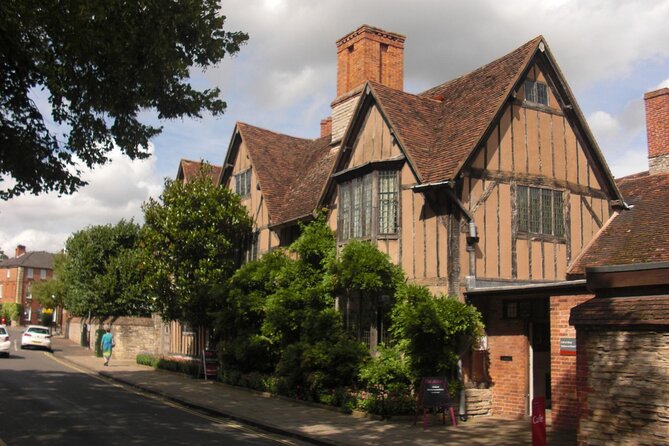
Your meeting point is the Royal Shakespeare Theatre on Waterside, Stratford-upon-Avon (CV37 6BB). Starting here is more than just convenient. It frames the whole day, because the theatre is tied to the modern Stratford identity while the rest of the walk pulls you backward into medieval and Tudor streets.
The route begins with an overview from the theatre area, then shifts into town history and Shakespeare’s family timeline. You get the sense that the guide is constantly connecting streets, buildings, and events, not just listing names. Even if you have seen a Shakespeare play before, you get a clearer map of how the town functioned, where power sat, and why certain locations mattered.
You will likely cover around 1.4 km total, which is short enough for most people, but it is still a walking tour. Wear comfortable shoes, because you will be on pavements and steps around old street corners.
More Stratford-upon-Avon tours:
- Oxford, Stratford-upon-Avon, Cotswolds & Warwick Castle Day Trip
★ 4.5 · 2,943 reviews - England in One Day: Stonehenge, Bath, the Cotswolds and Stratford-upon-Avon Day Trip from London
★ 4.5 · 1,344 reviews - Cotswolds in a Day Tour from Moreton-in-Marsh / Stratford-on-Avon
★ 5.0 · 1,216 reviews
One practical tip
If you care about interiors, keep your questions for the end of each stop. Most locations are viewed from the outside, and the guide can help you decide what is worth paying to enter versus seeing briefly and moving on.
Market Cross to Tudor pubs, spotting Stratford’s market pulse
One of my favorite parts is how the walk tracks Stratford’s economic engine. You start seeing it around Market Cross and the original Market Hall area, tied to the town’s trading traditions going back to the medieval period. The guide also connects it to John Shakespeare, William’s father, including his work as a glove trader.
That matters because Shakespeare was not created in a vacuum. The town’s market life shaped the people around him, the rhythms of daily living, and the local culture that formed his world.
This stop also helps you understand how Stratford grew into a place people passed through and lived in. When a guide explains this link, you start noticing the street plan and the junctions, not just the big landmarks.
The American Fountain stop, where old streets get surprising
You also pass the American Fountain area, which is tied to the livestock market dating back to the earliest period when the settlement became a market town. It is a good reminder that Stratford’s most famous era was built on ordinary commerce.
What I liked here is the way the guide points out survival buildings, including two Tudor-era pubs still present at that junction. You get a sense for the town as a living web of old and new, not a set of separate postcards.
More day trips out of London:
- Oxford, Stratford, Cotswolds & Warwick Castle Tour from London
★ 4.5 · 756 reviews - Shakespeare Distillery Tour – 1pm Ticket
★ 5.0 · 598 reviews - The Sinister Side of Shakespeare’s Stratford Walking Tour
★ 4.8 · 547 reviews - Stratford-upon-Avon: Shakespeare’s Birthplace Ticket
★ 4.6 · 476 reviews
Shakespeare’s Birthplace and the Tudor household mindset
When you reach Shakespeare’s Birthplace, the tone shifts from town-wide history to the personal reality of early life. The house itself dates to the early 1500s and functions as a living museum, but the guide’s real value is the framing. You hear what the young Shakespeare might have grown up around, and how a prosperous Tudor family would have experienced everyday life.
This is the stop that helps many people move from generic Shakespeare knowledge to human scale. It is not only about dates. It is about rooms, status, and the kind of stability (and limits) that shaped his early years.
Even if you are not a museum person, you will likely enjoy this part because it connects the biography to the building and the street setting. You can walk away knowing why Stratford keeps returning to the same sites again and again.
Bell Court and Chapel Lane, tiny streets that explain big culture

Between the big-name Shakespeare moments, you get quick, high-value stops that show how people socialized and how local governance worked.
Bell Court is one of those places where the guide helps you see meaning in the junction itself. The Bell there was used to call people to artisan markets, and the location now holds a mix of drinking and dining venues. That mix is useful on a practical level, because it gives you a map of where to eat and drink after the tour without guessing.
Then the walk moves into civic space near Chapel Lane, including King Edward the Sixth Grammar School, described as the modern version of an older guild school. This part is especially helpful for understanding continuity. Shakespeare’s schooling is not treated like a random side note. It is positioned as part of how Stratford educated its young.
If you care about the way institutions persist, you will appreciate these quick connections.
Town Hall Stratford-upon-Avon, and the Harvard connection
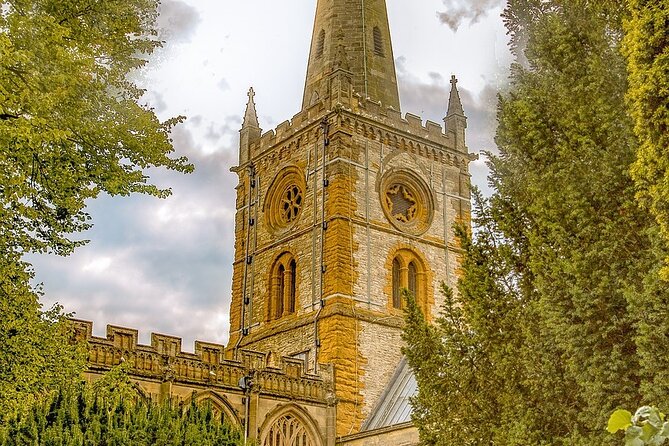
At the top of Sheep Street, the walk hits what the guide calls History Corner, and it is a clever moment for non-Shakespeare history fans too. You see buildings spanning five centuries, plus the birthplace of John Harvard, the founding father of Harvard University.
This is a big deal for value because it broadens the tour beyond Shakespeare alone. You get another layer of Stratford’s global influence, one that does not require you to be a literature specialist.
You will also spot the Garrick Inn, another Tudor-era pub now bearing that name. For me, that adds texture. It is one more reminder that the town has always hosted visitors, tradespeople, and locals gathering around food and drink.
Shakespeare’s New Place, what you get and what you do not

Shakespeare’s New Place is a highlight on the walk because it is tied to his retirement years. It was originally built in 1483, and Shakespeare bought it in 1597. The guide also frames it as the largest house in town, which helps explain how he moved from Tudor prosperity and civic roots into a later life marked by wealth and stability.
Important practical note: admission for Shakespeare’s New Place is not included. That means you can still hear the story and understand the site from the outside, but if you want to go in, you should expect to pay separately.
This is one reason the tour is a strong value. You get the context for free or low-cost access, then you choose how deep to go based on your interests.
Guild Chapel and Shakespeare’s schoolroom, the power center and the classroom next door
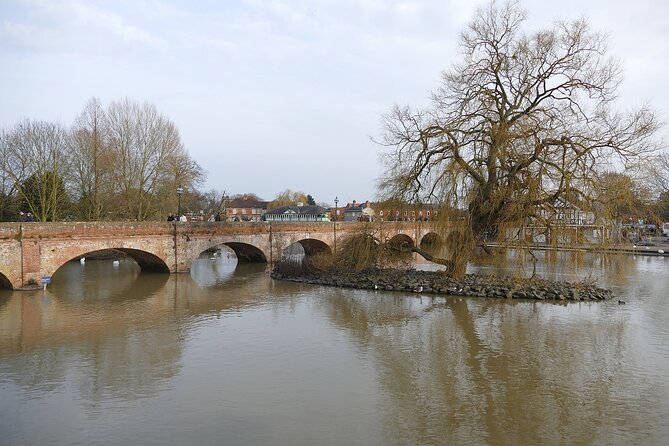
Near the end, the walk shifts to the guild side of Stratford. You visit the Guild Chapel, linked to the town’s original seat of power dating to 1269. The chapel is described as free to enter, and the adjacent Shakespeare schoolroom is part of the story about education.
There is also another educational thread, because the guild school started in 1295 and continued for centuries. Shakespeare attended it in the late 1500s, and the schoolroom is now presented as a living museum.
One detail I found useful is that the tour treats these as connected spaces. The chapel is not just another pretty stop. It helps you understand who held authority and how the town prepared young people.
Again, admission for Shakespeare’s schoolroom and Guildhall is not included. If you want to step inside and see the museum interpretation, plan for that extra cost and time. If you prefer to keep things moving, you can take the context and then decide later if you want more.
Swan Theatre and the Royal Shakespeare Theatre finale, where the old stage lives on
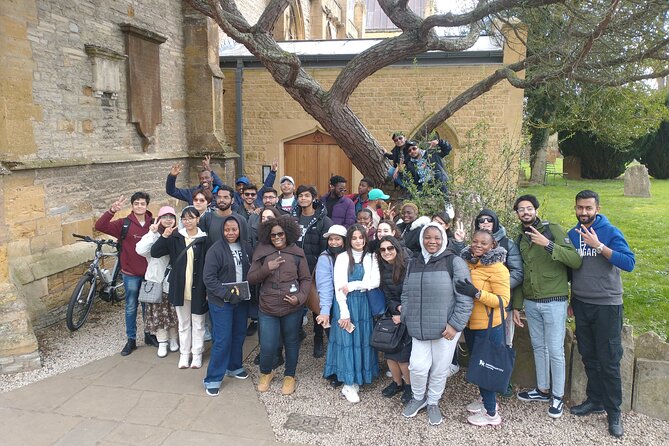
You end with a theatre-focused perspective. The Swan Theatre stop is used to explain the history of the theatre complex, including why the facade of the Swan survives as the only visible part of an earlier Shakespeare Memorial Theatre.
This is a great moment for anyone who loves performance history. Even if you do not plan to attend a show, you come away with a sense of how Shakespeare-era playhouses influenced later revivals and why certain structures remain.
Then you return to the Royal Shakespeare Theatre to wrap up. The guide uses the last minutes to handle questions and can help you optimize the rest of your time in town. That matters because Stratford is compact, but it still can feel like you are choosing between too many Shakespeare-themed stops.
Guides who make the difference, from Marcus to Glinda
A big part of the appeal is the guide style. The experience is praised for being entertaining while still factual, with guides like Dwayne and Marcus repeatedly noted for humour and an upbeat pacing. Glinda gets mentioned by name too, including a fun approach that keeps the story light while covering real institutions and turning points.
I like this kind of guide because the tour is short. If a guide drags, you end up with a walking lecture. Instead, you get stories with meaning. That keeps you alert and makes you remember what you saw a few hours later.
Also, the smaller group size helps here. You can ask questions without feeling like you are interrupting a machine.
Price and value for a short, story-heavy orientation
At $16.47 per person, you are paying for an organized walk, a guide, and a route that compresses major Stratford storylines into about 1 hour 30 minutes. For me, the value comes from context.
If you show up cold, you will likely bounce between the biggest Shakespeare sites but miss the connections that explain Stratford’s growth. This tour gives you the connective tissue, like how market life relates to the Shakespeare family, how guild power links to education, and how theatre history ties back to modern performance at the Royal Shakespeare Theatre.
Since many stops are free to view, you are not forced to buy a string of admissions just to get the story. Just keep in mind that Shakespeare’s New Place and Shakespeare’s schoolroom and Guildhall have admission not included, so your total spend depends on how many of those interiors you choose to add.
If you are a first-time visitor, this is a tidy way to make your later choices feel smarter instead of random.
Who should book this walk, and who might want to skip
This tour is a strong fit if you:
- Want a fast orientation to Stratford’s Shakespeare sites
- Like learning through real street-level context, not just museum walls
- Prefer a short route with a manageable walking distance
- Plan to return to the town after, using the guide’s pointers to choose what to see next
You might think twice if you:
- Want a long, exhaustive checklist of every major attraction
- Are hoping for lots of interior admissions included in the price
- Have limited mobility and do not want short steps and street changes
Even then, you might still enjoy it if you can handle an easy walking loop and you are okay viewing many places from outside.
Should you book WalkTalkShow in Stratford? My take
If you want to understand Stratford quickly, this is a solid choice. The combination of Shakespeare life, Stratford’s civic and market storyline, and the theatre history gives you a better map than you will get from wandering alone.
I would book it early in your stay. Then, use the remaining hours to deepen where you care most, especially if you are drawn to Shakespeare’s house settings, education sites, or theatre history.
If you are budget-aware, it is also a good plan because most stops are free to view, and only a couple of key interiors require extra admission.
FAQ
How long is the guided walk?
The tour lasts about 1 hour 30 minutes.
How much does it cost?
It is listed at $16.47 per person.
Where do I meet the guide?
You meet at the Royal Shakespeare Theatre, Waterside, Stratford-upon-Avon CV37 6BB, UK, and the tour ends back at the meeting point.
Is this a walking tour and how far do you cover?
Yes. The guided route is about 1.4 km on foot.
Do I need to print a ticket?
No. It uses a mobile ticket.
Are there any stops that require paid admission?
Yes. Shakespeare’s New Place is not included, and Shakespeare’s Schoolroom and Guildhall also have admission not included. The Guild Chapel is described as free to enter.
Are service animals allowed?
Yes, service animals are allowed.
What happens if the weather is poor?
The tour requires good weather. If it is canceled due to poor weather, you will be offered a different date or a full refund.
Recently reviewed around Stratford upon Avon
- London: Full Day Cotswolds Tour with Shakespeare’s Stratford★ 4.9 · 195 reviews
- London: Canterbury, Dover Castle, White Cliffs & Kent Trip★ 3.3 · 3 reviews
- Gin Tasting at Judith’s, Shakespeare Distillery★ 5.0 · 6 reviews
- From Stratford-on-Avon/Moreton-in-Marsh: Secret Cotswolds★ 4.9 · 19 reviews
- From London: Oxford, Stratford-upon-Avon, & Warwick Day Trip★ 4.5 · 36 reviews
- From Brighton: Stratford-upon-Avon & The Cotswolds Day Trip★ 4.6 · 4 reviews
- From Cambridge: Guided day trip to Stratford & The Cotswolds★ 4.7 · 4 reviews
- From London: Oxford, Stratford, Cotswolds & Warwick Castle★ 4.3 · 110 reviews
Stratford-upon-Avon Tours, compared.

Oxford, Stratford-upon-Avon, Cotswolds & Warwick Castle Day Trip
Read our review →
England in One Day: Stonehenge, Bath, the Cotswolds and Stratford-upon-Avon Day Trip from London
Read our review →
Cotswolds in a Day Tour from Moreton-in-Marsh / Stratford-on-Avon
Read our review →
Warwick Castle, Oxford, Stratford-upon-Avon & Cotswolds Day trip
Read our review →
Oxford, Stratford, Cotswolds & Warwick Castle Tour from London
Read our review →
Oxford, Stratford, Cotswolds, and Warwick Day Trip
Read our review →

The Sinister Side of Shakespeare’s Stratford Walking Tour
Read our review →Browse the lists this tour appears in