
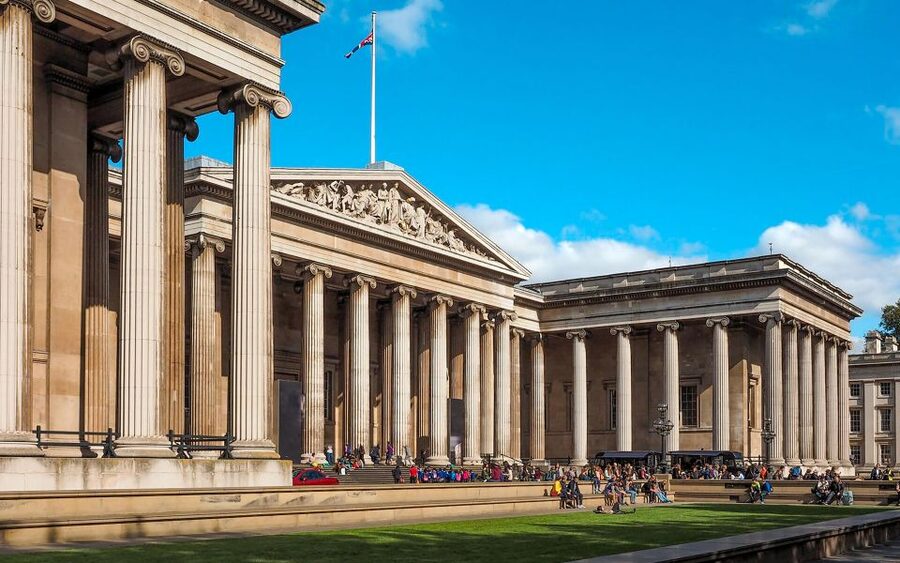
Reviewed · BRITISH MUSEUM TOURS
Unveil the Rosetta Stone, Parthenon at British Museum
This is a fast, focused way to see some of the British Museum’s biggest-name objects without getting lost in the maze. Rosetta Stone fans will love how quickly the guide connects a single artifact to the bigger story of reading Egyptian hieroglyphs, while you still get to stand in front of major world classics in one go.
I also like that the tour puts Parthenon sculptures in context, including the cultural heritage debate around the so-called Elgin Marbles. One possible drawback to plan for: it is only 2 hours, so you will see key highlights, not the full museum.
Key highlights you will actually notice
- Rosetta Stone explained clearly, with the practical why of its inscriptions
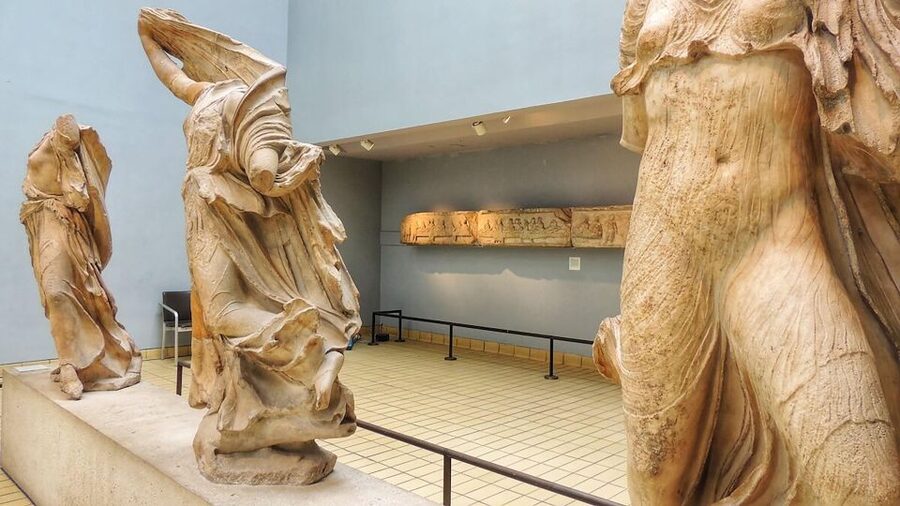
- Parthenon sculptures covered with context, including repatriation arguments
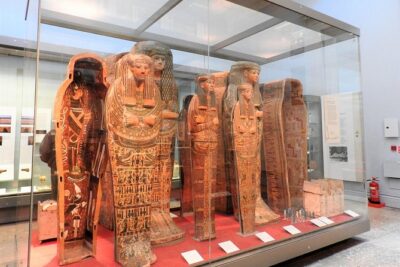
- Ancient Egypt galleries feel human, especially once you see the mummies in their cultural setting
- Sutton Hoo helmet gives you a time-capsule moment, for early medieval England
- Winged Bulls from Khorsabad are giant in person, so the scale lands fast
- Guide Joe praise is real, with an upbeat style that works for adults and kids
Seeing world-class artifacts in 2 hours, without the museum blur
The British Museum is huge. Even with a map, you can waste time zigzagging. This tour is designed for the opposite problem: you walk in, get oriented fast, and move through a set of big, story-driven stops. It is the kind of plan that helps if you only have a morning, one stop on your London schedule, or you want a confident starting point for later solo exploring.
The other thing I like is the mix. You are not stuck in one time period. One minute you are thinking about Egyptian writing. Next you are looking at sculpture from ancient Athens. Then the route jumps to burial practices in Egypt, early medieval England, and Assyrian royal power. That whiplash can be annoying in bad tours. Here, it works because the guide ties the objects back to how people lived and believed.
One consideration: you will walk a lot, and it is on foot. Also, this is not private, so you move with the group and follow the timing of the tour. If you prefer to linger for 30 minutes per artifact, you may end up wishing you had more time.
More British Museum tours:
- London: British Museum Guided Tour
★ 4.3 · 1,182 reviews - British Museum London Guided Tour Semi-Private 8ppl Max
★ 5.0 · 984 reviews - London: Tour of the British Museum
★ 4.1 · 678 reviews
Start at the British Museum, then get your bearings in the Great Court
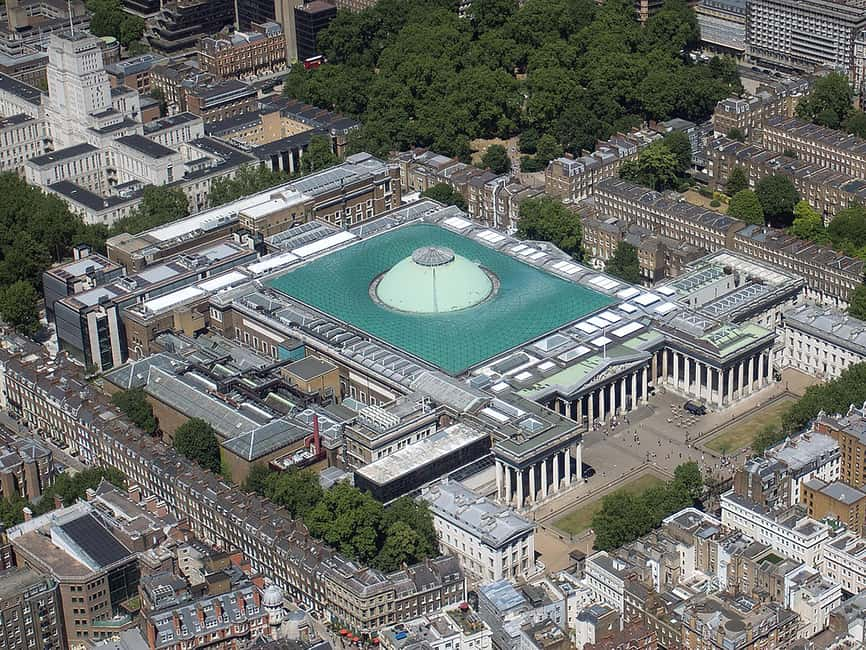
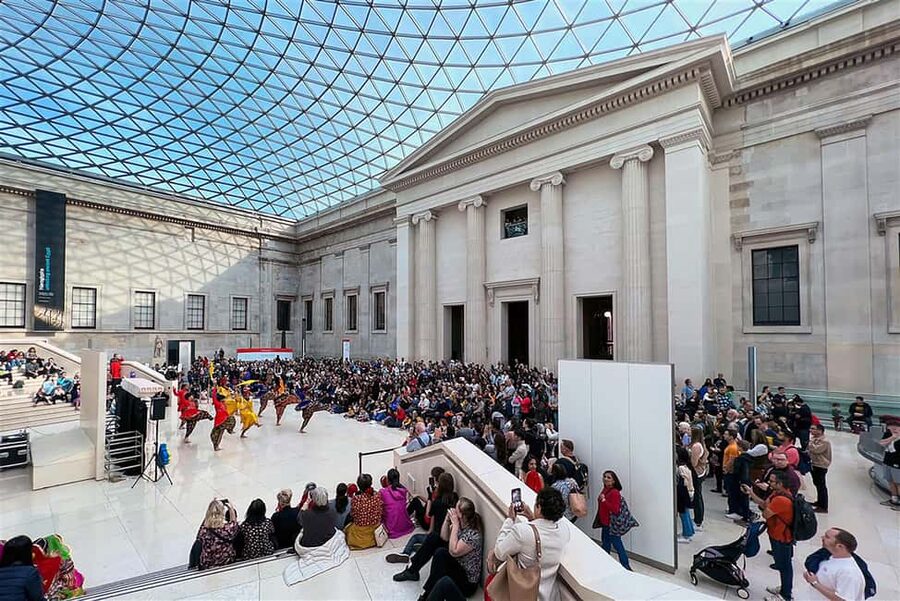
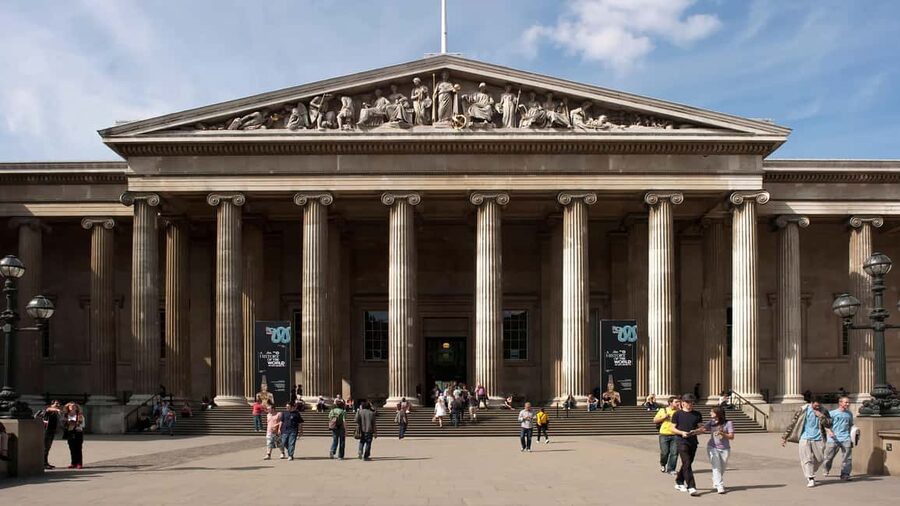
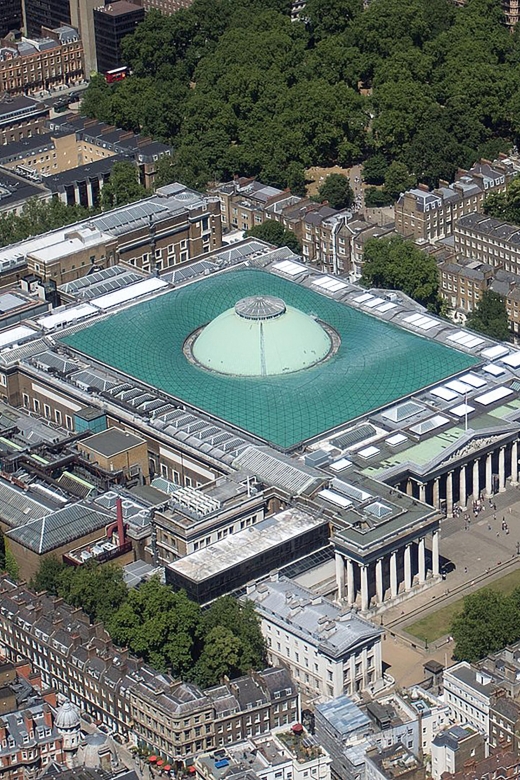
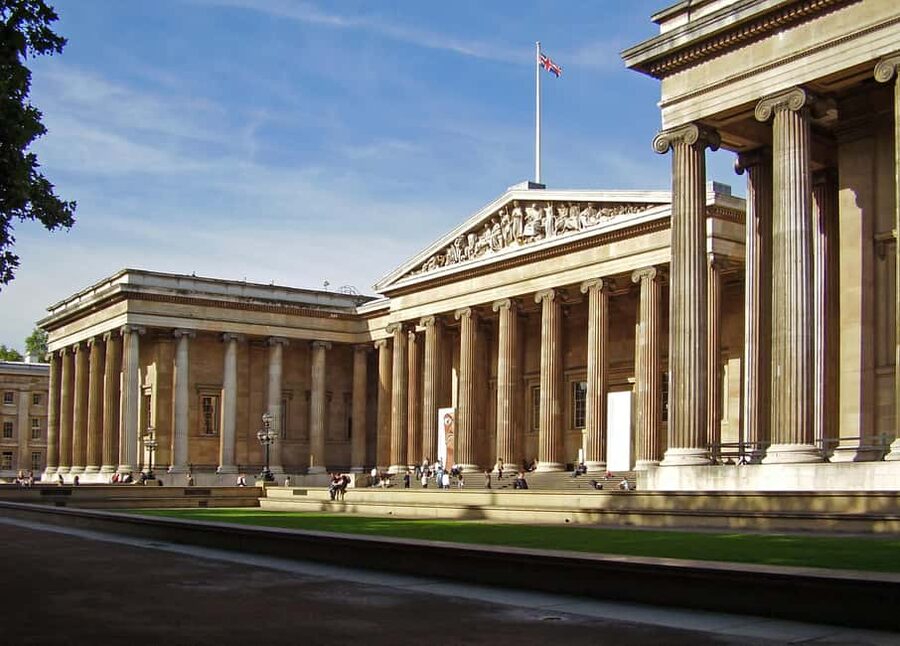
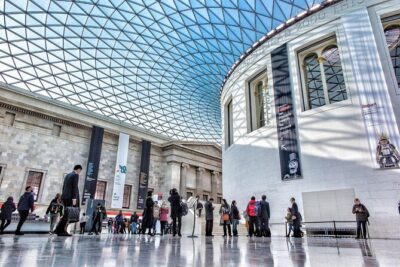
Your meeting point is on the stairs at the main entrance, after security. Arrive at least 15 minutes early so you are not rushed. Once you are inside, you start with a view that resets your brain. The Great Court glass roof, designed by Norman Foster, is the kind of architecture that makes you slow down for a second. Natural light pours down into the space, and it is easier to understand the museum once you can see the layout.
This matters because British Museum highlights can feel disconnected when you enter room after room. A quick orientation at the Great Court helps you connect what you see later. You are building a mental map while you still have energy, not after you are tired.
Practically speaking, bring comfortable shoes. This is not a sit-and-watch tour. You will stand, look up, and then move on. If you hate standing in long lines, you should still be aware that you will pass security and move through public spaces.
Rosetta Stone: the practical why behind those inscriptions

The first major stop is the Rosetta Stone. It was discovered in 1799, and it became the key for understanding Egyptian hieroglyphs. The guide’s job here is to make something that can sound technical actually make sense.
In person, you do not need fancy language to get the point. The Rosetta Stone matters because it provided a pathway to reading Egyptian writing systems, which opened the door for historians and linguists to interpret a much wider body of material. It is the classic example of how one artifact can change knowledge for everyone who comes after.
What you will get on this tour is the story of why the stone worked as a bridge, plus the bigger context for Egyptian culture. You are not just staring at a slab. You are learning how scholars made progress by comparing texts and using the same message expressed in different scripts.
Also, this stop is a great early win. It gives your brain a hook. Once you understand why the writing matters, the later Egypt-related objects feel less random.
Parthenon Sculptures (Elgin Marbles) and the repatriation debate you should know
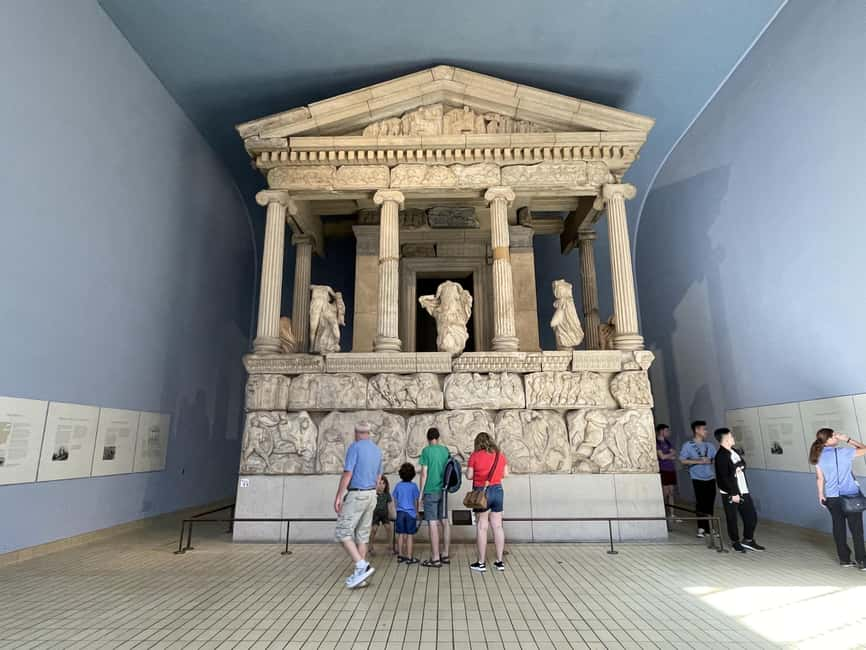
Next up, you see the Parthenon Sculptures, also known as the Elgin Marbles. These are marble carvings that were once part of the Parthenon in Athens. They ended up in Britain through Lord Elgin, who was a British ambassador to the Ottoman Empire. That last part is important, because it sits at the center of why the story is controversial.
Here is what I like about this part of the tour: the guide does not treat the sculptures like detached art trophies. You get a balanced perspective on cultural heritage and repatriation. That means you hear both sides of the debate, and you learn how people argue about ownership, context, and where an artwork belongs.
A drawback to expect: this topic can feel heavy in a museum setting that is usually calm and crowd-controlled. If you prefer purely aesthetic viewing, you might find the conversation adds pressure to what should be a relaxed stop. Still, it is also the reason the tour feels current and intellectually honest. These are not just old stones. They are part of modern ethical arguments.
In practice, the best way to enjoy this stop is to stand back for a full view first, then look for details. The sculptures are powerful, but you need a second pass to see why your eyes keep getting pulled to certain figures and angles.
More museum visits in London:
- Tower of London and Crown Jewels Exhibition Ticket
★ 4.5 · 6,677 reviews - London: Chelsea Football Club Stadium and Museum Tour
★ 4.8 · 4,576 reviews - Chelsea FC Stadium Tours and Museum
★ 5.0 · 1,908 reviews - Official tickets: Moco Modern & Contemporary Art Museum
★ 4.5 · 1,157 reviews
Ancient Egypt mummies: burial beliefs you can picture
After Greece, you shift to ancient Egypt. The museum’s Ancient Egyptian galleries include an impressive collection of mummies, and this tour includes that time period for a reason. Burial practices are not random. They connect to beliefs about the body, the afterlife, and how status played out after death.
A good guide helps you read the room, not just the artifacts. You learn about why mummification happened, what people thought it would do, and what burial rituals signaled about identity. Even if you do not love human remains as a topic, you can still appreciate this as a window into how Egyptians organized meaning around life and death.
One practical note: mummies can be visually intense. If you feel uneasy, take breaks as needed. The tour is only 2 hours, so the time pressure is real. If you need a reset, step back, look at a nearby label area, then come back when you feel steady.
Sutton Hoo helmet: a 7th-century treasure with real craftsmanship
The tour then heads to the Anglo-Saxon world with a visit connected to Sutton Hoo. Sutton Hoo is known for incredible finds from a 7th-century burial ship. Among the highlights is the Sutton Hoo helmet, famous for its craftsmanship and for how well it anchors a period of early medieval England in something physical and immediate.
This is a standout stop because it is not just about ancient writing or temple sculpture. It is about making and skill. A helmet like this forces you to think about materials, armor design, and the kind of status that could justify an elaborate burial.
You will likely leave with a stronger sense of time. London can make everything feel layered and close together. Sutton Hoo pulls you into a different rhythm, one where you can imagine a ship burial and the world around it. It is the kind of artifact that helps non-specialists feel competent. You do not need background knowledge to sense the importance.
Winged Bulls from Khorsabad: Assyrian power, in giant form

The final big visual stop is the Winged Bulls from Khorsabad. These are colossal statues that once guarded the entrance to the palace of Assyrian king Sargon II. In other words, they were meant to impress people before anyone even stepped inside.
In the British Museum, you get scale and drama without needing a museum trip to Iraq. You just stand there and notice how much effort went into making these figures imposing. The guide explains the story and the significance, tying them to Assyrian royal authority and the symbolism of guardians at palace gates.
This is a good closer because it makes the entire tour feel connected. You started with an artifact that helped people read ancient language. You then saw art tied to a political and cultural debate. After that, you watched burial beliefs and craft skill play out across cultures. Finally, you end with a monument to power.
If you only remember one thing from this stop, let it be this: the Assyrians built entrances as a message. The sculptures were not decoration. They were a statement.
The guide experience: why Joe’s style matters
One of the biggest reasons this tour works is the energy of the guide. In the feedback I saw, guide Joe gets called out for being awesome, upbeat, and able to keep attention. That last part is not trivial.
Museum information can become a lecture quickly. A guide who can explain the Rosetta Stone clearly, keep the Parthenon debate grounded, and still make it interesting for younger minds is doing something hard. If you have ever watched a kid drift off in a museum, you know that holding attention is a skill.
If you want to maximize value, listen for the guide’s connections. The tour is built around interpretation. You will enjoy it more if you treat each stop as a mini chapter, not just a photo op.
Price and pacing: $70.35 for highlights, not a full museum day
Let’s talk value. At $70.35 per person for a 2-hour guided experience, you are paying for focus. That sounds simple, but it is the real equation in London museum time. If you were to pay for a guide separately or spend hours wandering while trying to choose what matters, this gives you a controlled route through high-impact objects.
You are also paying for practical translation of complexity. The Rosetta Stone story becomes understandable. The Parthenon sculptures get placed within a real modern debate about repatriation. The Egypt section shifts from shock value to understanding burial beliefs. Sutton Hoo goes from medieval curiosity to human craft and social status. Khorsabad turns scale into meaning.
What is not included is food and drinks. This is a short tour, so that is normal. You will likely want a plan for a snack before or after, especially if you are combining this with other sights.
About timing: the duration is 2 hours, with starting times that depend on availability. If the time you choose is not available, you can be moved to another time on the same day, and the example given is moving from 10:00 to 14:00. If there is a lack of seats for last-minute bookings, you may be placed on the day following your booked date. Keep that flexibility in mind when your schedule is tight.
Who should book this British Museum highlights tour
This tour is a good fit if you:
- want a quick, confident route through museum heavyweights
- like guides who connect artifacts to real questions, not just dates
- have limited time in London and want maximum learning per hour
- are traveling with a mix of interests, including kids who need stories that stick
It may not be the best fit if you:
- prefer slow wandering with long stops
- want to see a wider selection of collections beyond the set highlights
- need wheelchair access, since the tour is not suitable for wheelchair users
Should you book this tour?
If your goal is to get your footing in the British Museum and see the biggest, most thought-provoking objects with a guide, I think this is worth considering. The strongest reason to book is that the tour compresses a lot of meaning into a short window, especially through the way it connects the Rosetta Stone, the Parthenon sculptures controversy, Egypt mummies, Sutton Hoo, and the Winged Bulls.
I would book it when you want clarity over chaos. If you want to spend an entire day unpacking the museum room by room, skip this and plan for self-guided time. But for two hours that actually teach you something, this guided highlights path is a smart move.
FAQ
Where do I meet the guide?
Meet your guide on the stairs at the main entrance, after security checks.
How early should I arrive?
Arrive at least 15 minutes before your scheduled travel time.
How long is the tour?
The duration is 2 hours.
Is the tour private?
No, it is not private.
What language is the tour guide?
The live tour guide provides the tour in English.
What is included in the price?
The British Museum guided tour is included, along with online support at the time of boarding the tour.
Are food and drinks included?
No. Food and drinks are not included.
Do I need an ID or passport?
Yes. Bring a passport or ID card.
What if my chosen time slot is not available?
If your time is not available, you will be transferred to another time on the same day.
Is the tour wheelchair accessible?
No, it is not suitable for wheelchair users.
Recently reviewed around London
- Bridgerton Tour in London★ 5.0 · 9 reviews
- Tour in Italian: Londra in un Giorno★ 4.9 · 20 reviews
- London in Spanish Privado: Lo Mejor de Londres en un día!★ 4.8 · 12 reviews
- Westminster and National Gallery 3.5-Hour Tour in Italian★ 4.9 · 28 reviews
- Top London Sights Tour – Christmas Day Special!★ 5.0 · 12 reviews
- Tour a Piedi di Harry Potter a Londra★ 5.0 · 20 reviews
- The Royal Express, 2.5 hour tour★ 5.0 · 6 reviews
- London: Royal Hampton Court Guided Tour with Afternoon Tea★ 5.0 · 67 reviews
British Museum Tours, compared.

British Museum London Guided Tour Semi-Private 8ppl Max
Read our review →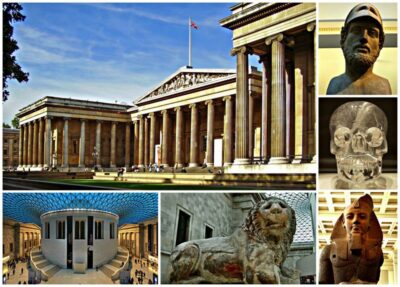

British Museum Audio Tour & Priority Entrance Ticket
Read our review →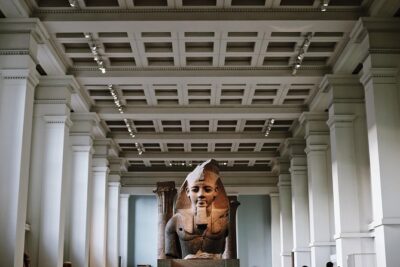
The British Museum London – Exclusive Guided Museum Tour
Read our review →
Browse the lists this tour appears in