Reviewed · TOURS
London: Architecture Tour of Benjamin Franklin House
Benjamin Franklin House is one of those London stops where you learn from the walls, not just from plaques. You’re touring a preserved Georgian and Victorian townhouse that was lived in for years, then carefully conserved, with architecture tied directly to Franklin’s London life.
I love the way the tour turns everyday spaces, like the kitchen and parlour, into clear stories about how Franklin lived and thought. I also like the hands-on feel of the Glass Armonica Room, where you can try playing a tune. One possible drawback: the building is a 5-storey with uneven, sloping floors and stairs between each level, and there is no wheelchair access.
Key things you’ll notice right away
- Only remaining Benjamin Franklin home in London, where he lived for 16 years
- Grade I listed townhouse with original Georgian and Victorian features
- Craven Street Bones connection to surgeon Hewson and his Anatomy school
- Upstairs storylines around Margaret Stevenson, the widow who rented rooms to Franklin
- Glass Armonica Room music moment, with a chance to play a tune
- A full hour with Q and A, plus visitor seating in historic rooms
Benjamin Franklin’s 16-year London address, and why the building still matters
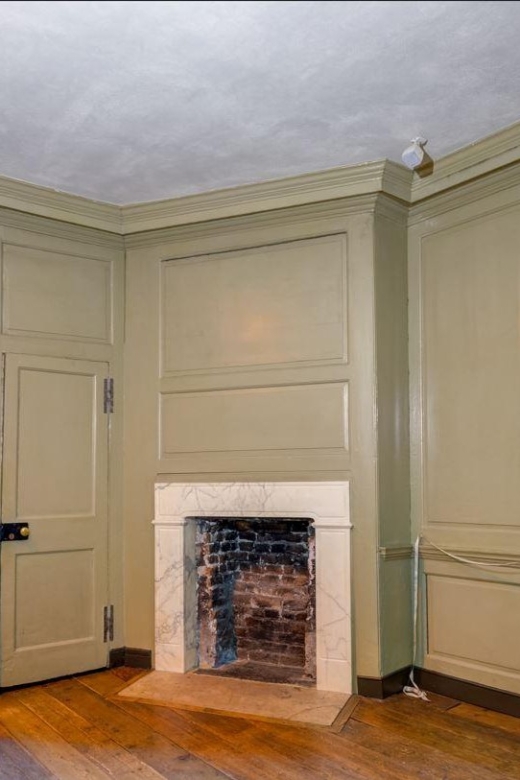
This is a rare kind of architecture tour. Most building tours are about style and dates. Here, the structure matters because it housed real decisions, experiments, and conversations. Benjamin Franklin lived in London for 16 years, and this is presented as his only surviving home in the city.
The house is Grade I listed, which is a big deal. That label signals that the building is protected for its exceptional historical and architectural importance. In practice, it means you’re walking through original Georgian and Victorian elements rather than a modern reconstruction. The tour frames what you see as part of the same story Franklin was living.
You’ll also learn why the house opened to visitors in 2006 as part of a conservation project. That detail matters because it explains why the rooms feel both historical and accessible enough to tour. The guides aren’t just repeating facts. They’re linking the building’s survival to what it makes possible today, like seeing how rooms were used and how Franklin’s life fit inside the space.
Other London bookings people compare this one against:
- From London: Harry Potter Warner Bros Studio Tour
★ 4.7 · 26,588 reviews - Magical London: Harry Potter Guided Walking Tour
★ 4.7 · 22,044 reviews - London: Madame Tussauds London
★ 4.6 · 20,915 reviews
Finding 36 Craven Street and what happens during the 1-hour tour
Plan for about an hour. The pace is steady, with time built in for questions at the end. The tour is led in English by a live guide.
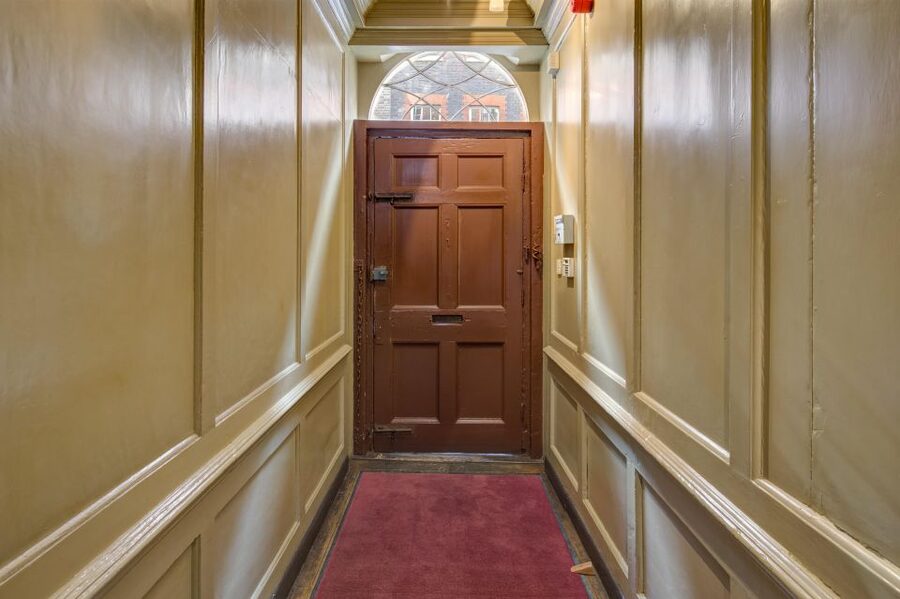
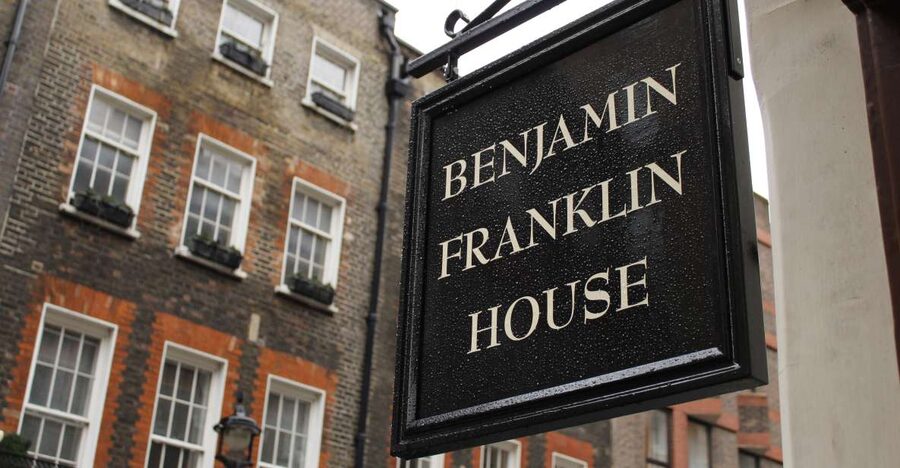
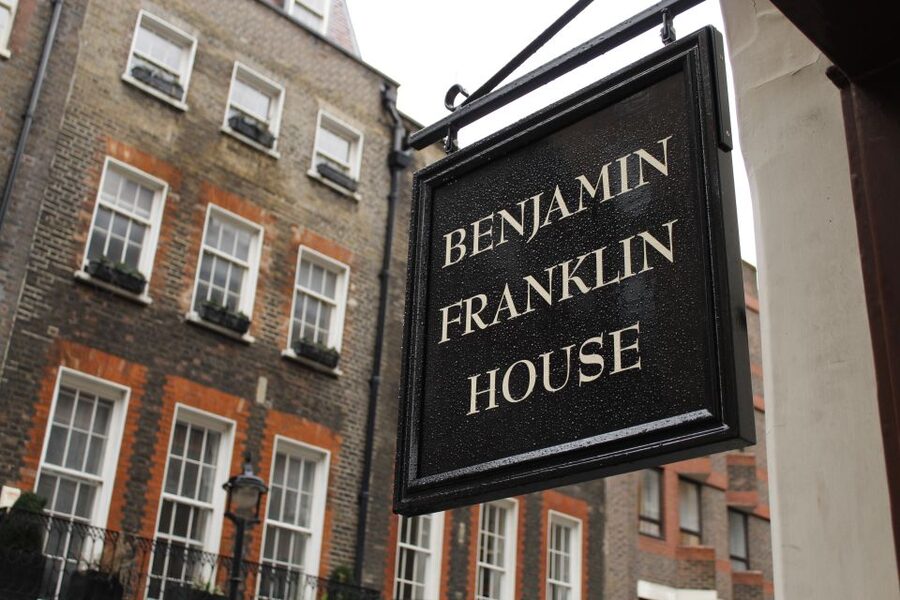
Meeting is simple, but very “townhouse London.” You knock on the door at 36 Craven Street, below the Benjamin Franklin House sign. It’s not a big street entrance with a ticket desk. It’s more personal, and that can feel charming. Just know that your group may pause for access, since the tour starts once staff let people in.
Inside, you move through a 5-storey townhouse. Stairs connect the floors, and the staircase arrangement includes a staircase between each floor. That also means the building has uneven, sloping floors, so the tour is best if you’re comfortable moving through older architecture. The good news: there are handrails on all staircases, and there is visitor seating in the historic rooms, so you’re not standing constantly.
Quick practical note: photography is allowed, but flash photography is not. Audio recording isn’t allowed either. And no drinks in the house. So if you want to sip something, do it outside before you start.
Georgian kitchens and the London diet: how everyday life is turned into architecture
The tour begins by pulling you into Franklin’s London through the rooms. One of the first stops is the kitchen, where you’re shown Georgian food culture and Franklin’s thoughts on the London diet. It’s a smart pairing.
Architecture is usually about big features: moulding, staircases, windows. Here, you’re also asked to pay attention to how ordinary routines happen inside those walls. A kitchen isn’t just a room on a plan. It’s where money, habits, and health show up day after day.
What I like about this approach is that it avoids turning Franklin into a distant genius. You’re learning how he sized up the local food and what that says about living as a visitor who became more involved in London life. The guide connects the physical layout to daily life, so the space doesn’t feel like a museum set. It feels like a place someone actually used.
If you enjoy tours where you can picture daily life, this is the part that clicks. If you prefer pure exterior architecture photos, you might find yourself wishing for more time outside. The trade-off is that the interior is the whole point here.
Margaret Stevenson’s parlour rooms and the guests who shaped conversation
As you head upstairs, the story shifts to the people around Franklin, especially Margaret Stevenson. She was a wealthy widow who rented rooms to him, and the tour uses her parlour as a key stage for understanding Franklin’s social world.
In the parlour, you hear about influential guests who visited and discussed current affairs. That detail helps you see Franklin not just as an inventor, but as someone who participated in the flow of ideas and politics in London. It’s also where Franklin’s relationship with the Stevenson family comes into focus, alongside Franklin’s connection to his own family.
This section works well because it ties architecture to status and access. Parlours in that era were not random rooms. They were spaces for conversation, for hosting, and for being seen in a particular way. When the guide explains who occupied the space and why, you start noticing the room as a social tool, not only as a physical object.
The tour also mentions Franklin’s own departure. He left London and the Stevenson family in 1776, when he returned to America to sign the Declaration of Independence, and he never returned to London. Hearing that before you reach the room tied to his personal experiments gives the final segment more emotional weight.
A different sort of day out in London:
- Stonehenge, Windsor Castle, and Bath from London
★ 4.5 · 18,662 reviews - London: Warner Bros. Studio Tour with Transfers
★ 4.7 · 17,586 reviews - London: Tower Bridge Entry Ticket
★ 4.7 · 15,560 reviews - London Big Bus Hop-On Hop-Off Tour with Optional River Cruise
★ 3.5 · 10,803 reviews
The Craven Street Bones and Hewson’s anatomy school
One standout highlight is the Craven Street Bones story, tied to surgeon Hewson and his Anatomy school. This is the kind of detail that makes an architecture tour feel different from a standard historical talk.
Bones and anatomy schooling belong to the scientific world, but the tour connects them to a specific place and time. You’re not just hearing that medicine existed. You’re learning about learning itself, how knowledge was taught and how the city held institutions connected to science.
Why this matters for your visit: Franklin was an active thinker across science, experiments, and practical questions. Placing anatomy education in the same narrative space gives you a fuller picture of the intellectual atmosphere around him. It also helps explain why this “house story” isn’t only about letters and politics. It’s also about what people were learning, building, and arguing about in London.
If you’re into science history, this section is a strong reason to book. Even if you’re not, it’s memorable because it’s concrete and slightly unusual. It gives you something you can tell friends later that isn’t the usual London highlight.
Franklin’s rented floor, experiments, politics, and eccentric personality
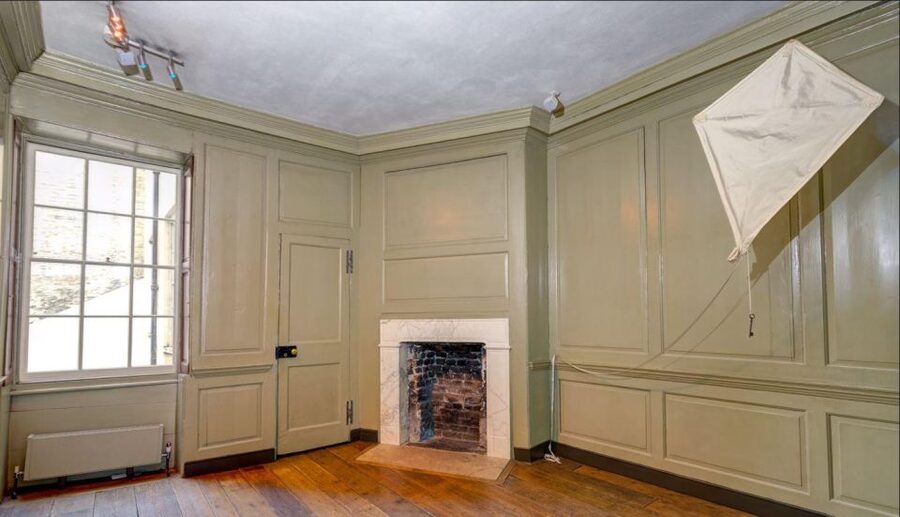
The tour then moves to Franklin’s Parlour, the floor he rented for 16 years. This is one of the core stops, and it’s where the narrative becomes very personal.
You’ll hear about Franklin’s experiments, his political beliefs and actions, and his eccentric personality. That combination matters. A lot of historic figures get reduced to one thing, like scientific genius or political reformer. Here, the guide links the parts so Franklin feels like a whole person with contradictions, curiosity, and opinions.
You should treat this part as the emotional heart of the tour. The building is Grade I, sure, but what you’re really touring is Franklin’s daily and long-term presence in London. The room is where the tour connects the physical experience of the townhouse to the mental experience of living with big ideas.
And remember the timeline. Franklin left London in 1776 and never returned. So by the time you reach this stop, the story is no longer about a single visit. It’s about an extended chapter, one that ended decisively when he returned to America to sign the Declaration of Independence.
If you enjoy hearing how people thought and acted rather than just what they achieved, this is the moment to listen closely. The guide weaves architectural details with the human story in a way that makes the rooms feel like they have memory.
The Glass Armonica Room, where you can try Franklin’s instrument
The last stop is the Glass Armonica Room, where guests are invited to try their hand at playing a tune on Franklin’s instrument.
This is the part that makes the tour feel alive. History tours can sometimes end with a walk back to the street and a polite wave goodbye. Here, you finish with something physical and playful, which helps you remember the rest of the house.
Even if you don’t have musical experience, the invitation to try is the point. It turns Franklin into a maker and performer, not only a writer. And it also reinforces the tour’s theme: science and ideas show up in objects, rooms, and everyday moments.
One practical note: your phone and camera can come out for photos, but flash isn’t allowed, and audio recording isn’t allowed. So think of this as a visual moment where you watch, listen within the rules, and then take your turn.
Price and value for this 1-hour architecture visit
The ticket price is $16 per person, and that includes entry to the house plus a guided tour for about an hour. Children under 12 enter for free. That value is real, because you’re paying for more than a doorway admission. You’re paying for a guide who connects architecture, Franklin’s biography, and a specific set of rooms.
A lot depends on what you want. If you’re looking for a self-guided “see everything” house pass, this might feel too focused. The tour route is designed to hit the meaningful rooms and stories, not to provide unlimited wandering time.
But if you like guided context, this is one of the better bargains in London for a narrative-driven architecture experience. You also get a built-in moment for questions at the end, which is where you can ask about anything that confused you or sparked curiosity during the walk through uneven, sloping floors.
Who should book? This works best for:
- People who enjoy combining architecture with biography
- Anyone curious about Franklin beyond the schoolbook highlights
- Visitors who like science and medical learning connections, like Hewson and anatomy schooling
- Travelers who want a short tour with big payoff, about an hour
Practical tips for a smoother visit
A few things can make your hour inside more comfortable.
First, the house is not wheelchair accessible. Floors and stairs are uneven and sloping, with handrails on all staircases. If your mobility is limited, plan ahead and consider whether the building layout will work for you.
Second, follow the indoor rules. No smoking or vaping indoors. No drinks. Flash photography is not allowed, and audio recording isn’t allowed. Also, no bare feet. Pets are not allowed, though assistance dogs are permitted.
Third, expect a “townhouse pace.” This isn’t a massive museum hall. It’s a preserved home with visitor seating in historic rooms. That seating is a blessing because you can rest while still listening.
Finally, pay attention to the guides. The tours run with live guides, and the experience is often helped by their energy and how clearly they connect story to room. If you have questions about the instrument, the anatomy schooling connection, or the Stevenson family, save them for the end when you can ask without interrupting the flow.
Should you book this Benjamin Franklin House architecture tour?
Yes, you should book if you want a smart, hour-long London experience that links architecture to real people, especially Benjamin Franklin during his years in London. The house is Grade I, the rooms are specific, and the tour gives you reasons to care about what you’re looking at, from Craven Street Bones to the Glass Armonica Room.
Skip it only if you’re strongly uncomfortable with older buildings, because the layout is uneven and sloping and there is no wheelchair access. Also skip if you want a long, free-roam museum experience rather than a guided storyline.
If those caveats don’t apply, this is a great way to spend a slice of your day in London, and still come away with details you can picture, not just dates you can recite.
Recently reviewed around London
- London: Harry Potter Walking Tour with Platform 9 3/4★ 4.6 · 37 reviews
- London: Harry Potter Tour & The London Dungeons Tour★ 3.8 · 28 reviews
- London: Harry Potter Tour, River Cruise & The London Dungeon★ 4.4 · 8 reviews
- London: Harry Potter Walking Tour and River Thames Cruise★ 3.6 · 24 reviews
- London: Harry Potter Tour and London Bridge Tombs Experience★ 3.8 · 4 reviews
- London: Harry Potter Walking Tour and Tower Bridge Ticket★ 4.4 · 7 reviews
- London: Harry Potter Walk, Hop-on Hop-off Bus Tour & Cruise★ 4.1 · 105 reviews
- London: Harry Potter Sights and Shrek’s Adventure Combo Tour★ 4.6 · 3 reviews
Tours, compared.

Magical London: Harry Potter Guided Walking Tour
Read our review →

London Big Bus Hop-On Hop-Off Tour with Optional River Cruise
Read our review →

Warner Bros. Studio Harry Potter Tour with Transfers
Read our review →